A nectarine is essentially a fuzzless peach. The two are the same species, Prunus persica, and differ by a single gene: peaches are fuzzy because they grow tiny hairs (trichomes) on their skin, while nectarines carry a mutation that switches those hairs off, leaving smooth, shiny skin. A nectarine is not a peach crossed with a plum.
Peaches and nectarines are available in stores as distinctly different fruits, yet these two fruits look and taste very similar. Have you ever wondered why?
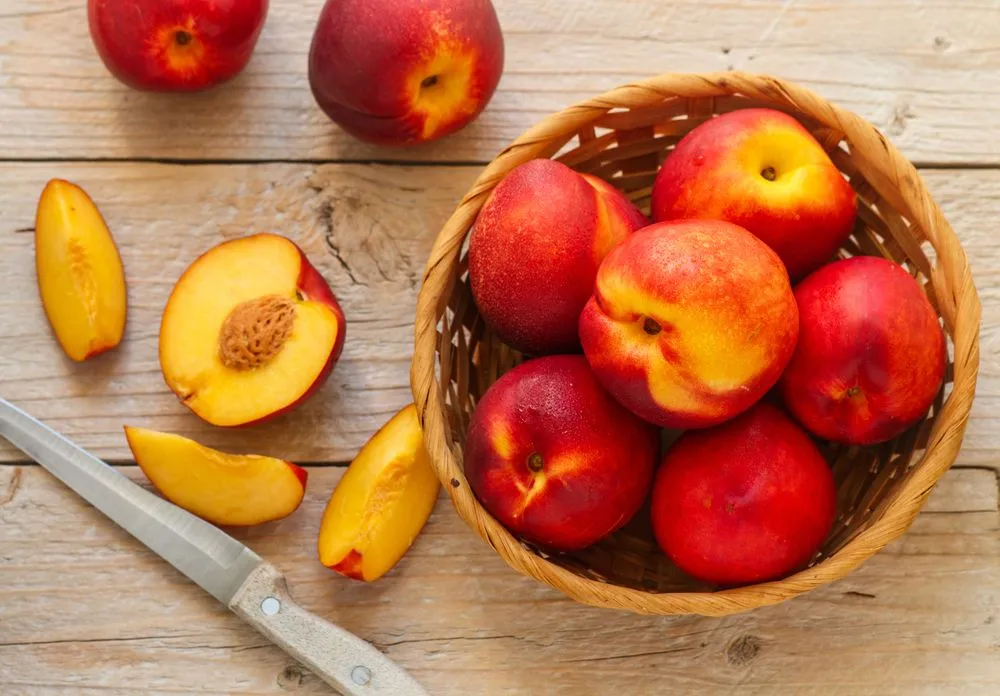
It turns out that nectarines are basically ‘bald’ peaches! Peaches and nectarines are the same species, Prunus persica. Peach and nectarine trees are virtually indistinguishable. The only difference lies in the fruits: peaches come with a dull fuzzy skin, while nectarines have smooth and shiny skin.
This fuzziness is used to categorize them commercially.
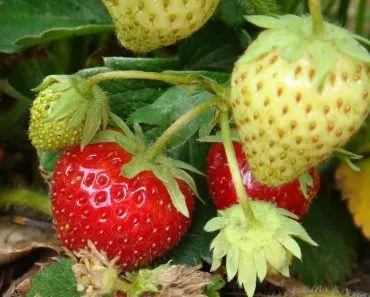
Peaches and nectarines belong to the family of plants called Rosaceae. This family also includes popular fruits such as apples and strawberries.
Within the Rosaceae family, they are classified in the genus Prunus, along with apricots and almonds. Members of the genus Prunus are also called stone fruits, as they are thin-skinned and fleshy fruits with a large seed (stone).
Peaches and nectarines belong to the species persica within the genus Prunus. Nectarines are a mutant (a genetic variant) of peaches that lack the tiny hair-like structures on the fruit surface. They are also shinier than peaches, and their cuticles (outer layer of fruit skin) produce a wax-like substance that gives them their glossy appearance.
What Are Those Tiny Hairs On Peaches?
The tiny, hair-like structures on the surface of the fruit that make it fuzzy are called trichomes. They are not hair like the kind you or I have. They are formed from the cells of the fruit skin (epidermal cells) and can be made of one or more cells. In some cases, they may contain glands that secrete specific compounds, such as toxins, to protect the plant against pathogens.
In the case of peaches, the trichomes are made of single cells and are non-glandular. The trichomes on the surface of the peach fruit are dead by the time the fruit ripens.
So why do peaches bother growing fuzz at all? Even though peach trichomes don’t secrete anything, a dense coat of these hairs still earns its keep as a defense. Non-glandular trichomes work as a physical barrier, roughening the surface so small insects struggle to land, crawl, and feed on the developing fruit. The fuzz is, in effect, the peach’s bristly bodyguard.
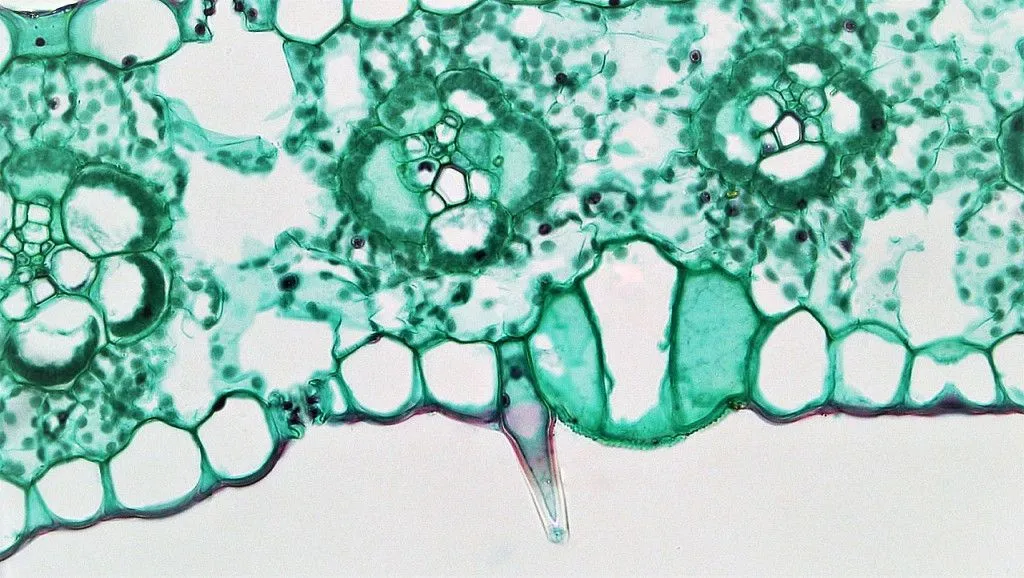
How Is Fuzziness Determined?
The difference in fuzziness between peaches and nectarines is determined by a single gene. Scientists call this gene g (for glabrous, meaning free from hair, as is the case of nectarines).
Big G denotes the presence of fuzziness and little g denotes the absence of fuzziness. G denotes the dominant and fuzzy form; g denotes the recessive and non-fuzzy form.
The lack of fuzziness in nectarines is a homozygous recessive trait. This means that the plant needs to have two copies of g (gg) to be a nectarine. If there are one or more copies of big G (as in GG or Gg), then it will be a peach.
In 2014, a collaboration of scientists from Italy and the USA published a paper that identified the gene responsible for forming the trichomes on the surface of peaches. That gene is PpMYB25 (also written PpeMYB25).
In the case of nectarines, the gene is ‘disrupted’. The presence of a mobile piece of DNA (Ty1-copia retrotransposon) led to the gene losing its ability to form trichomes.
When the scientists further compared this gene PpMYB25 to similar genes in other plants, they found that these genes are involved in the formation of trichomes not only on the fruit itself, but also on other parts of the plant, such as the stem and leaves.
What does the PpMYB25 gene do in the cell?
The gene PpMYB25 is what biologists call a transcription factor. Transcription factors regulate multiple processes within the plant. Imagine that there is a master switch that can turn on all the lights in your house. A person needs to turn on this switch for all the lights to work. That person is the transcription factor who turns the switch ‘ON’ for all the individual lights to work. However, the lights in various rooms (downstream) can be turned off separately, if needed.
What this means is that it is likely that other processes are also impacted when the gene is disrupted in nectarines. The researchers did see that happening.
When researchers compared the surface of peaches and nectarines using scanning electron microscopy and gas chromatography, they found difference in the trichome structure and cuticle wax.
A scanning electron microscope uses a beam of electrons to scan a surface. The electrons interact with the atoms on the surface and give off signals that are used to form an image, with magnifications that on modern instruments can reach hundreds of thousands of times. Gas chromatography separates the volatile chemical components of a sample to identify each individual component.
This difference in cuticle wax gives nectarines their shiny appearance.
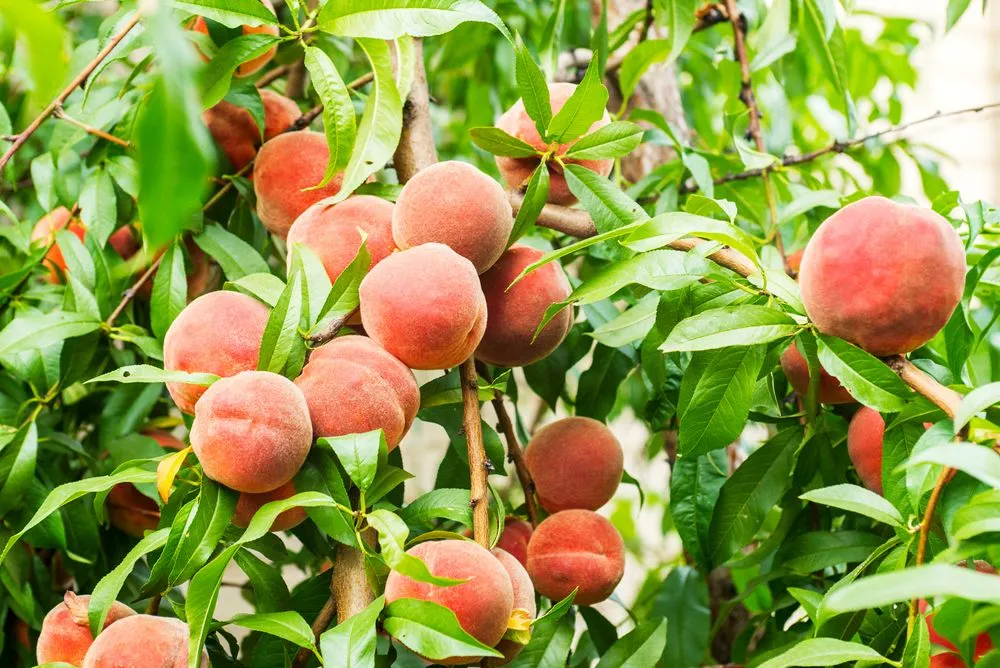
Scientists used this information to develop a genetic identifier that can be used to test seedlings. We no longer have to wait for the seedlings to grow up and bear fruit to know whether they will bear peaches or nectarines. All we need is DNA from the leaf of the seedling; with that, we can test it with genetic markers to identify which fruit will emerge.
More recently, in 2022, a group of scientists from China reported that two genes PpMYB25 and PpMYB26, with similar functions, determine the differences between peaches and nectarines. Both the genes are involved in the formation of trichomes; PpMYB25 activating PpMYB26. Take PpMYB25 out of commission (by the retrotransposon), then neither can it perform its own function, nor can it activate PpMYB26. In the absence of both of these genes, the fruit does not develop trichomes.
That isn’t quite the whole story, though. In 2025, researchers studying an unusual ‘Maravilha’ nectarine found a smooth-skinned tree that still carried an intact, working copy of PpMYB25. It should have grown fuzzy peaches, yet it didn’t, because the gene was switched off rather than broken. The most likely explanation is an epigenetic ‘mute button’ that silences the gene without altering its DNA sequence. In other words, a nectarine can also arise simply because the peach skips reading a perfectly good instruction.
Is A ‘Fuzz-Free Peach’ Just A Nectarine?
If you love the taste of a peach but could do without the fuzzy skin, here is the good news: the fuzz-free peach already exists, and it already has a name. It is the nectarine. As we have seen, a nectarine is not a separate fruit but the same species, Prunus persica, simply missing its trichomes. So a ‘smooth peach’, a ‘hairless peach’ and a nectarine are three names for the same thing.
One idea worth putting to rest is that a nectarine is a peach crossed with a plum. The University of Missouri’s Integrated Pest Management program calls this a horticultural urban legend: a nectarine “simply is a fuzzless peach” that first appeared as a natural mutation of the peach in China more than 2,000 years ago. No plum is involved.
And if you do end up with a fuzzy peach in your fruit bowl, the fuzz is easy to deal with. Those trichomes are dead and only loosely attached by the time the fruit is ripe, so a quick rub with a damp cloth or a rinse under the tap takes most of them off. If you would rather buy a peach that is already smooth on the shelf, though, reach for a nectarine (or a peacherine, the peach-and-nectarine cross with minimal fuzz).
Can A Nectarine Ever Grow Fuzz?
Here is where it gets interesting. Because the whole difference between a peach and a nectarine comes down to a single gene being switched off, that difference is not locked in stone. Every so often the switch flips, and a smooth-skinned nectarine turns up on an otherwise fuzzy peach tree.
Growers call this a bud sport: a spontaneous mutation in the growing tip of a single branch, which then bears fruit unlike the rest of the tree. In 2010, a Virginia orchardist famously found a lone nectarine growing among the peaches on one of his peach trees, and nursery experts explained it as exactly this kind of sport, often triggered by heavy pruning or injury. Far from being a one-off curiosity, this is how the whole nectarine industry began. A review of bud sports notes that more than 170 commercial peach and nectarine varieties trace back to spontaneous bud sport mutations.
So can a nectarine itself be fuzzy? A fuzzy ‘nectarine’ at the store is almost always just a mislabeled peach. But because the fuzz gene in a nectarine is only switched off, not deleted, the trait can in principle flip back on, which is why peaches and nectarines can occasionally turn up on the very same tree.
Which Other Fruits Are Fuzzy, And Why?
Peaches are not the only fuzzy items in the produce aisle, but not every fruit ‘fuzz’ is the same thing once you look closely.

Take the kiwifruit. Its coat really is made of trichomes, the same kind of epidermal hairs a peach grows. Botanists note that these hairs help the fruit hold on to water and shrug off strong sunlight, and their length and density vary from one species to the next. Fuzzy green kiwifruit are densely coated, golden kiwifruit are shorter and sparser, and the grape-sized kiwiberry is smooth enough to eat skin and all.
Raspberries are a different story. Those fine hairs are not trichomes at all. A raspberry is an aggregate fruit built from dozens of tiny drupelets, each one grown from its own carpel in the flower. Every carpel carries a slender style (the stalk that once guided pollen down to the ovary), and as the berry ripens those styles dry out but stay put, leaving the soft bristles you can see and feel. So a peach’s fuzz and a raspberry’s hairs solve very different jobs: one is a defensive coat of living-then-dead hairs, the other is a set of leftover flower parts.
Conclusion
Peaches and nectarines are basically the same species, but they differ in only one gene. For those who are unable to pick one or the other, peach breeders have developed varieties that combine the best of both worlds. Crosses between peaches and nectarines, called peacherines, are available commercially and are said to have “a sweet, old-fashioned flavor and minimal fuzz”. The PpMYB25 gene, in combination with PpMYB26, which acts downstream, determines whether the fruit will be a peach or a nectarine.
References (click to expand)
- Vendramin, E., Pea, G., Dondini, L., Pacheco, I., Dettori, M. T., Gazza, L., … Rossini, L. (2014, March 3). A Unique Mutation in a MYB Gene Cosegregates with the Nectarine Phenotype in Peach. (C. Peace, Ed.), PLoS ONE. Public Library of Science (PLoS).
- Yang, Q., Yang, X., Wang, L., Zheng, B., Cai, Y., Ogutu, C. O., … Han, Y. (2022, February 2). Two R2R3‐MYB genes cooperatively control trichome development and cuticular wax biosynthesis in Prunus persica. New Phytologist. Wiley.
- Huang, C.-C., et al. (2025). Transcriptomic analysis of peaches and nectarines reveals alternative mechanism for trichome formation. BMC Plant Biology. Springer Nature.
- Creller, M. A., & Werner, D. J. (1996, March). Characterizing the Novel Fruit Surface Morphology of `Marina' Peach Using Scanning Electron Microscopy. Journal of the American Society for Horticultural Science. American Society for Horticultural Science.
- Xing, Z., et al. (2017). Efficiency of Trichome-Based Plant Defense in Phaseolus vulgaris Depends on Insect Behavior, Plant Ontogeny, and Structure. Frontiers in Plant Science. Frontiers Media.
- Nectarine: The Fuzzless Peach. University of Missouri Integrated Pest Management.
- Grower finds nectarine growing on peach tree. Fruit Growers News.
- Foster, T. M., & Aranzana, M. J. (2018). Attention sports fans! The far-reaching contributions of bud sport mutants to horticulture and plant biology. Horticulture Research. Nature Publishing Group.
- Kiwifruit 1: Why are they so fuzzy? The Botanist in the Kitchen.
- Why Do Raspberries Have Little Hairs? Encyclopaedia Britannica.