Table of Contents (click to expand)
- What Is A Black Hole?
- Constituents Of A Black Hole
- How Do Black Holes Form And What Is Their Range Of Size?
- How Do We Locate Black Holes??
- How Many Black Holes Are There?
- How Many Black Holes Are In The Milky Way?
- How Many Black Holes Have We Actually Discovered?
- How Do We Estimate The Number Of Black Holes?
The latest peer-reviewed estimate, from Sicilia and colleagues in the Astrophysical Journal (2022), puts the number of stellar-mass black holes in the observable universe at roughly 40 quintillion — that is 4 × 10¹⁹, or about 1% of all the ordinary matter in the cosmos. On top of those, almost every large galaxy is thought to host one supermassive black hole at its centre, giving another few hundred billion. Astronomers can't see most of them directly — they infer black holes from how they bend nearby starlight, how they accelerate companion stars, the X-rays they emit when swallowing gas, and (since 2015) the gravitational waves released when two of them merge.
Stephen Hawking would be delighted to see the growing interest and advancement in various fields of science pertaining to black holes. It was his dream and vision to be able to not just understand the entirety of a black hole’s functioning, but also view it in all its glory.
After all, his role in redefining pre-existing assumptions and solidifying mere guesswork surrounding black holes has been pivotal in taking the human race to where we are today. The term “black hole” might trigger a series of ideas in your mind, namely something deadly and potentially catastrophic, but black holes’ true beauty and sheer might remain uncharted. Let’s try and map out some portion of this extensive and mysterious area of the cosmos.
What Is A Black Hole?
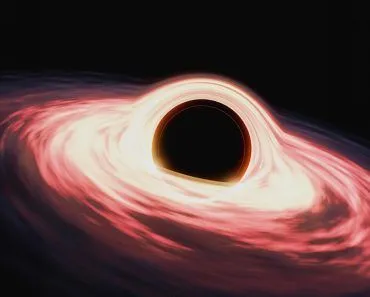
Just about the only thing that sci-fi movies have gotten right over the years is the definition of a black hole. A black hole typically refers to an area in space where the gravitational force is so enormous that no amount of matter or radiation can escape it. Even light can’t break this cycle, which results in us not being able to see them.
The most common cause behind the birth of a black hole is the death of a star. Light itself cannot escape from inside the event horizon, so we cannot photograph the inside of a black hole directly — but we are no longer blind to them. Telescopes track how stars and gas behave near these cosmic titans, and in 2019 the Event Horizon Telescope released the first actual image of a black hole's shadow (the supermassive M87*), followed in May 2022 by a similar image of Sagittarius A*, the supermassive black hole at the centre of our own Milky Way.
Constituents Of A Black Hole
- Inner and outer event horizons – The boundary of the black hole beyond which the mass disappears. This can be thought of as the last pit stop before individual entities become one mass. The concept was proposed by John Michell and the term was coined by Wolfgang Rindler.
- Singularity – The singularity of a black hole is the one point in space and time where, according to classical general relativity, the entire mass of the black hole is concentrated and the curvature of spacetime becomes infinite. The mathematical inevitability of singularities inside black holes was first proved by Roger Penrose in his 1965 singularity theorem — work for which he shared the 2020 Nobel Prize in Physics.

How Do Black Holes Form And What Is Their Range Of Size?
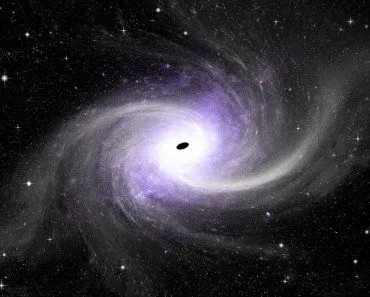
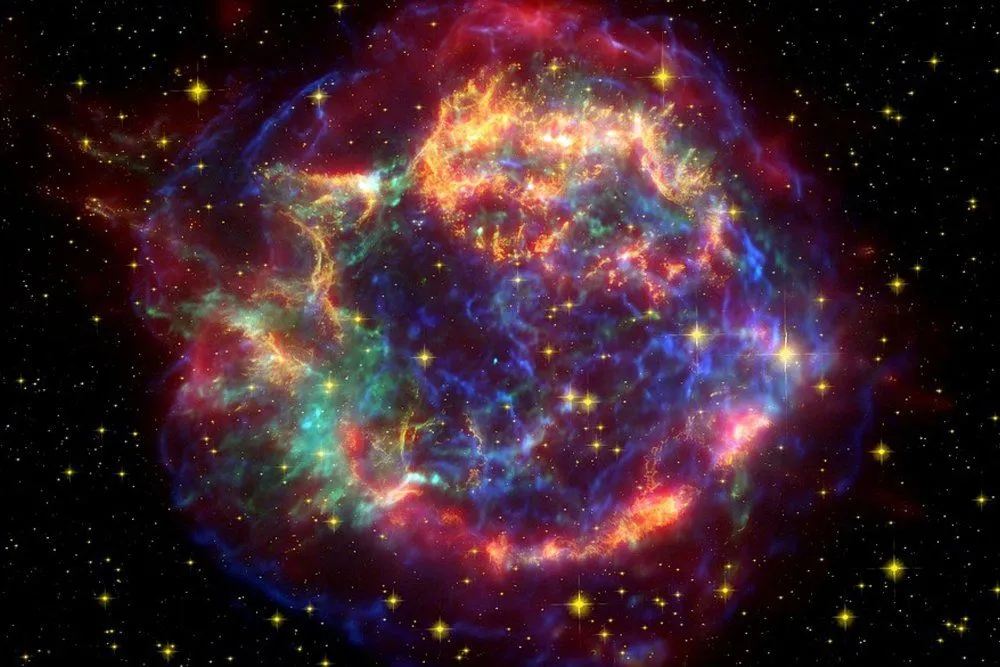
While most scientists argue that the first black holes emerged when the universe initially started expanding, ‘Stellar’ black holes are formed when the core of an extremely big star collapses in on itself. However, supermassive black holes are thought to have come into existence at the same time as the galaxies they are part of.
The one thing common to most if not all black holes is the path they take after their parent star has died. When the fuel of the star reaches its end, the first process that takes place is the conversion of hydrogen to helium, followed by the further burning of helium once the hydrogen runs out too.
The wide range of black-hole sizes is staggering. Hypothetical primordial micro black holes could be as small as an atom; "stellar-mass" black holes, formed from collapsing stars, typically weigh a few to a few tens of solar masses; and supermassive black holes at the centres of galaxies range from about 100,000 to more than 10 billion solar masses (the largest known, in galaxies like A2261-BCG and TON 618, push past 1010 suns).
How Do We Locate Black Holes??
This question at first seems absurd because even light doesn’t escape a black, so how could we possibly locate one, but taking a closer look into the characteristics of black holes, there are a few ways in which they can be remotely and precisely located.
- The first method is to pay close attention to the gravitational aspects of a black hole. Any black hole will cause the neighboring entities to come closer to it and cluster around, ultimately falling into the dense one-way path. As simple as this method sounds, it is not very practical because it depends a lot on chance. It is a trial-and-error method, since numerous other phenomena cause a similar effect on stars and planets.
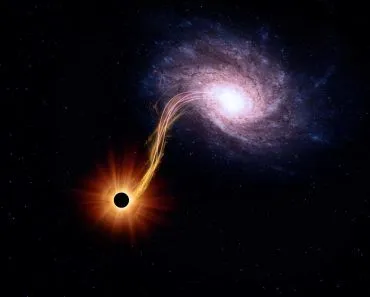
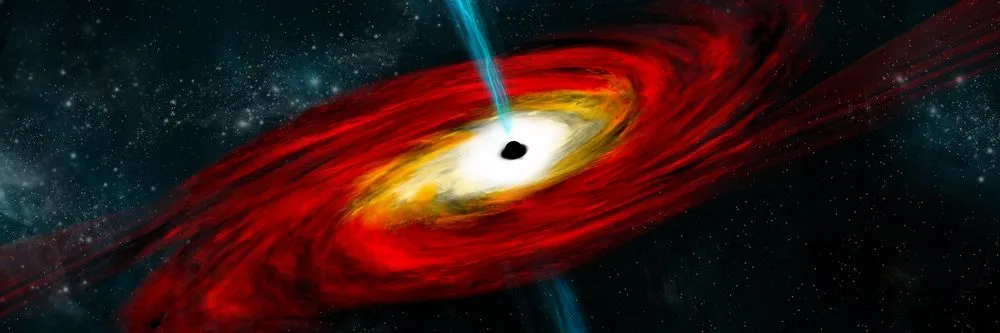
- The second method includes looking for possible X-ray emissions. When matter falls into a black hole, it gets collected in a dense ring-like structure, just at the horizon, and the unparalleled energy is converted to light on some occasions, making it feasible to locate one of these big boys.
How Many Black Holes Are There?
The density of black holes varies over a wide range of properties of space, such as the type of galaxy, type of stars found in it, etc. To estimate the number of black holes in a certain galaxy, the dust and gas formations need to be keenly observed. The behavior of two proximate black holes is affected greatly by the gravitational pull of the other. This very fact puts a limit on the closeness that two black holes can have.
The most rigorous recent estimate, by Sicilia and colleagues in the Astrophysical Journal in 2022, puts the stellar-mass black-hole population of the observable universe at roughly 40 quintillion (4 × 10¹⁹) — about 1% of all the ordinary baryonic matter. On top of that, almost every large galaxy is thought to host a single supermassive black hole at its centre, so there are roughly another 100-200 billion of those. Of all those black holes, only a few hundred have been individually pinpointed: a couple of dozen via X-ray binaries, several hundred through the gravitational-wave detections of LIGO, Virgo and KAGRA, and a handful imaged directly (M87* and Sgr A*).
Supermassive black holes and quasars like 1ES 2344+514 and Fornax A have been found, while intermediate black holes like HLX-1 and stellar black holes like GX 339-4/V821 Ara have also been discovered.
In addition to this, there is something known as black hole systems, which is when more than one black hole is in the same vicinity. These systems have distinctive properties that either stem from the properties of the largest black hole in the system or are a culmination of all the black holes’ effects.
How Many Black Holes Are In The Milky Way?
Narrowing the count from the whole universe down to our own galaxy makes the number far easier to picture. A 2017 census by astronomers at the University of California, Irvine (led by Oliver Elbert, James Bullock and Manoj Kaplinghat, published in Monthly Notices of the Royal Astronomical Society) estimated that the Milky Way holds roughly 100 million stellar-mass black holes. Around 10 million of those are heavyweights of at least 30 solar masses, while the rest are lighter. The team reached that figure not by spotting the black holes one by one, which is impossible for objects this dark, but by working out how many massive stars our galaxy has forged and buried over billions of years.

Sitting apart from that swarm is a single giant: Sagittarius A*, the supermassive black hole anchoring the centre of the Milky Way. It weighs about 4 million times the mass of the Sun and lies roughly 27,000 light-years away, and in May 2022 the Event Horizon Telescope released the first direct image of its shadow.
What about our own cosmic backyard? Reassuringly, there is no confirmed black hole anywhere in the solar system, and no evidence that one has ever passed through it. The nearest known black hole is Gaia BH1, about 1,560 light-years away in the constellation Ophiuchus, spotted in 2022. That is millions of times farther than the most distant planet in our solar system, so Earth is in no danger of being swallowed.
How Many Black Holes Have We Actually Discovered?
There is a huge gap between how many black holes are thought to exist and how many astronomers have actually pinned down as individual objects. The tens of quintillions are a statistical estimate; the number we have genuinely detected is tiny by comparison, though it is climbing fast.

For decades, the main way to catch a black hole was to spot one feeding on a companion star in an X-ray binary, and only about two dozen stellar-mass black holes in the Milky Way have been dynamically confirmed this way. The European Space Agency’s Gaia mission then opened a second route by measuring the tiny wobble a hidden black hole gives its partner star. This revealed a new class of quiet, “dormant” black holes that emit no X-rays at all, including Gaia BH1, Gaia BH2 and Gaia BH3. Announced in April 2024, Gaia BH3 weighs about 33 solar masses, making it the most massive stellar-origin black hole known in our galaxy.
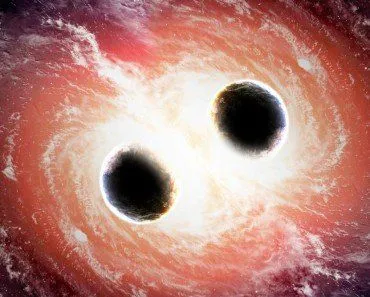
The biggest haul, though, comes from listening rather than looking. Since the first detection in 2015, the LIGO, Virgo and KAGRA observatories have recorded gravitational waves from merging pairs, the great majority of them black holes. The GWTC-5.0 catalogue, released in May 2026, brought the running total to 390 confirmed gravitational-wave events, of which 161 were added from a single stretch of observing between April 2024 and January 2025. Together with the two black holes imaged directly by the Event Horizon Telescope (M87* in 2019 and Sagittarius A* in 2022), the catalogue of individually identified black holes now runs to several hundred and grows almost every week.
How Do We Estimate The Number Of Black Holes?
The first step towards finding an approximate number of black holes in the universe is segregating areas according to certain characteristics, such as closeness to a galaxy, star etc. Upon observing the same set of attributes and applying them to different points of the same area, an average number of black holes can me made, give or take 10-20 holes.
The next step is to find similarities between the multiple key areas and categorize the black holes as supernovae, quasars etc. Because each type of black hole entity has very polar characteristics, it is somewhat possible to locate more of the same type in a range-bounded area.
The scope of research related to black holes is endless. It would take far more than a lifetime to comprehend them in all their glory, but what remains a difficult venture to undertake could also tell us much more about our future and our past. Only time will tell whether the fiction portrayed in movies like Interstellar and The Arrival could indeed be factual!
References (click to expand)
- J Wall. What Is a Black Hole? - NASA. The National Aeronautics and Space Administration
- Miniature Black Hole Surprises Astronomers: It Shouldn't Exist.. Forbes
- How can we detect black holes? - Chandra X-ray Observatory. The Chandra X-ray Observatory
- Physicists observationally confirm Hawking's black hole .... news.mit.edu
- Black holes: Everything you need to know - Space.com. Space.com
- Sicilia, A., et al. (2022). The Black Hole Mass Function Across Cosmic Times. I. Stellar Black Holes and Light Seed Distribution. Astrophysical Journal.
- We share the Milky Way with 100 million black holes. Science News
- Gaia discovers a new family of black holes. European Space Agency
- Gaia spots the Milky Way's most massive stellar-origin black hole (Gaia BH3). European Space Agency
- GWTC-5.0: Updated LIGO-Virgo-KAGRA Catalog. LIGO Laboratory, Caltech