Table of Contents (click to expand)
Bodies do not decompose in the open vacuum of space the way they do on Earth. With no oxygen, normal aerobic bacterial decay is impossible. Instead the body either freezes solid (away from the Sun) or freeze-dries (in sunlight). Inside a pressurized spacesuit or cabin, however, the body’s own bacteria can still cause normal aerobic, then anaerobic, decomposition.
Despite the fact that fewer than 700 people have ever crossed the Kármán line into space, the idea of space travel seems to capture the imagination and interest of people around the world. What would life be like on Mars? Will we ever discover another form of life? What will the fate of our galaxy be? These and so many other questions lie unanswered, and new ones are appearing every day.
With the prospect of longer-term space travel on the horizon, more and more people are wondering… what happens if you die in space? Whether you die on a long journey, lose your grip during a spacewalk (a la Gravity), or simply take the plunge into the vacuum without a spacesuit… what would happen? Would your body decompose? Freeze? Explode?
Short Answer: Depending on the circumstances of your death, you would be frozen, dried out, slowly rotting, or decomposing normally, in which case the rest of the crew would need to find a way to store or dispose of you.
Dying In Space
As you stare up at the stars each night, you may dream about living among them, but you probably wouldn’t want to die out there. To start with the most basic scenario of dying in space, let’s consider simply jettisoning out of a spacecraft without a spacesuit. First of all, you would have between 15 seconds and 2 minutes to live, during which time the water in your body would start to vaporize because of the near-zero ambient pressure, a process called ebullism. Your soft tissues would swell, but you would not actually explode (the skin is strong enough to hold things together).
If you held your breath, the air in your lungs would expand, rupture your lungs, and kill you quite quickly. If you didn’t hold your breath, you would still stay conscious for only about 10 to 15 seconds before blacking out, roughly the time it takes for the last oxygen-rich blood already in your brain to be used up. Almost instantly, unfiltered solar ultraviolet radiation would begin to burn any exposed skin. However, your death would most likely happen as a result of suffocation.
Now, a dead body on Earth would begin to decompose as the bacteria in the air and within the body began the long process of breaking down. However, in space, there is no oxidation, so decomposition cannot occur before the body either freezes (if you are not near a source of heat) or mummifies (all the moisture will be sucked out of your body). If your body was mummified, all biological processes would stop rather quickly, so there would be no further breakdown of your body. Both processes happen rapidly, but that frozen/mummified corpse could potentially sail through the cosmos for millions of years before encountering another object or force that acted on it.

If you are in a spacesuit, however, the situation is quite a bit different. The suit will contain all the exhaled air from the astronaut (even oxygen, although not in the right composition to prevent suffocation), and provided there is enough heat, death in a spacesuit wouldn’t be that different from death on Earth. Regular decomposition, by the bacteria on and inside the body, would then occur, although the bacteria would quickly use up the remaining oxygen. At that point, anaerobic processes would take over, so bacterial respiration would switch to fermentation. However, the likelihood of there being a constant source of heat, to prevent the corpse from falling to near absolute zero, is rather small, unless the body was exposed to consistent solar radiation.
Floating around in a spacesuit as a slowly rotting corpse doesn’t sound ideal, but that wouldn’t be your long-term fate. Eventually, the radiation all around you would begin to break down the material of your spacesuit. The process may take years or even longer, but eventually, when the suit is compromised and the air pressure built up inside is released, the rapid expansion of air would cause a small explosion, destroying the suit and the already weakened, rotting body inside.
Dying En Route To The Future
Finally, for those who are eyeing Mars as their retirement spot, what would happen if someone died on a long space journey inside the ship?
Presently, anyone sent to the ISS (International Space Station) must be in impeccable physical health, and there has never been a death on the space station itself. (The only humans who have actually died in space proper were the three Soyuz 11 cosmonauts in 1971, whose capsule depressurized during re-entry preparations at about 168 km altitude.) However, with longer journeys through space inevitably coming in future decades, new issues are arising. The first concern if a death were to occur is the safety of the remaining crew. A decomposing body is a biohazard, and in the closed atmosphere of a spaceship, the gases, smell and potential pathogens that could be released during the decomposition process are unpleasant, if not downright deadly.

Although NASA does not have publicly released contingency plans for this sort of event, decisions regarding the handling of a dead body would be left with the station commander. The most logical solution would be to keep the corpse inside a pressurized spacesuit, which would not prevent decomposition, but it would limit the exposure to off-gassing. At that point, the body would likely be stored in the coldest area of the ship, much like the protocol in place for submarines (where deceased seamen are stored near the torpedoes, the coldest part of the submarine).
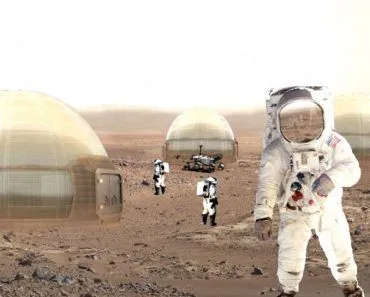
On the ISS, the body could also be stored in one of the airlocks, and potentially returned to Earth on the return journey of a re-supply shuttle. One of the more morbid options, of course, would be to jettison the body into space, as opposed to long-term storage. For longer journeys, due to the assumed “one-way” nature of those trips, returning the body to Earth wouldn’t be as logistically feasible. For example, if someone were to die on Mars, they would likely remain there. To ensure that they were completely free of Earth-based microbes – in order to protect the (relatively) virgin environment of the Red Planet – they would be cremated.
How Fast Would You Die In Space?
So how quickly does the clock actually run out? Faster than most movies suggest. The instant the pressure around you drops to near vacuum, you have only about 10 to 15 seconds of useful consciousness left. That short window is not set by suffocation, it is simply the time it takes for the last of the oxygen-rich blood already inside your brain to be used up. After that you black out, and unless someone restores the pressure within a minute or two, the damage becomes unsurvivable.

We are not just guessing at these numbers. On 14 December 1966, a technician named Jim LeBlanc was testing a spacesuit inside a vacuum chamber at NASA's Manned Spacecraft Center in Houston when a hose worked loose and the pressure around him collapsed to about 0.7 kPa (0.1 psi), well under one percent of normal sea-level pressure. He later recalled feeling the saliva on his tongue begin to bubble, and then he was gone, unconscious in roughly 12 to 15 seconds. Notice what did not happen: he did not explode, and his blood did not flash-boil away. A quick-thinking colleague repressurized the chamber, and LeBlanc came round with nothing worse than a sore ear.
The takeaway is grim but clear. In open space you would not get a long, dramatic farewell. You would get a handful of lucid seconds, and then the lights would go out. If you are curious about exactly how long a person can last on other worlds without a suit, the honest answer is rarely more than a moment either.
Are There Any Dead Bodies In Space Right Now?
Here is the question that really keeps people up at night: is anyone actually out there right now, drifting between the stars? The reassuring answer is no. No human corpse is floating freely through space. The three cosmonauts who remain the only people ever to die in space itself, the crew of Soyuz 11 in 1971, were brought home and buried on Earth.

What is out there is ashes. A small industry of memorial spaceflights, led by a Houston company called Celestis, has been launching cremated remains beyond the atmosphere since the late 1990s. Gene Roddenberry, the creator of Star Trek, was among the early passengers. The two most poignant cases belong to scientists. When NASA's New Horizons probe swept past Pluto on 14 July 2015, it carried a small canister holding some of the ashes of Clyde Tombaugh, the astronomer who discovered Pluto back in 1930. Those ashes are now sailing out of the solar system, the first human remains ever to make that trip.
Eugene Shoemaker, the planetary geologist who had once hoped to walk on the Moon himself, went the other way. A capsule holding about 28 grams of his ashes rode NASA's Lunar Prospector into orbit around the Moon, and on 31 July 1999 the spacecraft was deliberately steered into a crater near the lunar south pole. To this day, Shoemaker is the only person whose ashes rest on the Moon.
So what do we know? Given our new fascination with exploring further and deeper into the expanse of space, there is no doubt that people will die in the great void of the solar system. While it hasn’t happened yet, it’s only a matter of time, and each tragic death will have to be handled based on the particular details of the mission.
References (click to expand)
- Final Report of the International Space Station Independent .... The National Aeronautics and Space Administration
- The Body at Vacuum. Engines of Our Ingenuity, University of Houston.
- New Horizons Mission Salutes Pluto's Discoverer. Johns Hopkins University Applied Physics Laboratory.
- Eugene Shoemaker. The Planetary Society.