Table of Contents (click to expand)
The universe is huge and there are a lot of things we still don’t know about it. Scientists have developed different technologies to help us learn more about space, like telescopes. They’ve also developed ways to measure distance, like light years. The edge of the universe is constantly moving further away from us because the universe is expanding. It’s impossible to reach because you would need to go faster than the speed of light and the universe is expanding faster than that.
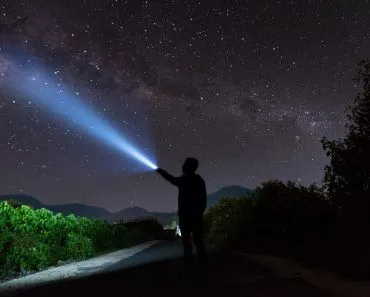
When a human stares out into the deepest depths of space with the naked eye, they can see only a minute fraction of our own galaxy, the Milky Way. The stars are still awe-inspiring, but in recent decades, the advancement of human knowledge about the cosmos has been nothing short of spectacular.
Whereas so many questions about space used to fall into the realm of science fiction or pure speculation, new technology and interstellar ambitions have brought those questions into a more realistic framework.
What is Dark Energy? Is time travel possible? What is our place in the universe? It’s natural for curious, knowledge-seeking beings to ask big questions like this, but as our gaze travels further and further into the darkness of space, one question stands out… Can we reach the edge of the universe?
Discovering The Size Of The Heavens
When humans wanted to take a closer look at the heavens, telescopes were invented, and since then, our fascination with space has hardly slowed. When larger telescopes were eventually developed, we could peer much further, all the way to other galaxies that lay thousands of light-years away. That wasn’t enough though, so massive space telescopes, like the Hubble Telescope and the JWST (NASA’s flagship infrared space telescope, launched in December 2021 and now returning groundbreaking science — you can read about it here) have been created.
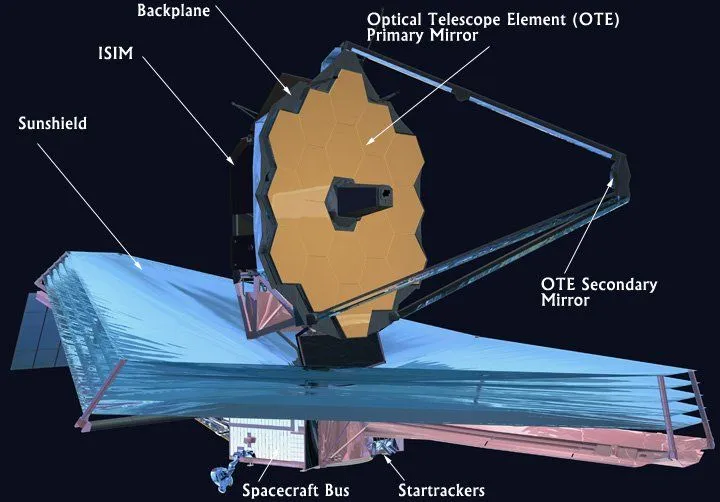
These space telescopes, and those launching in the coming years, are able to see deep into the heart of our universe, areas that are billions of light-years away. Thanks to these incredible marvels of engineering and astronomical insight, we have a more complete image of our visible universe.
Now, the visible universe consists of the matter, galaxies, and phenomena that can be seen by us from a single point (Earth), as a result of light and other signals from those compounds, events, and distances have had enough time to reach us since the cosmos began expanding. We have been able to detect light from approximately 13.8 billion light-years away, which is how we know that the Big Bang happened roughly that long ago.

However, that isn’t the whole story. Our universe is expanding, so while the light from 13.8 billion light-years away is just reaching us now, that same point of origin has spent the last 13.8 billion years expanding away from Earth, placing it a total of nearly 46.5 billion light-years away. We can’t see that far, but we can detect the traces left behind and draw conclusions, which makes it “observable”.
In other words, our observable universe is roughly 93 billion light-years in diameter, but even if you traveled for 93 billion years at the speed of light, would you be able to get there?

The Mysterious “Edge” Of The Universe
Whenever scientists and space experts start discussing the speed of light, something very strange happens. Consensus disappears and people all seem to have their own opinion about the nature, limitations, and special qualities of this holy grail – the universal speed limit.
What most scientists do agree on is that nothing can move faster than the speed of light; even light and other massless particles and gravitational waves can only move at the speed of light in a vacuum. Having this universal constant has allowed us to learn countless things about the cosmos, and is also the basis of the term “light-year”, which is the distance that light travels through a vacuum in one Julian year. The “speed of light” is approximately 300,000,000 meters per second (roughly 186,000 miles per second).
This gets a bit tricky when you talk about traveling to the edge of the universe, since the universe is not only expanding, but also accelerating. We know this because the galaxies at the far reaches of the observable universe appear to be moving faster than those galaxies closer to us. What is truly baffling is that they appear to be moving FASTER than the speed of light, which would appear to break the golden rule of reality – nothing moves faster than light!
However, we live in a Dark Energy universe, and while the composition, origin, and ultimate purpose of dark energy is not known, we do know that it is causing this seemingly impossible acceleration that drives galaxies beyond the boundaries of physics. In simple terms, the space between galaxies is also expanding, which drives the edge of the universe further and further from us every single second.
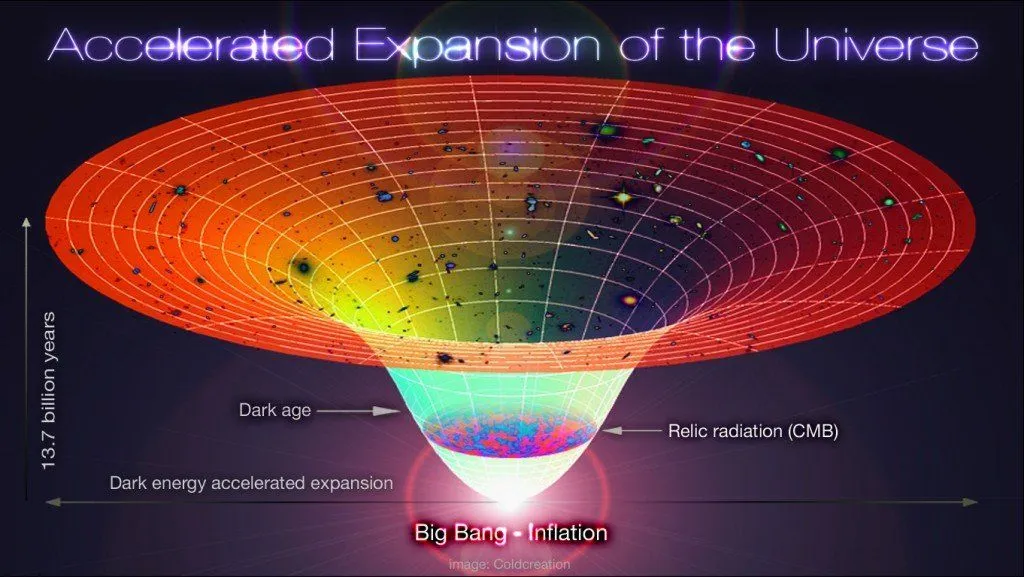
Therefore, to even dream of reaching the edge of the universe, a spaceship would have to go as close as physically possible to the speed of light, somewhere around 99.9999999%. Unfortunately, since universe is technically expanding faster than the speed of light (due to the expansion of space between matter), it is theoretically impossible to ever reach the “edge” of the universe, since it will always be moving away faster than we could ever move towards it!
What Is The Speed Of Light, Exactly, And Why Can Nothing Beat It?
We keep leaning on the speed of light as the universe’s ultimate speed limit, so it is worth pinning down exactly what that number is. The current scientific consensus is not a rough estimate at all. Light travels through a vacuum at exactly 299,792,458 meters per second (about 186,282 miles per second, or roughly 671 million miles per hour). Notice the word “exactly”. Since 1983, that figure has not been something we measure and refine; it is a defined constant. The metre itself is now defined as the distance light covers in a vacuum in 1/299,792,458 of a second, which is why standards labs like the NIST list the value with an uncertainty of exactly zero.

Stranger still, this speed refuses to change no matter how you chase it. One of the pillars of Einstein’s special relativity is that light in a vacuum moves at the same speed for every observer, whether you are standing perfectly still or streaking along in a rocket. You simply cannot catch up to a beam of light and watch it slow down.
That invariance is also why no spaceship, however advanced, can ever truly reach light speed. As an object with mass accelerates, a quantity called the Lorentz factor climbs, and the energy needed to keep speeding up climbs right along with it. As your velocity edges toward that of light, the Lorentz factor races toward infinity, meaning it would take an infinite amount of energy to cross the finish line. In short, the universe hands massless light a ticket that nothing built from matter can ever afford to buy.
Is There Actually An Edge, And What Lies Beyond It?
When we talk about the “edge” of the universe, it is tempting to picture a wall, a fence, or some cosmic curtain that you could press your hand against. In reality, no such boundary exists. What we call the edge is really a horizon, and it behaves a lot like the horizon you see when you stand on a beach and stare out at the ocean. You cannot see past it, but you know full well that the water keeps going.

This particular horizon is drawn by two things: the speed of light and the age of the cosmos. Since the Big Bang happened roughly 13.8 billion years ago, light from anything farther away simply has not had enough time to reach us yet. That boundary marks the limit of our observable universe, a bubble centered on Earth that stretches about 46.5 billion light-years in every direction. Here is the strange part though… every other observer, on every other planet in every other galaxy, sits at the exact center of their own bubble too.
That is possible because the universe has no center at all. As NASA puts it, the Big Bang was not a firecracker going off at a single spot in space; it was space itself expanding everywhere, all at once. So what lies beyond our horizon? More universe. Measurements of the faint afterglow of the Big Bang show that the cosmos is geometrically flat, which strongly hints that it is infinite, filled with an endless sea of galaxies whose light will simply never have the time to travel far enough to greet us.
How Long Would It Take To Reach The Edge At The Speed Of Light?
If our observable universe is about 46.5 billion light-years across in every direction, you might reasonably guess that a beam of light would need roughly 46.5 billion years to cross it. Unfortunately, the honest answer to “how long would it take?” is far stranger: for most of the cosmos, the journey would take longer than forever, because you could never arrive at all.
The culprit, once again, is the accelerating expansion of space. Cosmologists talk about a cosmic event horizon, which currently sits about 16 billion light-years away. Any galaxy beyond that line is already lost to us. Even if you fired off a spaceship (or a beam of light) toward it today, moving at the absolute maximum speed the universe allows, the space in between would stretch faster than you could ever close the gap. It is a bit like sprinting up an escalator that is racing downward faster than your quickest stride.
The consequences are humbling. Of all the galaxies we can currently see scattered across the sky, roughly 94% are already permanently out of reach, even for something traveling at the speed of light. For the small minority still within our grasp, actually getting there would swallow up billions of years of Earth-time. So while the edge of the universe makes for a thrilling destination, the cosmos has quietly rigged the race so that we can admire it from afar, but never touch it.
Would You Even Survive The Trip?
Now, if you have been doing the math, you’d see that even going that close to the speed of light, the trip to the edge of the universe would take billions of years! Since human beings are mortal, it would be impossible to even survive the trip, right?
Well, due to the peculiar intertwined nature of gravity, speed, and time, traveling that close to the speed of light would actually cause time to pass at a slower rate from the perspective of those who are doing the traveling. While the specifics require a deep dive into Einstein’s theory of relativity, try to understand that at that intense speed, near the maximum velocity of anything in the universe, your journey to the end of the universe would only seem like a century or so had passed to the traveler, even if tens of billions of years had passed from the perspective of Earth.

Mind-boggling…. I know. It’s a paradox that has puzzled scientists for the better part of a century, but it’s true! The perception of time by the body and mind can be completely different than what someone else sees and experienced based purely on your point of inertial reference.
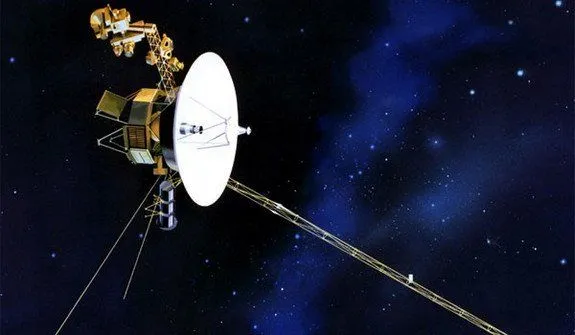
The most notable obstacle at this point is light-speed technology. The fastest ship that humans ever sent into the cosmos (Voyager 1) is traveling at about 11 miles per second, was launched back in 1977, and took 35 years to cross the heliopause and enter interstellar space (in 2012). The next star it will pass close to is Gliese 445, and that flyby is still around 40,000 years away.
With all of this information, if you’ve been following along with these rough calculations and truly mind-expanding distances, you can see that reaching the edge of the universe consists of some major obstacles. Some of them currently appear impossible to overcome (the perpetually expanding and accelerating universe, for one), but who knows where science and technology will take us.
There is some good news… if we put any stock in science fiction, then faster-than-light travel, wormholes, and teleportation may all come to fruition in the next few centuries! With the help of those wild ideas and endless possibilities, then we may get a chance to peek at the edge of the universe, but until then, it will remain out of humanity’s reach!
References (click to expand)
- Brief Answers to Cosmic Questions - CfA Harvard. The Center for Astrophysics | Harvard & Smithsonian
- Where's the Edge of the Universe? - Space.com. Space.com
- How long would it take to reach the edge of the reachable .... Stack Exchange
- Question Everything: Journey to the Edge of the Universe. futurism.com
- Observable universe. Wikipedia
- Cosmological horizon. Wikipedia
- Speed of light in vacuum. NIST Reference on Constants, Units, and Uncertainty
- Speed of light. Wikipedia
- Webb Telescope and the Big Bang Q&A. NASA Science
- Does the Universe have an edge? BBC Sky at Night Magazine
- Where is the centre of the universe? UC Riverside Physics FAQ