Because of axial precession, a slow ~25,800-year wobble in Earth’s rotational axis, the zodiac constellations have drifted by roughly one sign since the dates were fixed some 2,000 years ago. So by the sky’s actual alignment, the sign you call “yours” is probably wrong. (Astrology itself, of course, is not a science.)
The zodiac has undergone periods of reinvention as it has passed between different cultures, because each culture has picked out shapes and patterns in the sky that are unique to their history. Rivaling each other in size and forms, the zodiacal signs have been viewed as totems by which to identify oneself, and are thought to represent certain behavioral characteristics and personality traits.
While many researchers believe that the impetus for development of the zodiac was derived from Babylonia, archaeological discoveries (from the Lascaux cave in France) indicate that their origins can be traced back to the Paleolithic Age.
Originally fixed roughly two thousand years ago, the zodiac signs are based on the position of the sun relative to the constellations over the course of a year.
However, since the inception of the zodiac system, a slow change in the orientation of Earth’s rotational axis has altered our view of the zodiac. The stars have gradually drifted westward along the ecliptic, which has resulted in the constellations becoming misaligned with their corresponding zodiac signs.
This means that the zodiacal sign you consider as “yours” is probably incorrect! (To be clear, this is a quirk of astronomy, not an endorsement of astrology, which is not a science.)
The Ecliptic: The Sun’s Apparent Motion
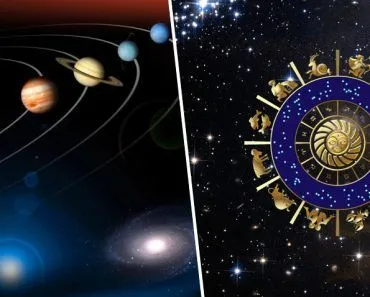
The Zodiac Is A Belt Of Constellations Appearing On Either Side Of The Ecliptic.
The ecliptic is one of the most important tools in an astronomer’s arsenal, but many readers may be completely unaware that it exists. Imagine a line connecting the Earth to the Sun in a manner such that the Earth and Sun are at the two ends of the line. As the Earth revolves around the sun, the sun also seems to be moving against the backdrop of stars.
However, this is just an illusion, as the sun isn’t actually moving! The ecliptic is just an imaginary line that traces out this annual path of the Sun in the sky. Traveling along the ecliptic are also the moon and planets, while straddling it are the constellations that form the zodiac.
This imaginary line points to different stars in the celestial sphere throughout the Sun’s year-long journey. The constellations that this imaginary straight line points to during its trip throughout the year are known as the constellations of the zodiac.
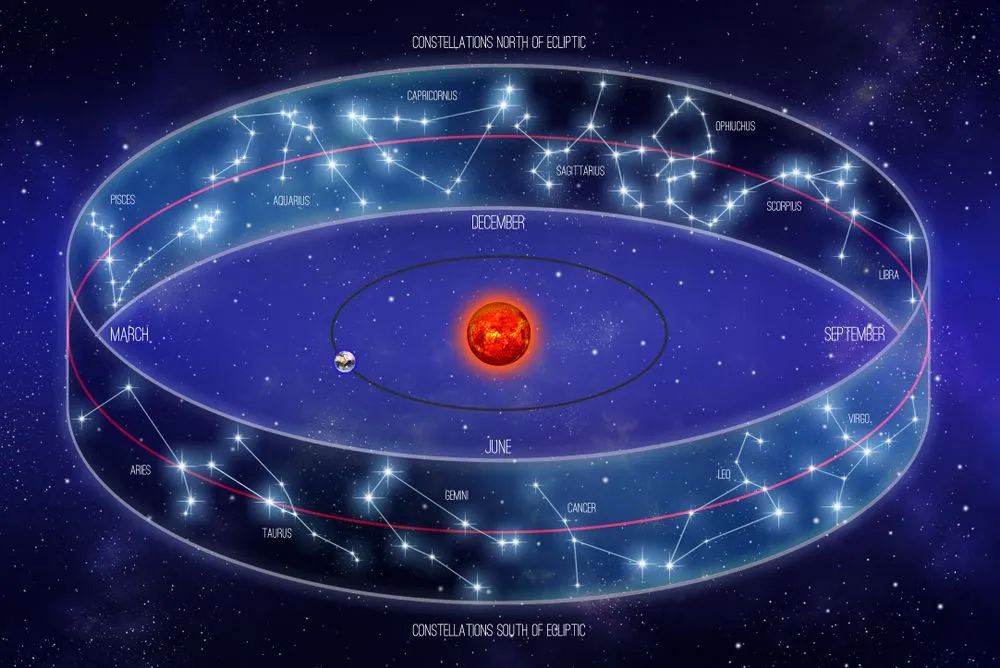
Every year, the Sun moves around this band of constellations, making a complete circuit. A different constellation is visited every month, which is why the annual path of the Sun is known to be divided into 12 signs of the zodiac, where each sign occupies a 30-degree sector of the sky.
However, the constellations are not distributed evenly along this belt.
In reality, a wide variation can be observed in the sizes of the astronomical constellations. Owing to this variation in size, and Earth’s velocity around the sun, which changes with its distance from the Sun (Kepler’s law; Earth moves faster when closer to the Sun, and slower when farther away), the sun traverses the area covered by different constellation on the celestial sphere in different time periods.
For instance, the line from Earth through the Sun points to the largest zodiac constellation, Virgo, for about 45 days, whereas it points to the smallest, Scorpius, for only 7 days.
Following the boundaries laid out in Délimitation scientifique des constellations (Delporte, 1930), the IAU recognizes 88 constellations today, over half of which can be attributed to the ancient Greeks, who consolidated the learnings of the primordial civilizations of Babylon, Egypt and Assyria.
While a popularly held view is that there are 12 constellations of the zodiac, there are actually 13 constellations, namely, Capricornus, Aquarius, Pisces, Aries, Taurus, Gemini, Cancer, Leo, Virgo, Libra, Scorpius, Sagittarius, and Ophiuchus. The rather large constellation of Ophiuchus was left out by the Babylonians, even though it has always been a part of the Sun’s path in the sky. The Babylonians wanted 12 tidy slices to match the 12 months of their calendar, so they simply dropped one. The sun actually passes in front of Ophiuchus for roughly 18 days each year (about November 30 to December 18), which is longer than it spends in neighboring Scorpius.
This is the kernel of truth behind the “NASA changed the zodiac” story that goes viral every few years. Back in 2016, a NASA educational post pointed out that the sun moves through 13 constellations, not 12, and that precession has shifted the dates. Headlines twisted that into the claim that NASA had invented a 13th sign and rewritten everyone’s horoscope. NASA did no such thing. As the agency put it, “we didn’t change any zodiac signs… we just did the math.” NASA studies astronomy, a science built on evidence and data; it does not practice astrology, which is not a science and has no bearing on your personality or your future.
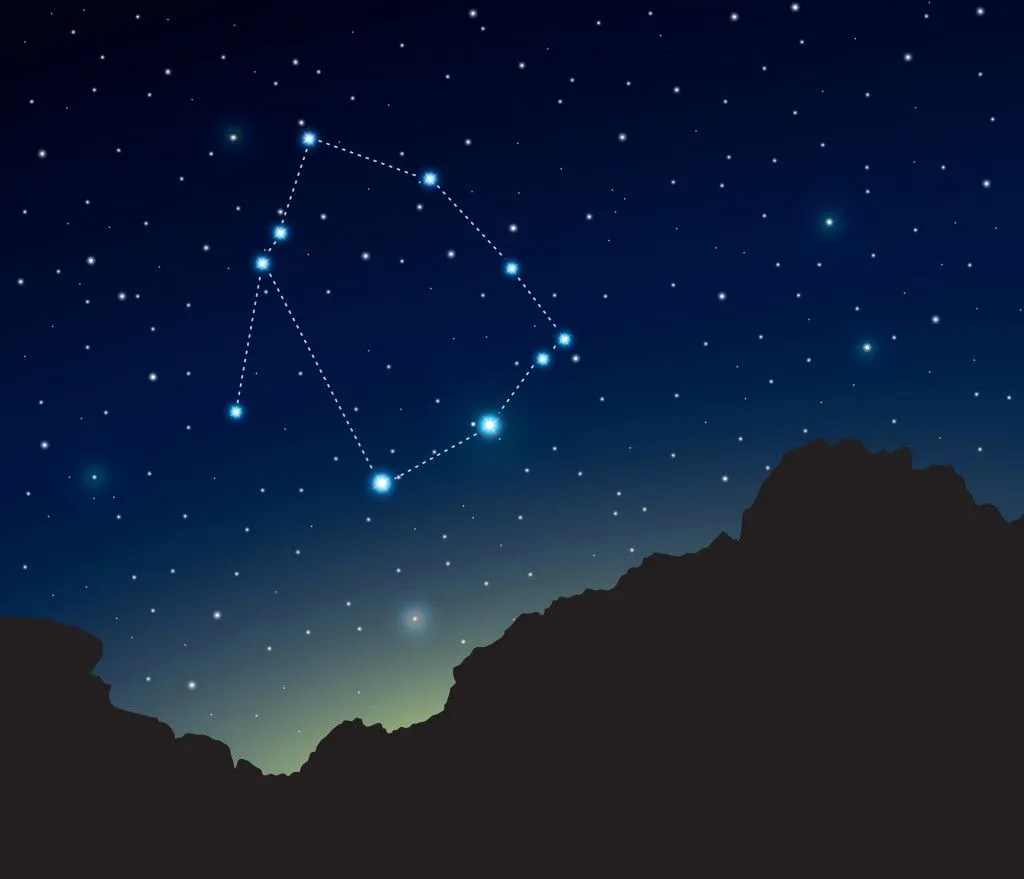
The Celestial Sphere
With Earth as its center, the celestial sphere is a gigantic, fictitious sphere of infinite radius used to describe the positions of heavenly objects. Every object within or on the celestial sphere has set coordinates, though distant objects that are barely moving (like stars) are treated as fixed objects.
If Earth’s axes (North pole and South pole) were to be indefinitely extended into space, the two points where it would intersect the celestial sphere would give us the celestial North and South poles. Polaris is located very close to the North celestial pole.
The extension of Earth’s equator into the celestial sphere gives us the celestial equator, which divides the sphere into two halves, just as the equator divides Earth into northern and southern hemispheres. All heavenly bodies can be identified by their coordinates on the celestial sphere.
At present, Polaris is known as the north star. However, when the Egyptians built the pyramids, another star, called Thuban, was the north star, while the north star in 15,000 BC was Delta-Cygnus. In other words, the north pole is not always pointing in the same direction. Eventually, in about 12,000 years, Polaris will be replaced by another star, Vega.
Precession: What Causes The Shift
The Earth rotates on its spin axis, an imaginary line passing through the North and South poles. This axis happens to undergo precession, which is a motion by which the axis slowly changes the direction in which it is pointing.
As a result, the alignment of the poles with the stars is altered, and a change in the celestial coordinates is observed.
Like a toy top that has been set spinning, the axis of the earth maintains a fixed direction until nudged, when it then changes the direction of this axis.
The Greek astronomer Hipparchus first identified this gradual westward shift around 130 BC, while attempting to accurately estimate the length of a year. During an equinox, which occurs twice a year, the sun sits at the intersection of the ecliptic and celestial equator.
While comparing earlier observations (made roughly 150 years before, by Timocharis of Alexandria) with his own, Hipparchus noticed that the sun’s position had changed, as the intersections had moved by a couple of degrees. Hipparchus’ work was later continued by Ptolemy in Tetrabiblos.
Now, one may wonder why this happens. A spinning Earth bulges at the equator, owing to which the shape of the Earth isn’t a perfectly round (or uniform sphere), but is instead an oblate spheroid (a slightly flattened sphere). Basically, the Earth is wider at the equator than it is at the poles. The Earth’s equatorial radius (6378.1 km) differs from its polar radius (6356.8 km).
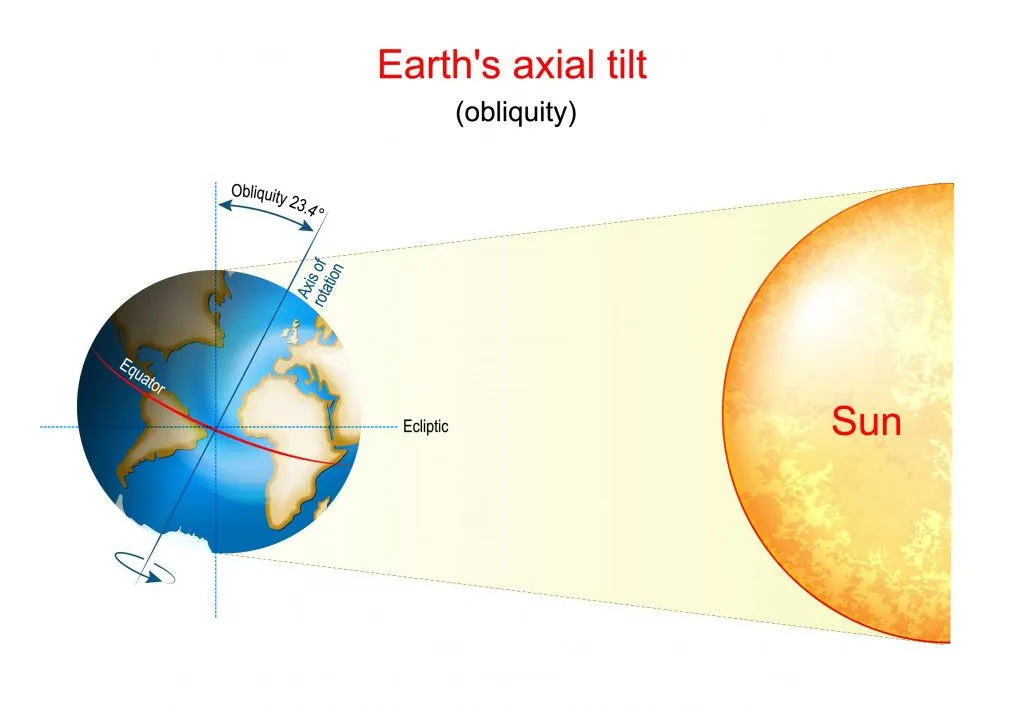
Since the Earth’s rotational axis is tilted, the equatorial bulge is also tilted relative to the direction of forces from the sun. Due to this tilt, the gravitational force experienced by Earth at the two poles differs. The gravitational force experienced by the different parts of the equatorial bulge of the Earth is also slightly varied; it is stronger on the side near to the source of external gravity, and weaker on the side farther from the source of external gravity.
The effect of this gravitational action of the sun on the different sides of the bulge manifests as the Earth being pulled in the direction normal to the ecliptic, so as to decrease the tilt angle, as if an attempt is being made to straighten up the leaning Earth.
However, the torque (the force trying to get Earth to stop leaning) does not affect the axial tilt as the Earth is rotating; instead, it changes the angular momentum perpendicular to the spin axis, i.e., it causes the Earth’s spin axis to move in a circle in the sky, resulting in the Earth wobbling, much like a spinning top.
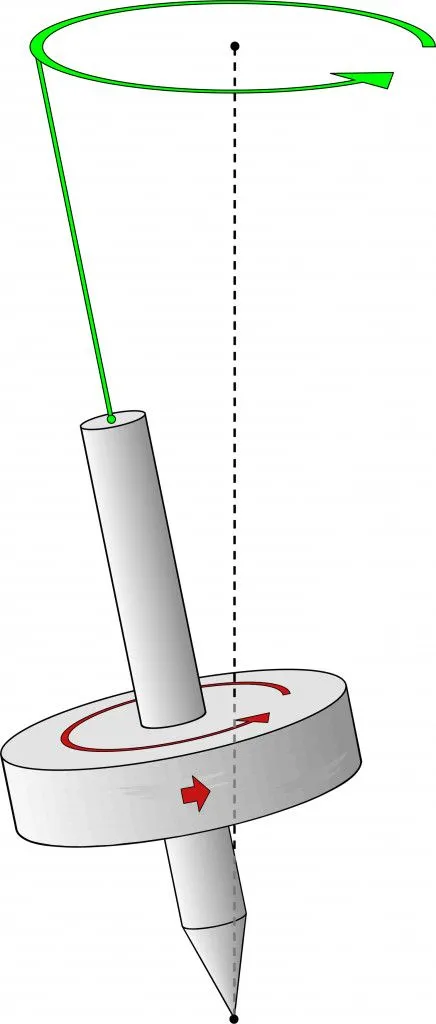
It would be close to impossible to study precession using one’s earthbound observations, given the extremely slow nature of the phenomenon; one full circuit of this movement takes about 25,800 years (roughly 26,000), which is a rather long stretch of time when the short length of a human life is considered.
Over the past two thousand years or so, precession has shifted the intersection point between the celestial equator and the ecliptic by nearly one-tenth of the way around the band. This means the constellations now lag the traditional sign dates by close to a full sign, about a month. So at the spring equinox the sun now rises in front of Pisces, where two millennia ago it rose in Aries!
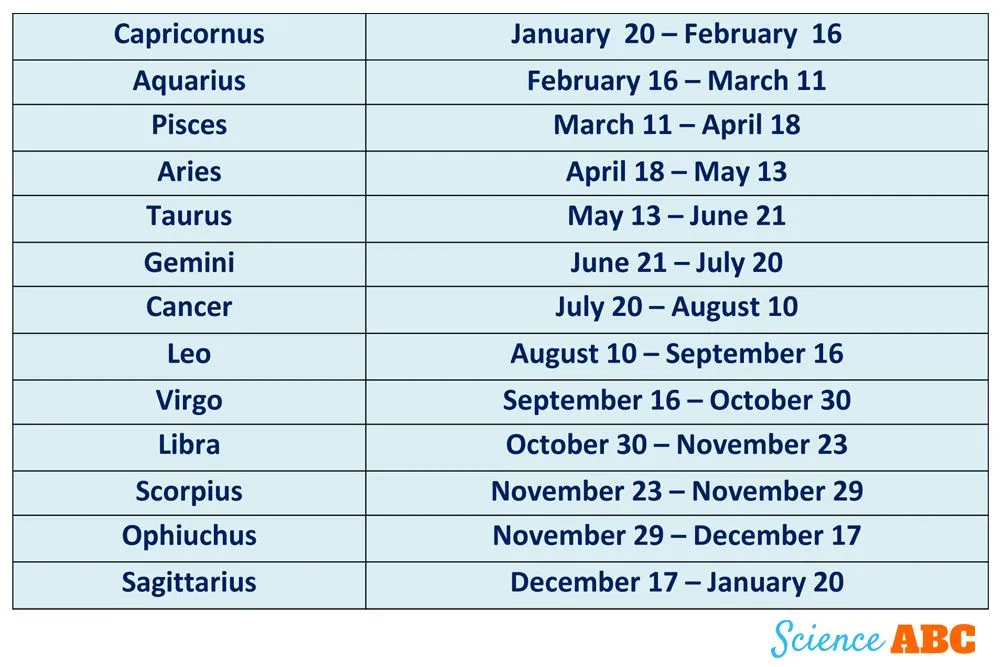
The corrected dates for the zodiacal constellations are as follows:
Who Decided Where One Constellation Ends And The Next Begins?
For most of history, the constellations had no agreed edges. Star maps drawn in different countries placed the borders in different spots, and a faint star sitting near the join of two constellations might be assigned to either one, depending on whose chart you trusted. That vagueness turned into a real problem once astronomers needed a single, unambiguous address for every object in the sky.

The fix came from the International Astronomical Union (IAU). In 1922 it fixed the official list of constellations (the 88 we still recognize today) and gave each a three-letter abbreviation, and it handed the Belgian astronomer Eugène Delporte the task of drawing exact borders between them. His boundaries were adopted in 1928 and published in 1930 under the title Délimitation scientifique des constellations, the very work our article quoted earlier. After Delporte's atlas, every point in the sky belonged to one constellation and one only.
Rather than tracing wobbly outlines around the star patterns themselves, Delporte drew the borders as neat arcs of constant right ascension and declination, the sky's equivalent of lines of longitude and latitude, fixed to where those grid lines lay in the year 1875. There is a curious side effect to that choice. Because of the very same precession that shifts the zodiac, the 1875 grid has slowly drifted, so today those officially "straight" constellation boundaries appear slightly tilted against a modern coordinate grid.
This is also why the boundary between Pisces and Aries has quietly become the most talked-about line in the sky. The March equinox point, the spot astronomers still call the First Point of Aries, marked the western edge of Aries when the Greek astronomer Hipparchus defined it around 130 BCE. Precession has since carried it roughly 30 degrees westward, and it now lies inside Pisces, close to the border with Aquarius (it is expected to cross into Aquarius around the year 2600). The name simply stuck for tradition's sake, even though the "First Point of Aries" has not actually been in Aries for about two thousand years.
So What Is Your ‘Real’ Star Sign? The Dates The Sun Is Actually In Each Constellation
Put precession and the uneven constellation sizes together, and the dates the Sun genuinely spends in front of each zodiac constellation no longer match the tidy, roughly 30-day slices printed in a horoscope. The astrological dates were locked in around two thousand years ago, but the sky has drifted on since. The table below shows approximately when the Sun actually passes through each of the 13 zodiac constellations today. (The exact day can slip by one either way from year to year, and notice how lopsided the spans are, from a generous 45 days in Virgo down to barely a week in Scorpius.)
| Zodiac constellation | When the Sun is actually in front of it (approximate) |
|---|---|
| Capricornus | Jan 19 – Feb 15 |
| Aquarius | Feb 16 – Mar 10 |
| Pisces | Mar 11 – Apr 17 |
| Aries | Apr 18 – May 13 |
| Taurus | May 14 – Jun 20 |
| Gemini | Jun 21 – Jul 19 |
| Cancer | Jul 20 – Aug 9 |
| Leo | Aug 10 – Sep 15 |
| Virgo | Sep 16 – Oct 30 |
| Libra | Oct 31 – Nov 22 |
| Scorpius | Nov 23 – Nov 29 |
| Ophiuchus | Nov 30 – Dec 17 |
| Sagittarius | Dec 18 – Jan 18 |
So if your birthday falls on, say, July 25, the calendar and your horoscope call you a Leo, yet the Sun on that date now sits in front of Cancer instead. The constellations run close to a full sign behind the calendar the zodiac was originally built on. It is a neat reminder that astrology's dates describe a sky that has since moved on, not the one overhead tonight.
References (click to expand)
- The Constellations | IAU - International Astronomical Union. The International Astronomical Union
- Constellations and the Calendar - NASA - Tumblr. This result comes from nasa.tumblr.com
- What Are Constellations? | NASA Space Place. The National Aeronautics and Space Administration
- Gurshtein, A. A. (1993, January). On the origin of the zodiacal constellations. Vistas in Astronomy. Elsevier BV.
- Magli, G. (2004). On the possible discovery of precessional effects in ancient astronomy (Version 2). arXiv.
- Born under the sign of Ophiuchus? - EarthSky. earthsky.org
- IAU designated constellations - Wikipedia
- First point of Aries - Wikipedia
- When is the sun in each zodiac constellation? - EarthSky