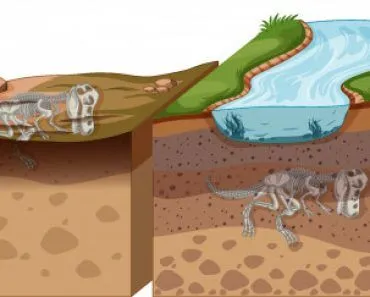
Uniformitarianism (developed by James Hutton, popularised by Charles Lyell, term coined by William Whewell in 1832) holds that the same slow geological processes — erosion, deposition, uplift — we see today have shaped Earth over deep time. Catastrophism (Georges Cuvier, early 1800s) holds that Earth was reshaped by rare, violent events such as floods and impacts. Modern geology accepts both: gradual change punctuated by occasional catastrophes like the Chicxulub asteroid impact, the Permian-Triassic eruptions and Snowball Earth glaciations.
Our understanding of the vastness of geologic time is only about 200 years old, and it was not achieved easily. Even though some ancient Romans and Greeks believed the planet to be very old, our present understanding of the Earth’s age dates back to the late 1700s, as the scientific revolution swept through Europe.
One of the most heated conflicts in the development of scientific thought around time was the relative significance of huge, catastrophic events against the cumulative impact of smaller, slower occurrences.
These two opposing schools of thought have put forward their arguments explaining the processes that have shaped the earth. The evolution of these ideas has not only built the foundation of modern geology, but also contributed to a range of other sciences. Let’s try to properly understand these two theories before making any judgments between them.
Catastrophism
Catastrophism was a hypothesis proposed by Georges Cuvier (1769-1832) centered on paleontological data from the Paris Basin. Cuvier saw something unusual about the fossil sequence. Rather than finding a continuous sequence of fossils, Cuvier discovered many notable gaps. All traces of life would vanish during such discontinuity, and then unexpectedly resurface after a certain length of time.
Cuvier identified such breaks in the fossil sequence as catastrophic extinction events.
This prompted Cuvier to formulate a hypothesis known as catastrophism. It is the notion that the Earth was mostly moulded by rapid, short-lived catastrophic events. (Cuvier himself proposed regional inundations of limited extent; later British natural-theology geologists such as William Buckland linked these to a worldwide biblical flood, which Cuvier had not.)
It suggested, for example, that mountains were formed in catastrophic moments. As a result, entire groups of species perished and were substituted by new ones in a rather short period of time.
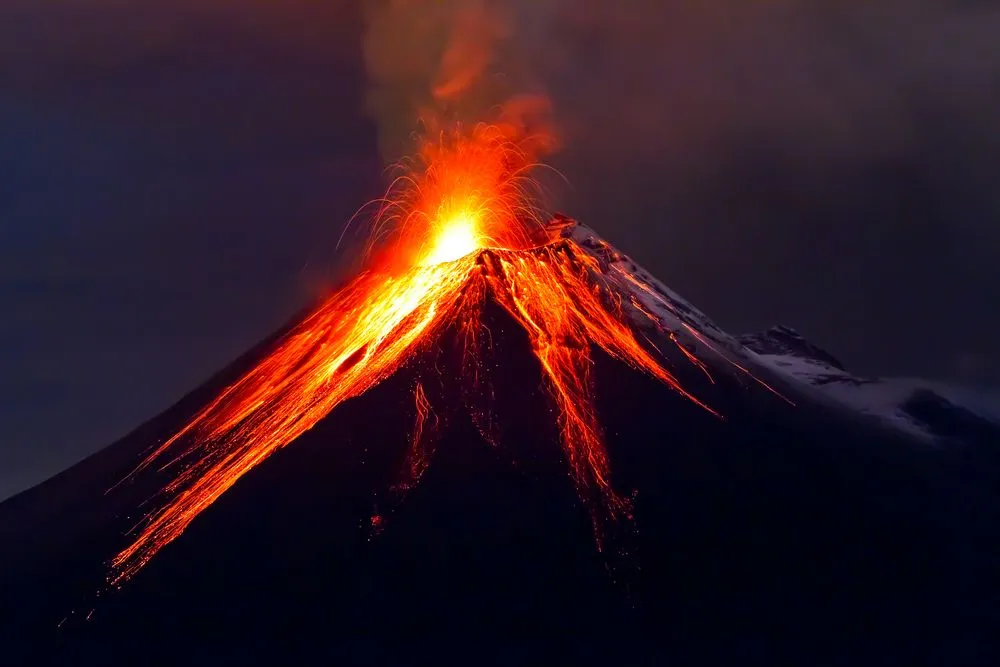
Although Cuvier speculated that the flooding of plains may have been the trigger of catastrophic extinctions, he never justified what could have caused the floods in the first place. Since he never named these factors, many people assumed the extinctions were caused by biblical floods or supernatural actions.
It has long been assumed that nineteenth-century catastrophists held that God was intimately involved in deciding Earth’s history. These individuals firmly believed that catastrophes have gradually affected the planet’s surface since its creation, resulting in the modern Earth.
Uniformitarianism
James Hutton (1726-1797), a chemist and “gentleman farmer” from Scotland, utilized the scientific method to gather facts and developed a different hypothesis. Hutton’s views grew into what is now known as the theory of uniformitarianism. It argues that the laws of the universe are constant and that the processes happening in the present world have been working in much the same way for millions of years – ‘The present is the key to understanding the past.’
Earth-sculpting processes include erosion, deposition, compaction, and uplift. Even though these mechanisms are continual, they occur at exceedingly slow speeds.
Hutton understood that these erosional activities were so slow that it would require an unthinkable amount of time to see major changes in the Earth’s terrain. Before Hutton, no one had successfully proven that geologic processes happened over extended time scales.
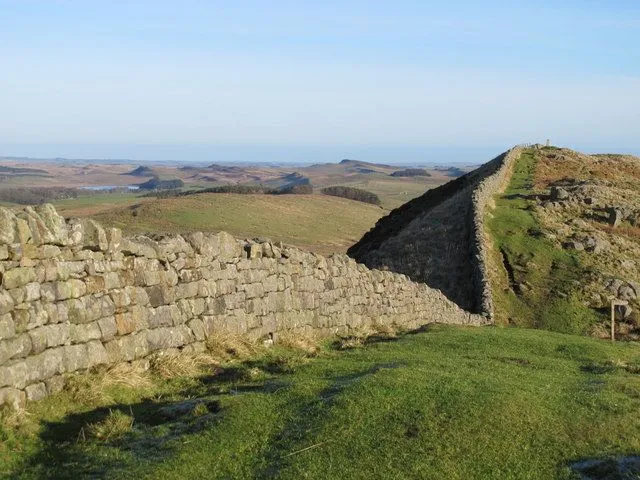
Geologists were able to explain Earth’s characteristics logically using the theory of uniformitarianism. In doing so, they have also discovered an extraordinary finding concerning time and origins: The Earth is tremendously old. Uniformitarianism is the earliest hypothesis in Western science to describe deep time. It is the concept that Earth’s history is so vast that a person cannot possibly comprehend the extent of time that has elapsed on the planet.
Hutton’s views were unconventional for his day and, even today, are difficult for the majority of people to grasp, let alone adopt. Hutton developed the underlying ideas; Charles Lyell (1797-1875) systematised and popularised them in his Principles of Geology (1830–33), and the term "uniformitarianism" itself was coined by William Whewell in an 1832 review of Lyell’s work. Lyell travelled to the Paris Basin to study the fossils that inspired the theory of catastrophism. When Lyell studied the huge extinction episodes, he came to an opposite conclusion. He saw a pattern of recurrent depositional environments and repeating extinctions.

It pointed out that there were mechanisms that drove these events to occur again and again. Lyell viewed these events as happening over huge lengths of time, although they looked “sudden” with respect to the vastness of time recorded in the rocks.
Lyell had a similar effect on our knowledge of the origin of life. He had such an impact on Darwin that he imagined evolution as a kind of biological uniformitarianism.
Why Did Uniformitarianism Require an Ancient Earth?
Here is the hidden demand buried inside uniformitarianism: if rivers, waves, and rain reshape the land only a hair at a time, then a young Earth simply does not give them enough time to finish the job. To explain the world we see today using nothing but the slow processes we can watch, you need an almost unimaginable amount of time.

Take the Grand Canyon. The Colorado River only began cutting it about 5 to 6 million years ago, yet it has carved a gorge roughly 446 km (277 miles) long with walls close to a mile (about 1.6 km) high. The river lowers its bed by a tiny fraction of a millimeter each year, so the sheer size of the canyon is really a measure of time: millions of years of patient scraping. Multiply that logic across entire mountain ranges, sediment beds kilometers thick, and coastlines worn back for miles, and a few thousand years falls hopelessly short.
James Hutton reached exactly this conclusion in the 1780s. Standing at Siccar Point on the Scottish coast, he found near-vertical layers of ancient rock overlain by gently tilted younger sandstone, a junction geologists now call an unconformity. For those older rocks to be laid down, hardened, tilted on end, eroded flat, and then buried again under fresh sediment demanded staggering spans of time. His companion John Playfair later wrote that "the mind seemed to grow giddy by looking so far back into the abyss of time," and Hutton himself concluded in his 1788 Theory of the Earth that he could find "no vestige of a beginning, no prospect of an end." Uniformitarianism did not merely allow an old Earth. It demanded one, because slow causes only add up to a finished planet if you grant them deep time to work in.
What Are Some Real Examples of Uniformitarianism and Catastrophism?
Both ideas stop feeling abstract once you attach them to real places you could actually visit. Here are the clearest examples geologists point to for each.

Uniformitarianism (slow and steady):
- The Grand Canyon, carved grain by grain by the Colorado River over the last 5 to 6 million years.
- Erosion by running water, wave action pounding a coastline, and the steady downstream transport of sediment, the very processes Hutton watched in Scotland.
- The layer-by-layer buildup of mud and sand on lake and sea floors, which slowly compacts into the stacked rock beds you see in a canyon wall.
- Radioactive decay, which ticks along at a fixed rate because the laws of physics stay constant, letting geologists read the age of a rock like a clock.
Catastrophism (rare and violent):
- The Missoula floods at the close of the last Ice Age, roughly 15,000 to 17,000 years ago. An ice dam holding back glacial Lake Missoula failed again and again, and each collapse sent an estimated 10 to 20 million cubic meters of water per second racing across eastern Washington, the largest freshwater floods known on Earth. In a matter of days they gouged out the scarred landscape now called the Channeled Scabland. Geologist J Harlen Bretz proposed this megaflood in the 1920s and was ridiculed for decades before the evidence proved him right.
- The Chicxulub asteroid impact about 66 million years ago, which ended the age of the dinosaurs.
- Giant volcanic outpourings such as the Siberian Traps, tied to the largest mass extinction in Earth's history.
The modern view is that both lists are equally real. The same unchanging laws of physics produced the gentle Grand Canyon and the violent scablands. Neither one needs a supernatural push.
Conclusion
Geologists now recognize that many of the processes that shaped the world in the past are no longer present. The early Earth, for example, was regularly bombarded by massive pieces of cosmic debris. Modern plate tectonics likely did not operate during Earth’s first ~1 billion years; current evidence suggests plate-tectonic processes were established by around 3.0–3.5 billion years ago, although the exact onset and how "modern" early tectonics were remain actively debated.
However, we also know that catastrophic occurrences can be entirely understood through ordinary physical processes. These are not the disasters imagined by 17th-century preachers, who were forced to invoke mystical forces. They are events that follow standard physics, but are so large and so rare that they reshape Earth in ways gradual processes never could.
Modern geology synthesises both views, sometimes called actualism (or "actualistic catastrophism"): the same physical laws have always operated, but Earth’s history is also punctuated by extraordinary events. The clearest case is the Chicxulub asteroid impact off the Yucatán Peninsula, ~66 million years ago — first proposed by Walter and Luis Alvarez in 1980 from an iridium anomaly, with the buried crater confirmed in 1991, and a 2024 isotope study identifying the impactor as a carbonaceous (C-type) asteroid from the outer Solar System. Other now-recognised catastrophes include the Great Oxidation Event (~2.4 billion years ago), Snowball Earth glaciations (~720–635 million years ago), the Permian-Triassic mass extinction driven by the Siberian Traps eruptions (~252 million years ago), and the Toba supervolcanic eruption (~74,000 years ago). When we consider Earth’s history as a series of recurring but rare events, uniformitarian processes account for most of it, but the rare catastrophes have repeatedly reset the rules — and we have every reason to assume that similar incidents will undoubtedly occur again in the future.
References (click to expand)
- Uniformitarianism: Charles Lyell - Understanding Evolution. University of California, Berkeley
- Uniformitarianism | The Foundation of Modern Geology. Urbana-Champaign
- Catastrophism | The Foundation of Modern Geology. Urbana-Champaign
- Skinner B. J.,& Murck B. W. (2011). The Blue Planet: An Introduction to Earth System Science. Wiley
- Prothero D. R. (2020). The Evolving Earth. Oxford University Press
- Geologic Principles: Uniformitarianism. U.S. National Park Service
- Siccar Point. The Geological Society of London
- Geology. Grand Canyon National Park. U.S. National Park Service
- The Missoula and Bonneville Floods: A Review of Ice-Age Megafloods in the Columbia River Basin. U.S. Geological Survey