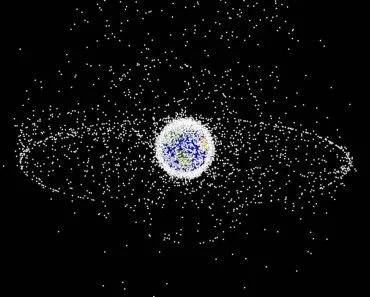
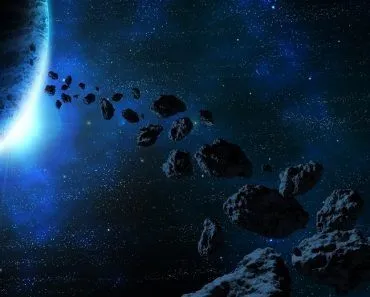
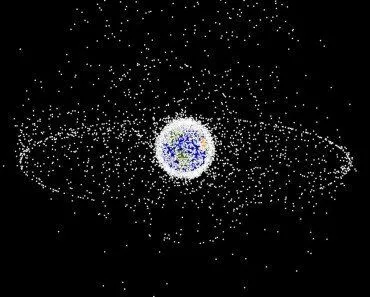
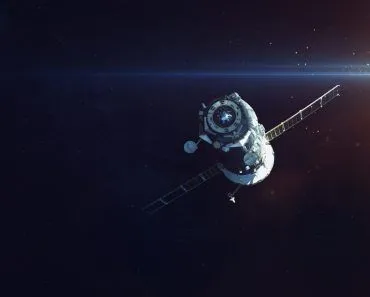
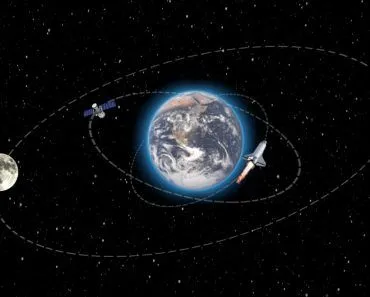
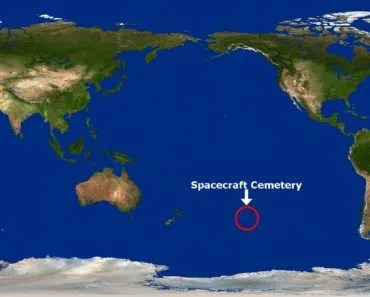
Kessler syndrome describes a runaway cascade in Low Earth Orbit (LEO): once orbital objects get dense enough, a single collision shatters two satellites into thousands of fragments, each fragment becomes a fresh projectile, and those projectiles cause more collisions. The cycle feeds itself until parts of LEO become a debris belt too hazardous to fly through.
Back in February 2017, there was a lot of talk about how the Indian Space Research Organisation (ISRO) set a world record by launching no fewer than 104 satellites from a single rocket! With this bold move, ISRO smashed the previous record held by a Russian Dnepr rocket, which had launched 37 satellites in a single mission back in 2014. That record itself has since been blown out of the water by SpaceX, whose Transporter-1 Falcon 9 delivered 143 satellites in a single flight in January 2021.
We see news of satellites being launched by various space agencies and private companies almost every week now. Everyone is launching satellites these days, or at least it certainly looks that way. SpaceX alone has more than 10,000 active Starlink satellites whizzing through Low Earth Orbit, and that single constellation could eventually grow to 15,000 or more.
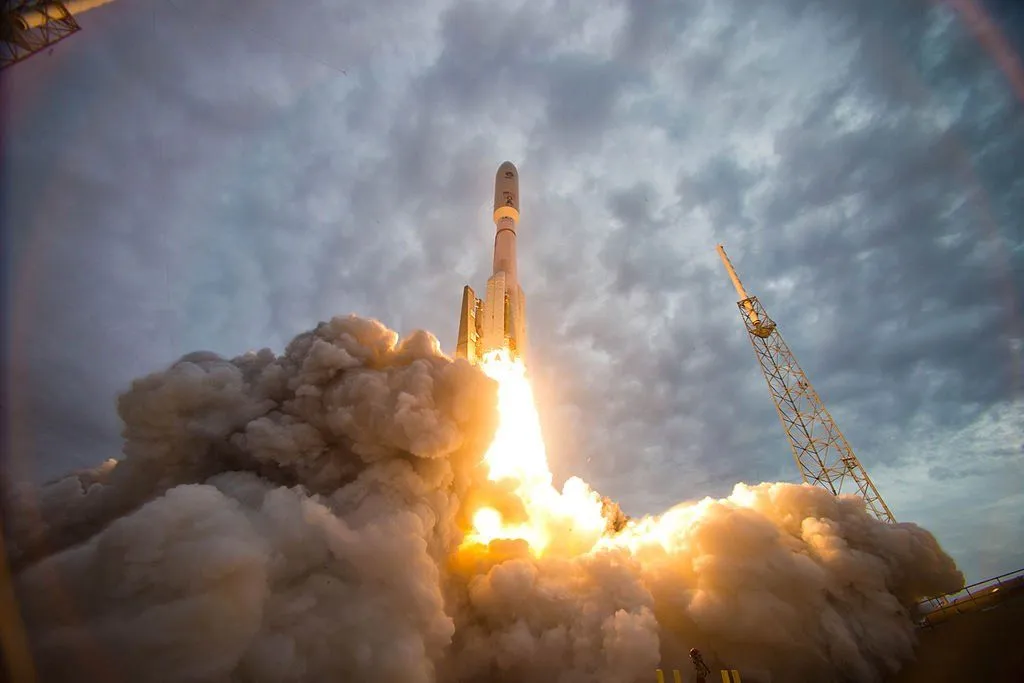
However, have you ever thought about what happens when a satellite ‘dies’? In other words, when a satellite becomes inoperative, what happens to it? Where does it go?
As you can imagine, a dead satellite doesn’t have anywhere to go, so it remains in its orbit (unless the ground staff has other plans for it). With so many satellites in the Low Earth Orbit (LEO), you can imagine how crowded it must be by now. And given the ever-increasing number of dead satellites, it only makes this orbital region more cluttered.
The logical question is, of course, what happens when there are just too many satellites in the orbit?
Impacts and collisions!
What Is The Kessler Syndrome?
Named after NASA scientist Donald J. Kessler, who first sketched out the problem in 1978, Kessler syndrome is the moment Low Earth Orbit gets so crowded that one accidental collision is enough to set off a chain reaction. Two satellites slam into each other, shatter into thousands of fragments, and each of those fragments is now a fast-moving projectile capable of smashing another satellite, which produces yet more fragments, and so on. The math is unforgiving: above a certain density, the cascade keeps going on its own, even if we stop launching anything new.
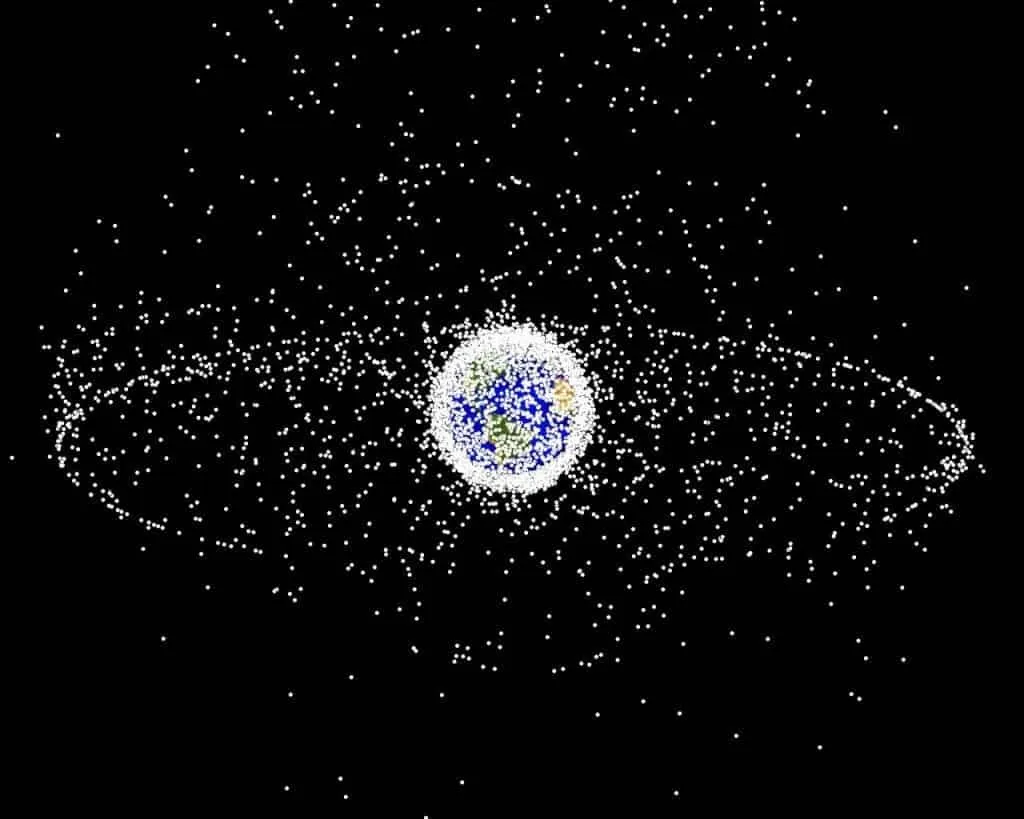
You see, the Low Earth orbit is home to thousands of artificial satellites, along with the International Space Station, the crewed space habitat that hosts a rotating crew of about seven astronauts at any given time (and briefly more during crew handovers). When some of these satellites become inoperable, they are either pushed into the graveyard orbit or they keep circling the planet until they gradually lose altitude and fall towards the Earth, burning up as they re-enter the atmosphere.
The Problem Of Space Debris
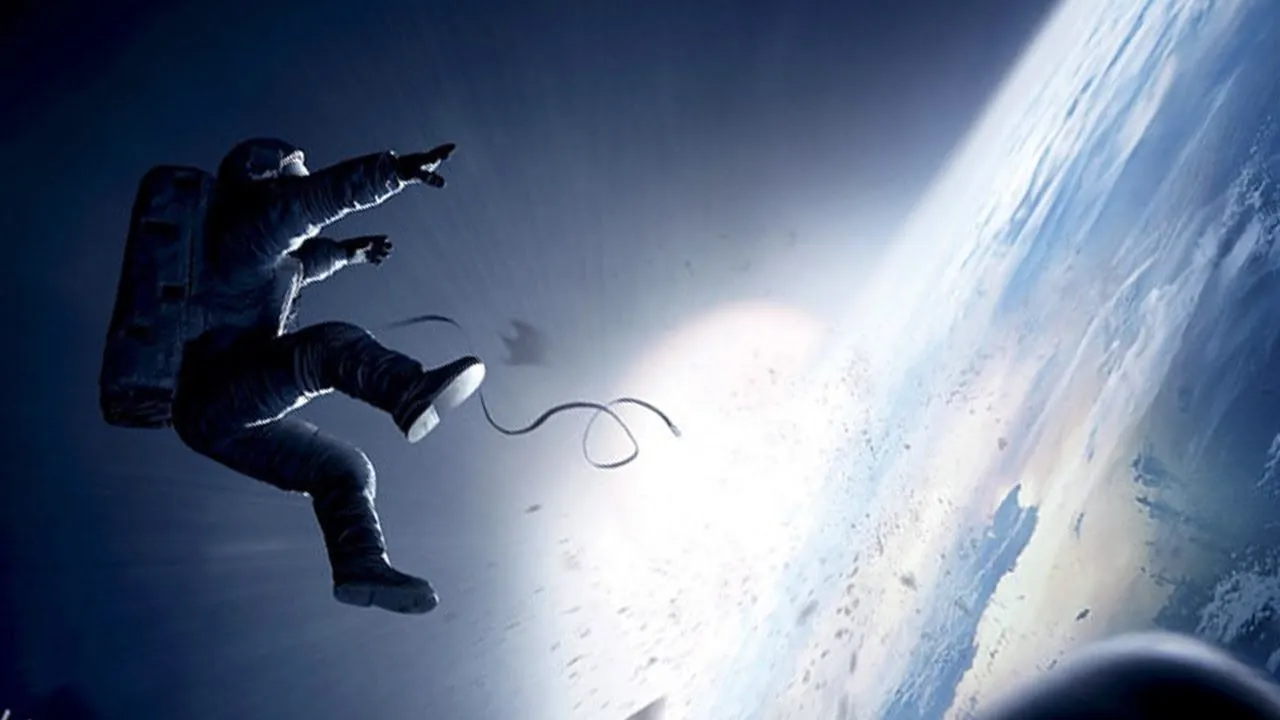
While these ‘junk’ satellites or parts of them still circle in the orbit, they pose a great threat to other satellites, spacecraft and even astronauts operating in the same orbit. Do you remember the 2013 blockbuster hit Gravity? The protagonist of the movie was flung out into space because the spacecraft she was on was hit by the flying debris of a decommissioned Russian satellite.
NASA scientist Donald J. Kessler first laid out the problem of ‘space junk’ in a paper titled Collision Frequency of Artificial Satellites: The Creation of a Debris Belt, co-authored with Burton G. Cour-Palais and published in the Journal of Geophysical Research back in 1978. He described a self-sustaining cascade of debris collisions in Low Earth Orbit. This phenomenon came to be known as the Kessler Syndrome, or the Kessler Effect. It’s also called collisional cascading or an ablation cascade.
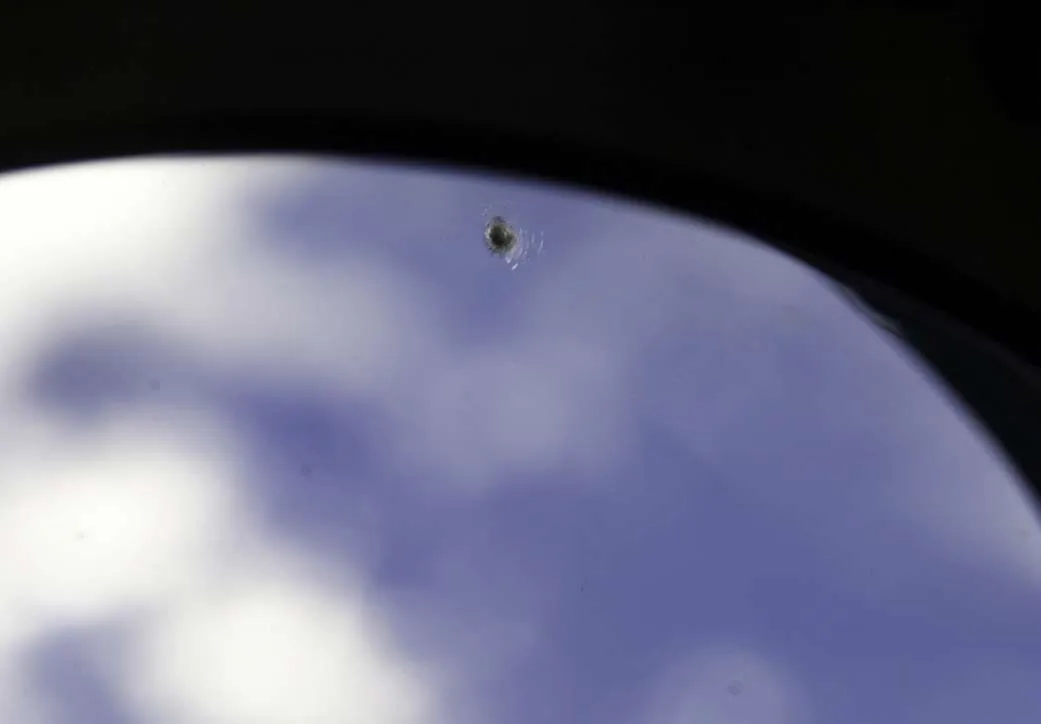
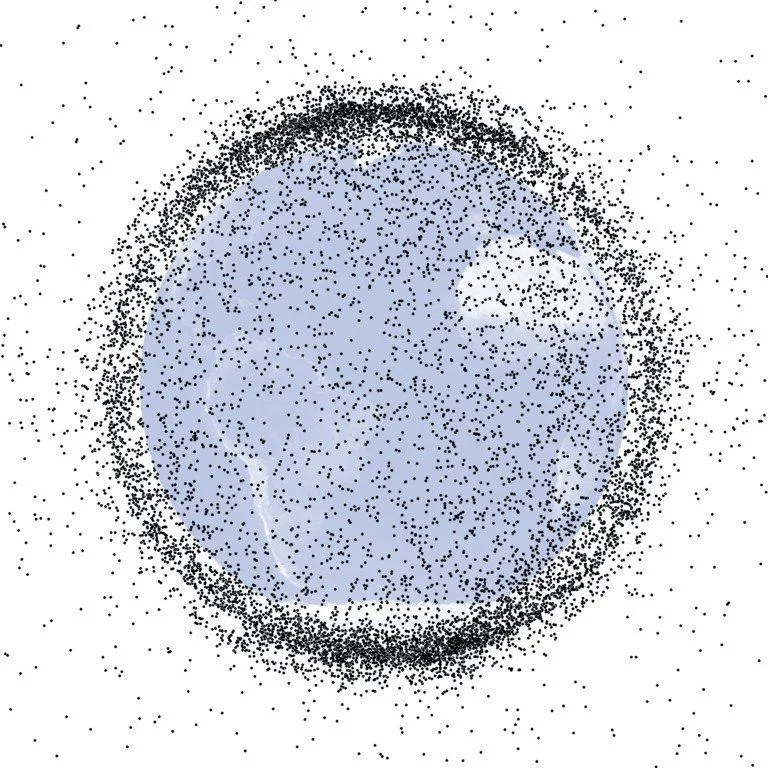
The numbers are staggering, and they have only grown since Kessler first did the math. According to NASA and the European Space Agency, global space surveillance networks now routinely track more than 40,000 objects in orbit, of which about 11,000 are active satellites and the rest are spent rocket bodies, dead satellites, and fragments larger than 10 cm (4 inches). ESA’s latest debris model estimates the true total at roughly 54,000 objects larger than 10 cm, about 1.2 million pieces in the 1–10 cm (0.4–4 inch) range, and around 140 million fragments smaller than 1 cm (0.4 inch), the size of a paint chip but still capable of cracking a spacecraft window.
The Kessler Syndrome isn’t just a thought experiment. We have already watched it play out, in miniature, twice. In January 2007, China deliberately blew up its defunct Fengyun-1C weather satellite in a missile test, scattering more than 3,000 trackable fragments across orbits between 200 km and 4,000 km, the single largest debris-generating event on record. Two years later, in February 2009, the working Iridium 33 communications satellite slammed into the derelict Russian Kosmos 2251 at roughly 11.7 km/s (about 26,000 mph) over Siberia, producing more than 2,300 catalogued fragments and an estimated 100,000 smaller pieces. The International Space Station has been forced to dodge debris from both events on multiple occasions since.
Effects Of The Kessler Syndrome
The Kessler Syndrome is bad news because impacts between objects of sizable mass can cause significant damage to ‘useful’ objects that are present in LEO. Not only that, but the resulting debris cascade could also make it extremely difficult to launch satellites in the LEO in a way that they wouldn’t be hit by flying debris. Finally, the long-term viability of new satellites in the LEO would become decidedly low.
Are We Already In The Kessler Syndrome?
This is the question everyone eventually asks, and the honest answer is an uneasy “to some degree, yes”. Kessler syndrome was never meant to describe a single dramatic afternoon in orbit like the one in Gravity. It is a slow, statistical creep that unfolds over decades, and by the reckoning of the very scientists who defined it, that creep has already started.

Back in 2006, NASA researchers J.-C. Liou and Nicholas L. Johnson ran the numbers and reached a blunt conclusion in the journal Science: the debris population in Low Earth Orbit had “reached the point where the environment is unstable”, and collisions would become the dominant way new debris is created. Four years later, Kessler himself co-authored a follow-up paper spelling out what that means. Because the current environment is “already above a critical density”, the authors wrote, even 100% compliance with clean-up guidelines “would not prevent the debris environment from increasing”. In plain terms, even if every nation stopped launching tomorrow, the junk already up there would keep multiplying as the pieces grind into one another.
The idea traces all the way back to Kessler’s original 1978 paper, which predicted that sometime around the year 2000, collision fragments would overtake everything else as the main source of small debris, after which “the debris flux will increase exponentially with time, even though a zero net input may be maintained”. The 2007 Fengyun-1C missile test and the 2009 Iridium-Kosmos smash-up were exactly the kind of self-feeding events that math anticipated.
So why hasn’t LEO become an impassable minefield? Because “exponential” still takes decades to bite. We are not locked out of space yet, but the slow opening chapters of Kessler’s scenario are arguably already being written. It is also why simply launching more carefully is no longer thought to be enough. The same researchers concluded that we will now have to actively retrieve hardware that is already in orbit, which is precisely what the clean-up missions below are trying to prove.
Why Some Orbits Are More Dangerous Than Others
Not all of Low Earth Orbit carries the same risk, and the reason comes down to a faint wisp of atmosphere. Even a few hundred kilometers up, space is not perfectly empty. The last stray air molecules exert a gentle drag that slowly saps energy from anything passing through, pulling it lower until it finally burns up on re-entry. This natural cleaning service is the only thing stopping LEO from silting up completely, but it only reaches so high.

According to NASA’s Orbital Debris Program Office, the contrast is stark. “Debris left in orbits below 600 km normally fall back to Earth within several years,” the agency notes. Climb to around 800 km and the drag becomes so weak that decay “is often measured in centuries”. Above 1,000 km, orbital debris “will normally continue circling the Earth for a thousand years or more”. A single bolt lost at 1,200 km today could still be looping around the planet centuries from now, long after everyone alive to read this has gone.
That is why the crowded shells between roughly 600 and 1,700 km are the ones debris experts flag as already unstable, with the thickest traffic packed between about 800 and 1,000 km, where many weather and Earth-observation satellites fly in sun-synchronous orbits. It is dense, it is busy, and anything that shatters up there stays shattered for lifetimes. The European Space Agency’s 8-tonne Envisat, an Earth-observation satellite that fell silent in 2012 and remains stranded near 785 km, is the textbook worry. It sits right in the thick of the traffic, too high for the atmosphere to drag it down on any human timescale.
It also explains why the fix is a race against time. The lower the orbit, the more forgiving nature is; the higher the junk, the longer we are stuck with it. That single fact shapes every serious rule about tidying up after ourselves in space.
Kessler Syndrome (Space Debris) Solution
The most important thing we can do right now is be prudent about what we send into LEO. Preventing the unnecessary creation of additional orbital debris is the cheapest and most effective way to keep Kessler Syndrome at bay. In practice, that means designing satellites and rocket stages that can be reliably deorbited at the end of their working life, so they burn up in the atmosphere rather than linger as floating shrapnel. Most space agencies have settled on a rough rule of thumb that hardware should clear LEO within 25 years of mission end, and the US Federal Communications Commission has since tightened that bar to five years for new commercial constellations.
Cleaning up the existing clutter in LEO remains a technical and economic challenge, but it is no longer purely theoretical. Astroscale’s ELSA-d mission, launched in 2021, demonstrated the magnetic capture and release of a mock piece of debris in orbit, and the company’s follow-on ADRAS-J spacecraft has since rendezvoused with a real, defunct Japanese rocket upper stage. The European Space Agency’s long-delayed ClearSpace-1 is targeting a late-2020s launch to physically grab and deorbit a derelict satellite. The hope is that, by the time any of this gets cheap, we won’t already be locked out of LEO.
So, until active debris removal becomes routine, prudence is the name of the game!
References (click to expand)
- Frequently Asked Questions: Orbital Debris - NASA Orbital Debris Program Office
- Orbital Debris - NASA Johnson Space Center
- Micrometeoroids and Orbital Debris (MMOD) - NASA White Sands Test Facility
- Space debris by the numbers - European Space Agency
- Collision Frequency of Artificial Satellites: The Creation of a Debris Belt - Kessler & Cour-Palais (1978), via NASA Technical Reports Server
- 2009 satellite collision (Iridium 33 and Kosmos 2251) - Wikipedia
- Risks in Space from Orbiting Debris - Liou & Johnson, Science (2006)
- The Kessler Syndrome: Implications to Future Space Operations - Kessler, Johnson, Liou & Matney (2010)