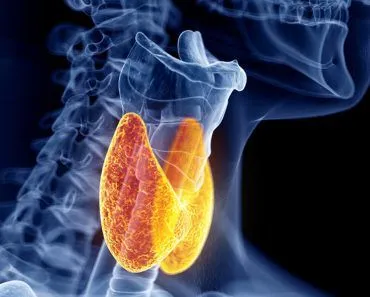
The main difference between hormones and enzymes is their job. Hormones are chemical messengers that switch body processes on or off, while enzymes are biological catalysts that speed up chemical reactions. Almost all enzymes are proteins and emerge unchanged after a reaction, whereas hormones can be proteins, amines, or steroids and are used up in the process.
The human body is complex machinery and though all seems quiet and calm on the outside, there are multiple physiological functions carried out every second of our existence. These functions are enabled by various chemical reactions in our body.
Think of the human body as a car and for a car to be in a functional, driveable state, various parts of the car need to be well oiled, lubricated and working in tandem for us to be able to drive the car. The various chemical reactions in our body help us function in a similar fashion.
Metabolic activities – Certain hormones control the rate of basal metabolism.
Growth, maturation, and regeneration – Hormones regulate growth and in some animals regulate metamorphosis, molting (shedding of hair and feathers) and diapause (a period of suspended development of an animal or an insect).
What are hormones?
Hormones are also called chemical messengers of the body. They regulate various types of reactions in the body and this regulatory action could either be of activation or of inhibition. Most hormones are secreted in the blood and circulate through the body coming in contact with all cells, but binding only to its designated target cells. Target cells have specific receptors for specific hormones which enables the binding of the hormone to the target cell. Rest of the cells that hormones come across while circulating remain unaffected.

This is very similar to you walking through a crowded station platform with thousands of people walking by, but the minute you come across someone you know, you tend to hug or shake hands with that person while the other unknown passersby continue to walk past you.
Activities controlled by hormones
Homeostasis – Hormones help regulate the body temperature, water and glucose balance in the body and this helps in maintaining the internal environment of the body.
Morphogenic activities – Hormones of the thyroid, pituitary glands, etc. control the growth, development, and differentiation of the tissues of the body.
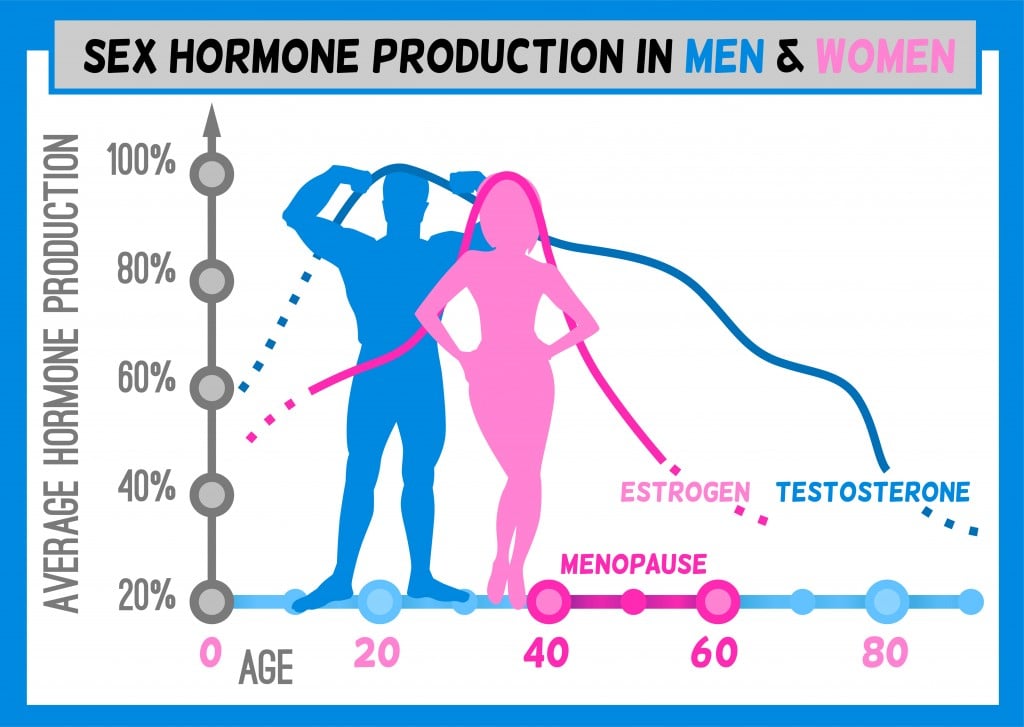
Reproductive activities – Hormones play an important role in the formation of gametes and the development of secondary sexual characteristics. Examples of this are the male and female hormones – testosterone and progesterone. Progesterone in females helps in maturation of the ovum, implantation of the fertilized egg, sustenance of pregnancy, etc.
(Photo Credit : Double Brain/Shutterstock)
Testosterone in males is responsible for male characteristics like muscle bulk, facial hair, and maturation of sperms.
Metabolic activities – Certain hormones control the rate of basal metabolism.
Growth, maturation, and regeneration – Hormones regulate growth and in some animals regulate metamorphosis, molting (shedding of hair and feathers) and diapause (a period of suspended development of an animal or an insect).
Hormones are needed in small quantities in our body, however, the excess or deficiency of hormones leads to a hormonal imbalance and disorders in the body.
What Are Enzymes?
Our life is sustained by numerous well orchestrated chemical reactions, many of which occur at a slow speed and hence nature has created these chemicals in our body called enzymes which act as catalysts and speed up these chemical reactions. Without enzymes as catalysts, these chemical reactions would be too slow to keep up with our needs.
Enzymes are present in all life-forms ranging from viruses to humans. In humans, they catalyze a wide array of reactions right from metabolism to biosynthesis to detoxification. In any given cell, several thousand enzymes are present, each meant for catalyzing specific reactions. The production of enzymes in terms of structure and the quantity of the enzymes is controlled by the cell’s DNA.
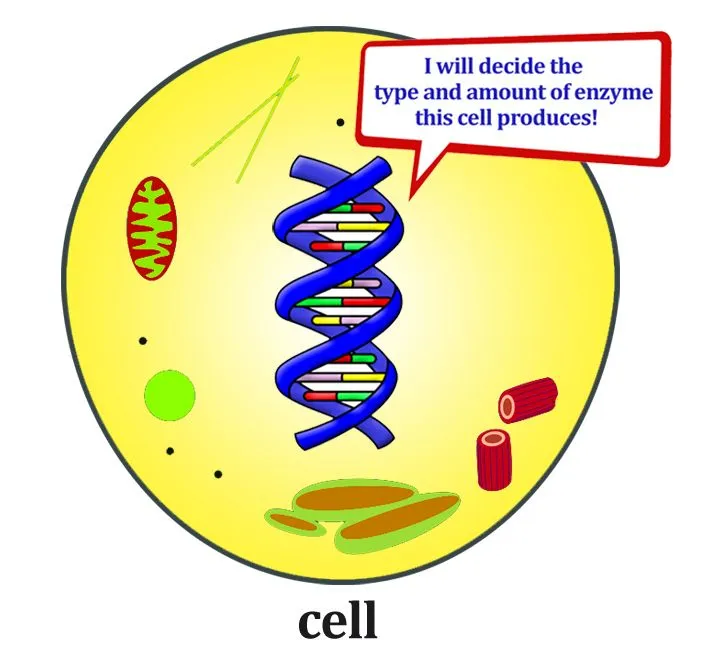 Hence, different cells in the same organism can produce different enzymes in the required quantities as per the demands of that particular cell. Enzymes aid digestion by helping the body break down large complex molecules like starch into smaller units which can be utilized by the body. In the liver, enzymes help with the breakdown of toxins in the body. Many enzymes that are extracted from living organisms retain their catalytic properties and can be used for commercial purposes like manufacturing of bread, cheese, etc. They are also used in washing powders and cleaning products.
Differences Between Hormones And Enzymes
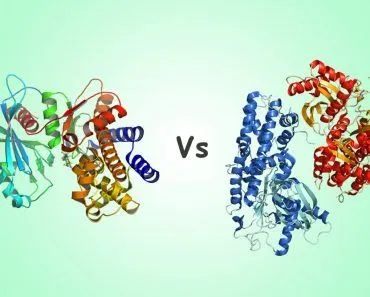
- For starters, almost all enzymes are proteins (the main exceptions are ribozymes, which are made of RNA). That being said, all proteins are not enzymes, the difference being that only enzymes possess catalytic properties. Hormones may be composed of proteins (e.g., antidiuretic hormone), amines (e.g., epinephrine), or they may be steroids (e.g., testosterone and estrogen).
- Enzymes by definition are biological catalysts, whereas hormones merely trigger or inhibit a reaction, with no effect on the rate at which the biological reaction progresses.
- The site of action for enzymes is usually the cell in which they are produced, whereas hormones are secreted by cells and carried elsewhere to the target organs via blood.
- Enzymes are giant molecules with a high molecular weight whereas hormones have a low molecular weight.
- Enzymes are unable to diffuse through cell membranes. Hormones vary: lipid-soluble ones (such as steroid and thyroid hormones) can diffuse through cell membranes, whereas protein and amine hormones cannot and instead bind to receptors on the cell surface.
- Since enzymes are catalysts, their chemical composition remains unchanged after a reaction and hence enzymes can be used again whereas hormones undergo a change in their chemical composition after participating in a chemical reaction and hence cannot be utilized again.
- Factors like age do not affect enzyme production, however, age-related milestones affect the production of hormones (e.g., puberty, menopause).
- If the concentration of an enzyme increases, the reaction rate increases up to a certain limit, whereas an increase (excess) or decrease (deficiency) in hormone levels leads to metabolic disorders in our bodies.
Similarities Between Hormones And Enzymes
We have spent a lot of time on how hormones and enzymes differ, but it is just as telling to ask what they have in common. After all, both are tiny chemical helpers that our own cells manufacture, and a few shared traits are exactly why students mix them up in the first place.

The most important similarity is specificity. Both molecules work because of their precise three-dimensional shape. An enzyme has an active site that fits only its particular substrate, much like a key fits a single lock. The modern picture refines this into the “induced-fit” model, in which the enzyme molds itself snugly around the substrate as the two meet. A hormone behaves the same way, slotting into a receptor that is shaped to recognize it and ignoring every other cell it drifts past. So if an exam question asks how enzymes and hormones are alike, this is the answer it is fishing for: both have specific shapes that influence how they function.
They overlap in other ways too. Both are needed only in very small amounts. An enzyme, being a catalyst, is not consumed and can drive reaction after reaction, while hormones circulate at extremely low concentrations yet still produce large effects. Both are also regulatory rather than structural: instead of building tissue or supplying fuel, they switch processes on, off, or faster, helping the body hold its internal balance, or homeostasis. And chemically they can overlap, since many hormones (such as insulin) and almost all enzymes are proteins. The real distinction, as we saw above, is what each does with that shape: an enzyme speeds up a reaction, while a hormone simply delivers a message.
Are Enzymes Cells, Or Something Inside Them?
A surprising number of people searching for enzymes really want to settle one basic question: is an enzyme a cell? The short answer is no. An enzyme is a single molecule, almost always a protein built from a chain of amino acids (a handful, called ribozymes, are made of RNA instead). It is far smaller than a cell. In fact, any one of your cells contains several thousand different enzymes working at once, so an enzyme sits inside a cell the way a tool sits inside a workshop, not the other way around.

So where exactly are they? Enzymes are assembled at the ribosomes, the cell’s protein-making machinery, following instructions written in the cell’s DNA, and they are then sent to wherever they are needed. Different jobs happen in different compartments: the enzymes of energy production sit inside the mitochondria, lysosomes hold dozens of digestive (hydrolytic) enzymes that break down worn-out parts, and the enzymes of glycolysis float freely in the cytosol. Not every enzyme stays home, though. Cells of the salivary glands, stomach and pancreas secrete digestive enzymes that do their work outside the cell entirely, in the gut, which is how much of metabolism begins. So “where are enzymes?” has two honest answers: most operate inside the cell that made them, but a good number are exported to act elsewhere.
Conclusion
Enzymes and hormones are essential chemicals needed by our bodies to perform various activities on a cellular level. Enzymes have known to be of commercial importance even outside of our bodies and hormones need to be present in our bodies in just the right amounts or else it’s metabolic havoc waiting to happen. Though both of them are regulatory in function, it is important to understand each one of them individually to be able to appreciate the differences between hormones and enzymes.
References (click to expand)
- Rastogi V. B. (1997). Modern Biology. Pitambar Publishing
- Hormones, Receptors and Target Cells.
- Robinson, P. K. (2015). Enzymes: principles and biotechnological applications. Essays in Biochemistry, 59, 1-41. (PMC)
- Verma D. P. ISC Biology Book-II For Class-XII. S. Chand Publishing
- Hiller-Sturmhofel, S. & Bartke, A. The Endocrine System: An Overview. Alcohol Health and Research World. (PMC)
- Cooper, G. M. Lysosomes. The Cell: A Molecular Approach, 2nd edition. (NCBI Bookshelf)