A gas pump nozzle shuts off automatically using the Venturi effect. Fuel flowing through a venturi inside the nozzle creates suction on a tiny sensing port near the spout tip. As long as that port is in air, air is drawn through it and pressure stays balanced. When rising gasoline covers the port, the air bleed stops, the vacuum spikes in the diaphragm chamber, and a spring snaps the main valve shut — no electronics required.
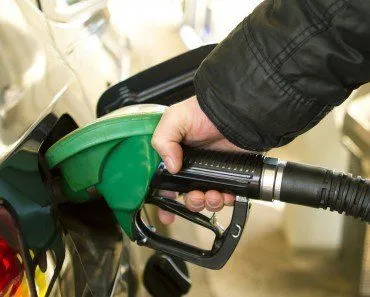
The extent to which various different devices and techniques have made our lives simpler sometimes baffles me. Almost everything has either already become, or is in the process of becoming, completely automated. Take, for example, the gas pump. Although it is mainly used to feed oil into the parched tanks of vehicles, there are quite a few imaginative ways that people use gas pumps; take this lady here, for example, who chooses to wash the windscreen of her car with it.
However, we’re not going to talk about other uses for gas pumps. We simply want to discuss an extremely common phenomenon that you probably observe every time you fill up the tank of your car. Yes, you guessed it… we’re going to figure out a bit more about the automatic shut-off function of the gas pump nozzle.
Automatically shutting off of the pump may seem like an “out-of-your-league” electric process, but actually, it’s not an electric process at all. In fact, it is a mechanical process – and a rather innovative one at that! It involves a very interesting physical phenomenon, known as the Venturi effect. Let’s take a closer look.
Venturi Effect: Something You Witness Almost Every Day
The Venturi effect is one of those common phenomena that you experience every day, but don’t know the name or even recognize the phenomena until pointed out by a physics professor. Don’t be frightened by the figure below; it simply depicts how fluid pressure changes as a result of a change in the cross-section of the container.
If you understand Venturi effect, then congratulations! Essentially, that means you understand the basic principle behind the magical shutting off of the pump nozzle. All that remains to understand now is how the whole mechanism works, which, by the way, is quite interesting too!
When the fuel indicator on your dashboard tells you that the tank is empty, what it’s actually telling you is that the tank is devoid of any gasoline, but not devoid of everything. It also contains air; as your vehicle runs and gasoline is used, the space that it vacates is instantly occupied by air. This means that when there is no gasoline left in the tank, it’s still filled, but only with air.
What’s Inside The Pump Nozzle?
Next time you go to a gas pump, take a closer look at the pump nozzle (i.e., the thing that goes inside the tank of the vehicle to fill it). Near the end of the spout, you will spot a tiny pinhole-sized port. If you don’t know already, then I should tell you, this hole does not pass gasoline to the tank. From the looks of it, it may seem like it just sits there idly, not doing anything at all. But is that true? What purpose does that little port serve?
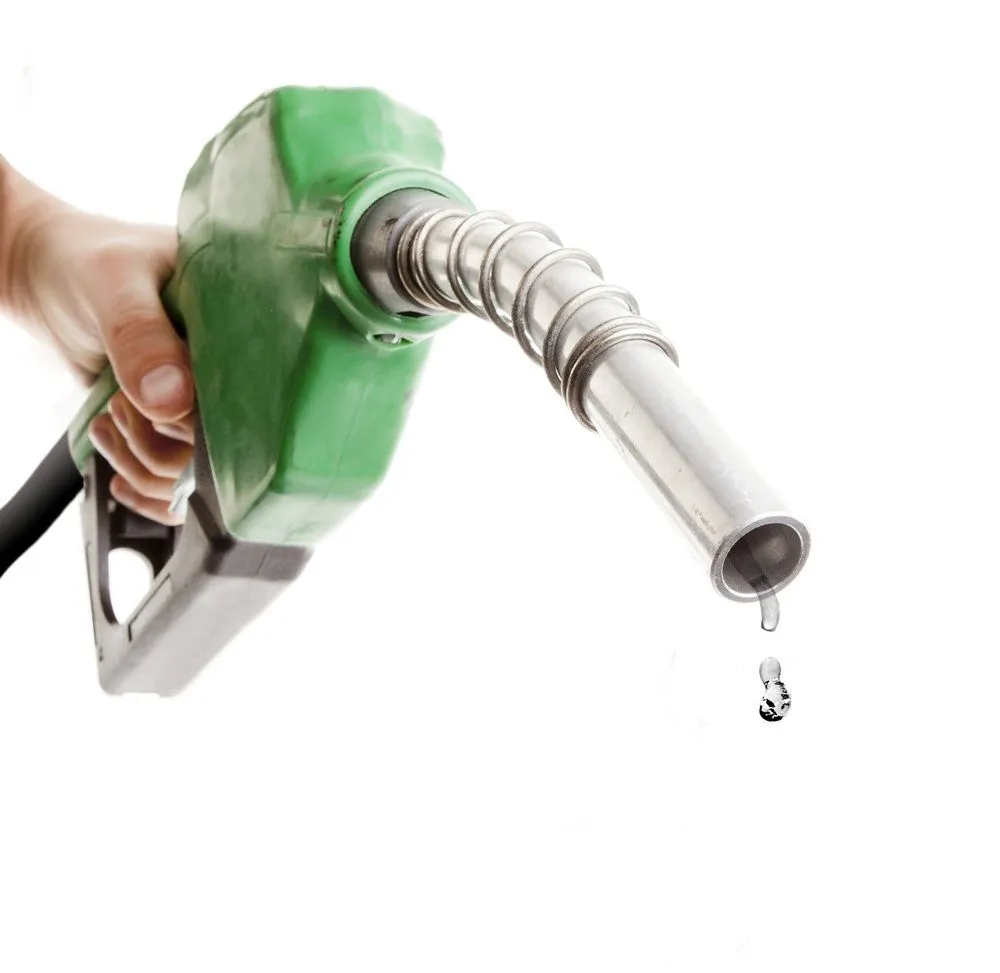
Well, that inconspicuous hole performs a very important function that ensures that not a single drop of the precious (and expensive!) oil is spilled.
This hole is connected to a small pipe that runs into the handle. At a point near the end of its length, let’s call it Point A, the pipes veers off in a different direction to a diaphragm of air. At Point A, there is a Venturi tube through which gasoline flows. This is how the nozzle appears from the inside; but now let’s see how the whole thing works.

How Does It Actually Work?
How the nozzle shuts off automatically with a click may seem like magic to toddlers and adults alike, but it actually involves a very simple and innovative process.
While the tank is still filling, air is drawn from the tiny port (of the nozzle) through to the diaphragm due to the venturi’s suction. This keeps the pressure on both sides of the diaphragm roughly balanced. The moment the rising gasoline covers the port, the air bleed is cut off. The venturi keeps pulling, but with nothing to pull through, the vacuum in the diaphragm chamber deepens sharply. The diaphragm gets sucked in, that movement trips the latch holding the main poppet valve open, and a spring snaps the valve shut—cutting off the flow of gasoline through point A.
What happens next is what we’re all familiar with – the crisp click announcing a freshly full tank.
It’s incredible how simple stuff from our daily lives can help inspire such path-breaking techniques and make our lives easier; in this case, the employees in charge of filling up tanks at a gas station are the real winners!
Why Does The Pump Sometimes Click Off Before The Tank Is Full?
You may have noticed that the pump sometimes clicks off when there’s still plenty of room left in your tank. That’s not a glitch in the nozzle; it’s the same Venturi mechanism doing its job a little too eagerly. Squeeze the lever too hard and gasoline can splash back inside the spout, briefly covering the sensing port; the diaphragm reads that as “tank full” and trips the valve. The same thing can happen if you’re parked on a steep slope (the fuel level inside the tank rises unevenly toward the spout), or if you’re filling on a hot day, when vapor billowing out of the tank disturbs the airflow around the port.
The trick is to ease off the lever once gasoline is flowing steadily and let the last gallon trickle in. And if the pump shuts off and a little fuel spits back at you, that’s not the nozzle malfunctioning either; it’s usually just the small surge of fuel that was already past the main valve when the spring snapped it shut.