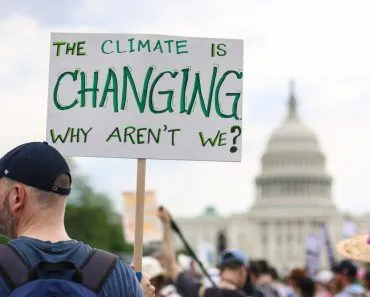
Climate change is a long-term shift in temperatures and weather patterns. Today's climate change is driven primarily by human emissions of greenhouse gases—mostly CO2 from burning fossil fuels (about 75% of global emissions), with smaller contributions from agriculture and land-use change. Atmospheric CO2 has risen from around 280 ppm before the Industrial Revolution to more than 430 ppm in 2025, and 2024 was the warmest year on record—the first calendar year above 1.5 °C of warming relative to pre-industrial levels.
The climate change that we face today is the effect of the rising concentration of carbon dioxide. The primary source of carbon dioxide is the burning of fossil fuels. Scientists have observed several long-term changes in weather patterns since the mid-late 19th century.
These changes are collectively known as climate change. Scientists measure the level of carbon dioxide in parts per million, i.e., the number of moles of carbon dioxide per million moles of air and global temperature in degrees Fahrenheit or degrees Celsius. As shown in Fig 1, the increase in global temperature is following the atmospheric carbon dioxide concentration.
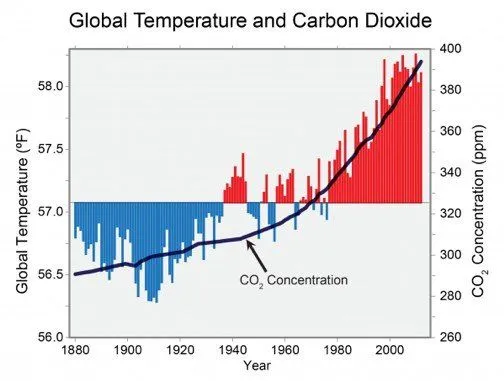
The rise in average temperature, measured as a temperature anomaly relative to the 1951–1980 average, has accelerated dramatically. NASA confirmed 2024 as the warmest year on record, with the global mean temperature roughly 1.28 °C above the 1951–1980 baseline and—by Copernicus and WMO measurements—about 1.55 °C above the pre-industrial level, the first calendar year to exceed the 1.5 °C threshold set out in the Paris Agreement. Atmospheric CO2 at Mauna Loa surpassed 430 ppm in May 2025, up from about 280 ppm in pre-industrial times—the highest level in more than two million years.
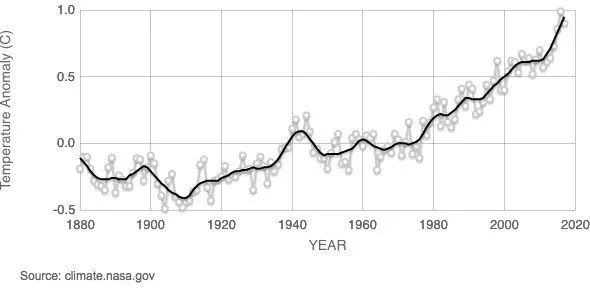
NASA brings out a scientific visualization of the time series data on different weather variables. The following video shows a five-year variation of global surface temperatures
Effects And Physical Evidence Of Climate Change
The rise in global temperature is changing several other weather patterns. The increase in temperatures is causing warming of oceans, melting of ice mass and an increase in evaporation. These effects are having several physical impacts such as sea level rise and increased variability in weather patterns and extreme weather events. The adverse impact of these physical changes due to global warming is now becoming visible on the biological system and human systems. The higher temperature is causing seawater to expand resulting in sea level rise. It is also causing several harmful impacts on the marine ecosystem.
- Ocean warming: The oceans absorb almost 90% of the excess heat from the surrounding air making it warmer. Although most of the heat is absorbed in the surface, as the rate of warming is increasing the heat is reaching deeper waters.
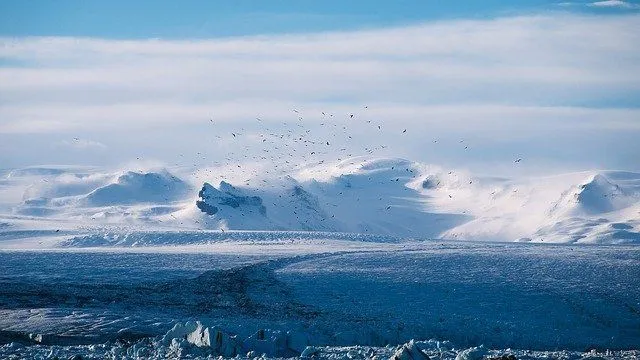
- Changes in snow, ice, and frozen ground: Increase in temperature directly impacts the snow, river and lake ice, sea ice, glaciers, and ice caps, ice shelves and ice sheets, and frozen ground. The rising surface temperature is causing a decline in ice mass. Ice mass measurement by NASA’s satellite shows that the Antarctica and Greenland mass is declining at an unprecedented rate. Glaciers are also retreating almost everywhere around the world including the Alps, Himalayas, Andes, Rockies, Alaska, and Africa.
- Sea level rise: Sea level rise is caused primarily by water from melting ice sheets and glaciers and the expansion of seawater as it warms. Satellite level observations indicate that the sea height is increasing at a fast rate and will continue to rise at a quicker pace. The rise in sea levels has adverse impacts on the population living in coastal areas. It also plays a role in flooding and an increase in storms.
- Changes in weather patterns and extreme weather events: Changing climate leads to changes in the frequency, intensity, spatial extent, duration, and timing of weather and climate extremes. Weather and climate extremes are events that occur when the weather or climate variable is above or below a threshold value of the variable. Some of the changes in weather patterns include an increase in the number of warm days and nights and a decrease in cold days and nights and an increase in the frequency and intensity of daily temperature extremes. Some of the extreme weather events include floods, droughts, hurricanes, and heatwaves.
What Is Causing Climate Change?
The rising concentration of greenhouse gases in the earth’s atmosphere is causing climate change. The sun emits solar radiations which are shortwave radiations such as ultra-violet radiations and visible light. The earth’s surface absorbs some of the solar radiation and reflects the rest as longwave radiation, i.e., infrared radiations. Some of the reflected radiation escapes the earth’s surface, and some are absorbed by gases such as carbon dioxide and methane. These gases act similar to a greenhouse and hence are called greenhouse gases.
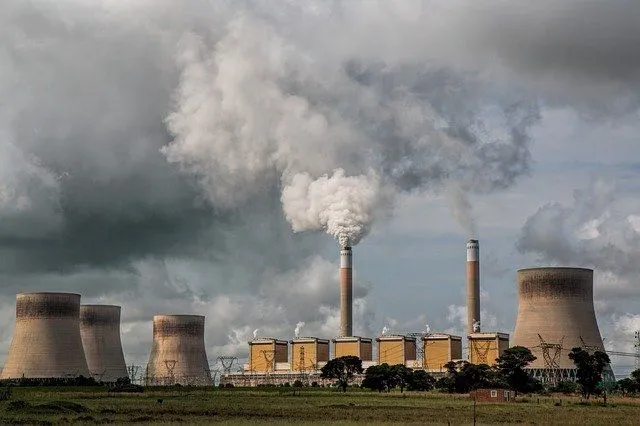
The most significant greenhouse gas is carbon dioxide. Other greenhouse gases are methane, nitrous oxide, fluorinated gases – hydrofluorocarbons, perfluorocarbons, etc. The effect of these gases on climate change depends on the amount of gas and their global warming potential. The global warming potential (GWP) is calculated to reflect how long a gas remains in the atmosphere, on average, and how strongly it absorbs energy. Gases with a higher GWP absorb more heat and thus contribute more to warming Earth. The concentration of carbon dioxide is higher than any other gas and is the major contributor to the warming of the planet.
Natural causes and human activities both emit greenhouse gases. There is a scientific consensus that human-induced greenhouse gas emissions have caused the observed temperature anomaly. The increase in economic activities since the industrial revolution has resulted in increasing amounts of carbon dioxide emissions. These emissions are higher than the amount that can be captured by the earth’s natural carbon cycle. The primary source of human-induced greenhouse gas emissions is the burning of fossil fuels, agriculture, and change in land use patterns.
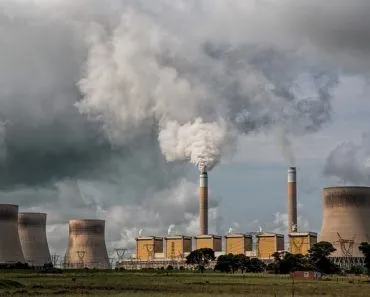
- Burning of fossil fuels: The burning of fossil fuels like coal and oil has increased the concentration of atmospheric carbon dioxide. The contribution of fossil fuels in the greenhouse gas emissions is the largest in the range of 70- 80% of the total emissions.
- Agriculture: greenhouse gas emissions from agriculture comes from livestock such as cows, agricultural soils, and rice production and is in the range of 10-15% of the total emissions.
- Changes in land use patterns: Clearing of forests for cultivation, industry, and other human activities have increased concentrations of greenhouse gases. The share of changes in land use patterns in the total emissions is in the range of 5-10% of the total emissions.
What Is The Difference Between Global Warming And Climate Change?
In everyday conversation, people use global warming and climate change as if they mean the same thing. Scientists draw a line between them. Global warming refers to just one part of the story: the long-term rise in Earth's average surface temperature caused by heat-trapping greenhouse gases. It is a single measurement, a number that keeps climbing.
Climate change is the wider picture. It includes global warming, but it also covers the full range of shifts that follow from a warmer planet. As NASA explains, these include rising sea levels, shrinking mountain glaciers, accelerating ice loss in Greenland, Antarctica and the Arctic, and changes in the timing of when plants flower and bloom. Rainfall patterns and the frequency of extreme weather shift as well.
So global warming is the cause you can put a thermometer to, while climate change describes the many downstream effects that warming sets in motion. Both are driven mainly by people burning fossil fuels and releasing greenhouse gases into the air. When you read that 2024 was the warmest year on record, that is global warming. The retreating glaciers and higher tides that come with it are climate change.
What Can Be Done About Climate Change?
Climate change is driven by human activity, which means human choices can also slow it down. Scientists group the response into two broad strategies: cutting emissions, known as mitigation, and preparing for the changes already underway, known as adaptation.

The heart of mitigation is reaching net zero. The United Nations defines net zero as cutting greenhouse gas emissions to a small residual amount that nature and carbon-removal methods can absorb, so that no extra gas builds up in the atmosphere. To hold warming to 1.5 °C (2.7 °F), the UN says global emissions need to fall by roughly 45% by 2030, compared with 2010 levels, and reach net zero by around 2050.
Getting there rests on a familiar set of levers: replacing coal, oil and gas with renewable energy such as solar, wind, hydro and geothermal power; using energy more efficiently; protecting and restoring forests; and changing how we farm and use land.
Some warming is already locked in, so adaptation matters too. That means building sea defenses for coastal cities, breeding drought-tolerant crops, and setting up early-warning systems for storms, floods and heatwaves. Together, these measures aim to limit how far the climate shifts and to soften the impacts we cannot avoid.
Conclusion
To summarise, the changes in weather patterns that persist over a decade or more are defined as climate change. The rising concentration of carbon dioxide in the atmosphere is causing an increase in the average temperature of Earth’s surface. This phenomenon is also known as global warming. Global warming is disturbing the natural cycles and causing several long-term changes in local and global climate. The primary source of carbon dioxide emission is the burning of fossil fuels for various economic activities. The other causes of climate change include agriculture and changes in land use patterns.
References (click to expand)
- Evidence - NASA Science.
- IPCC — Intergovernmental Panel on Climate Change.
- Sources of Greenhouse Gas Emissions | US EPA.
- How does climate change affect precipitation?.
- What Is the Difference Between Climate Change and Global Warming? - NASA Science.
- For a Livable Climate: Net-Zero Commitments Must Be Backed by Credible Action | United Nations.
- Renewable energy – powering a safer future | United Nations.