Table of Contents (click to expand)
- Do Pilots Of A Supersonic Jet Hear The Sound Of The Engines When It Breaks The Sound Barrier?
- How Does A Sonic Boom Work?
- Flying In A Supersonic Aircraft
- Does It Become Significantly Quieter Inside The Cockpit/cabin When A Plane Breaks The Sound Barrier?
- How Far Away Can You Hear A Sonic Boom?
- Can A Sonic Boom Kill You Or Break Windows?
- Why Don’t We Hear Sonic Booms Anymore?
Pilots and passengers do not hear their own sonic boom because they sit at the apex of the Mach cone, the shockwave trails behind them and never catches up. Inside the cabin, however, the plane is far from silent: the cabin air travels with the aircraft, so engine hum, voices and switches sound essentially the way they do at subsonic speeds.
When the Wright brothers conducted their first successful flight in the world’s first flying machine, it was a groundbreaking achievement that astounded everyone. The idea that humans could ride on air was a marvel of technology that has since improved. Today’s planes are much more sophisticated, safe, and well-equipped with amenities. They are also much faster than ever before.
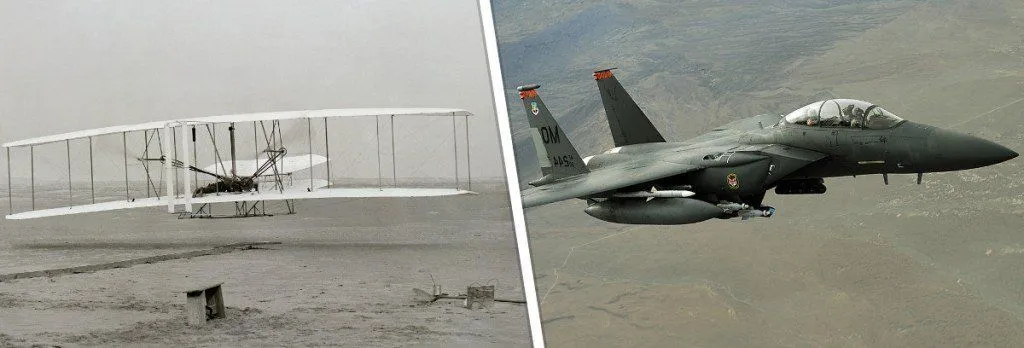
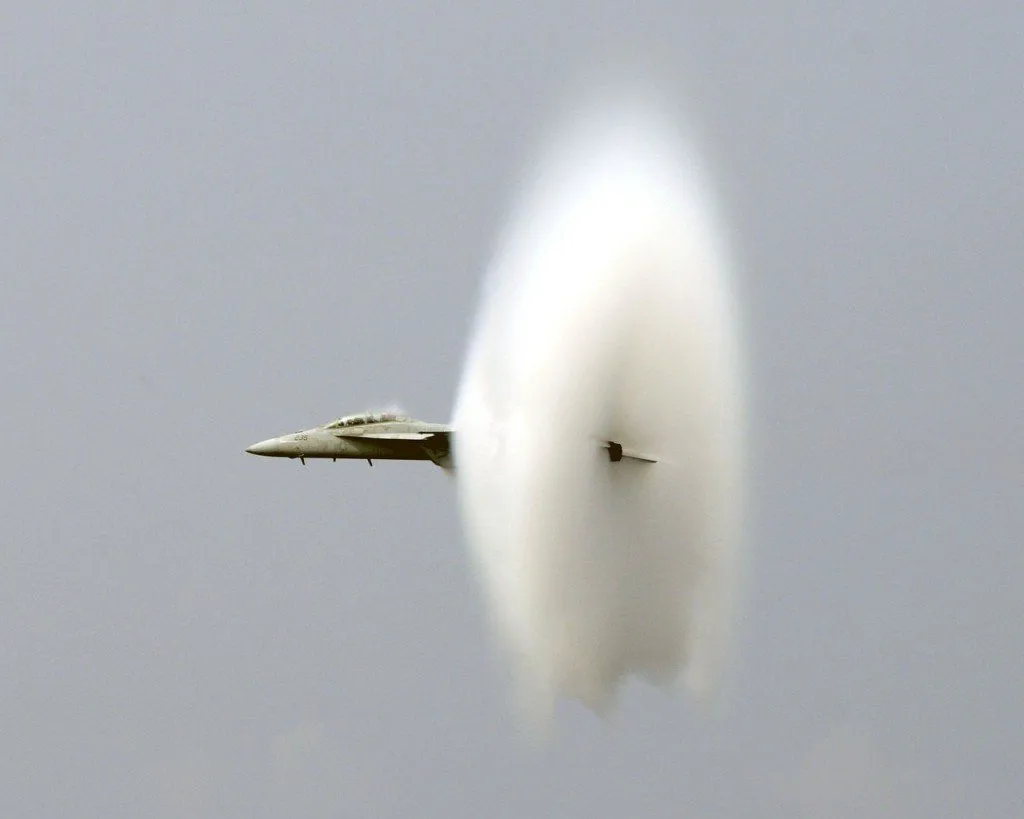
Supersonic jets are a prime example of this technological advancement. These planes can travel faster than the speed of sound itself, creating a sonic boom that is heard when anything breaks the sound barrier. The sonic boom is often loud and painful when military jets fly by, and everyone on the ground can hear it.
But what about the passengers inside the aircraft? Do they notice a difference in the cabin environment when the plane breaks the sound barrier? Since they travel faster than sound, does the cabin suddenly become silent?
What about the pilots and the situation inside the cockpit?
Do Pilots Of A Supersonic Jet Hear The Sound Of The Engines When It Breaks The Sound Barrier?
Short answer: When a supersonic jet breaks the sound barrier, pilots can still hear the humming of the engines, but only if the sound is transmitted through the air inside the plane. They cannot hear any sounds coming from the outside. Similarly, passengers can also hear sounds inside the cabin because the air around them and the pilots is stationary with respect to the plane.
Since the sound inside the plane is traveling through the internal air (which is moving as fast as the plane itself), there would be no problems hearing sounds inside the cabin, regardless of whether or not the sound barrier is broken.
How Does A Sonic Boom Work?
In high school Physics, you might have learned about sonic booms, which occur when something travels faster than the speed of sound. The speed of sound varies depending on the medium through which it travels. However, since Earth is surrounded by air, we will take the speed of sound in air, which is 767 mph (or 1234 km/h).
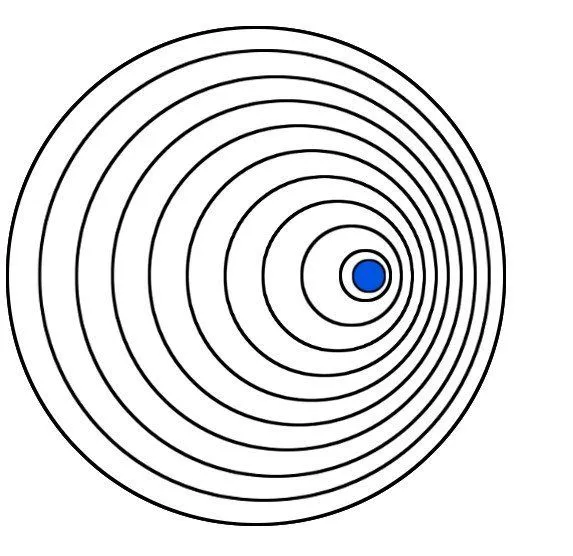
When a fast-moving object travels like a fighter jet, it produces sound waves in all directions. As the speed of the jet increases, the sound waves in front of the plane tend to bunch up as they do not have enough time to get out of the aircraft’s way. You can refer to the diagram above to understand it better.
When the aircraft flies faster than the speed of sound (in the air), the sound waves cannot spread out in front of the plane, trailing behind it instead, forming a ‘Mach cone.’
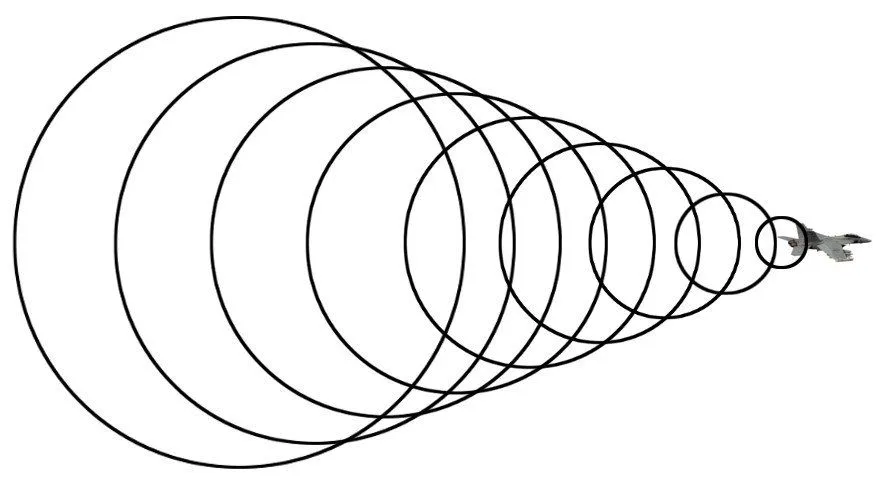
Due to this Mach cone, you hear the ear-shattering boom as a supersonic plane flies overhead. This is similar to the wake created by a fast-moving steamer in water.
Flying In A Supersonic Aircraft
People on the ground hear the sonic boom of an ultrasonic jet, but what about the people ‘inside’ the jet itself (the pilot, crew, and passengers)? Do they also hear the sonic boom?
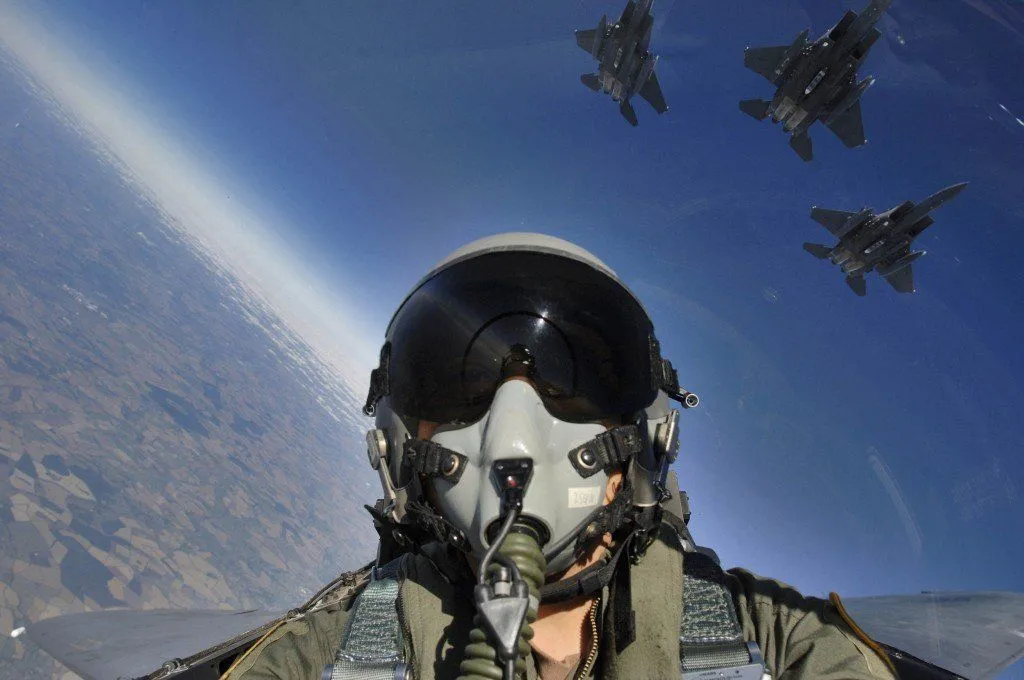
The short answer is – no, they don’t hear the sonic boom. Pilots and passengers cannot hear the sonic boom created by their own plane because they are at the head of the Mach cone. Simply put, they are moving so fast that the sonic boom doesn’t get a chance to catch up to them.
Does It Become Significantly Quieter Inside The Cockpit/cabin When A Plane Breaks The Sound Barrier?
Not really.
Sound is a mechanical wave that requires a medium to travel and moves at a speed “relative” to the medium it travels through. For example, sound travels at 343 m/s through still air to a stationary observer. However, if the air is moving at a speed of 100 m/s, the same observer would perceive the sound to be traveling at a higher speed of 443 m/s (343+100).
In supersonic airplanes, the internal air surrounding the people on board travels at the same speed as the plane itself. Since sound travels through this air, the sound levels inside the plane do not change.
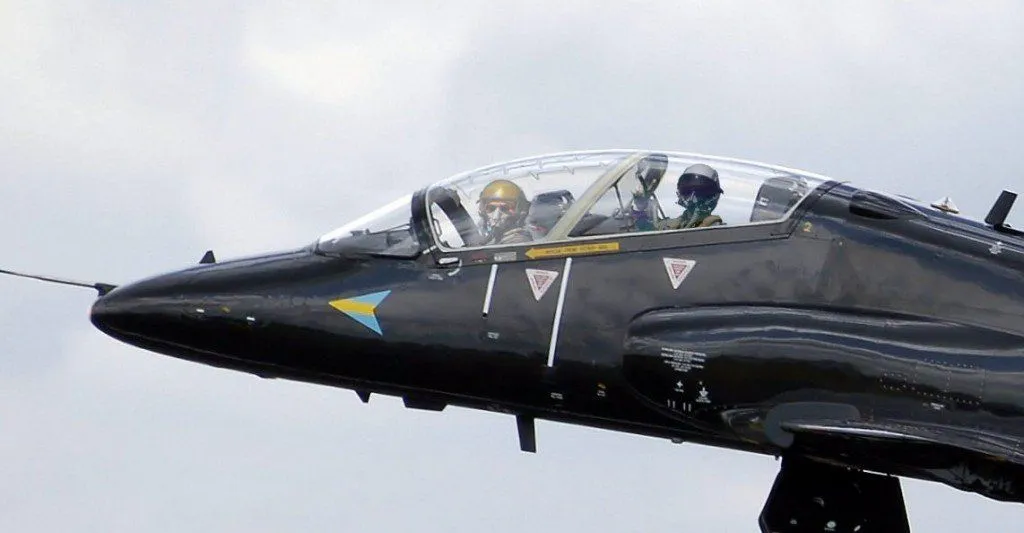
Because of this, pilots can hear their own voice and the sound of the supersonic aircraft engines they’re flying in, but only if the sound is transmitted through the air inside the plane. Any external sound cannot reach the cockpit. Additionally, the noise made by the engines can also be transmitted through the airplane and felt by the pilot as mild vibrations.
How Far Away Can You Hear A Sonic Boom?
A sonic boom is not a one-off bang that happens only at the instant a jet passes the speed of sound. As long as the aircraft keeps flying supersonic, its Mach cone keeps trailing behind it, so the boom sweeps across the ground beneath the entire flight path. That strip of ground is called the boom carpet.
The carpet is surprisingly wide. As a rough rule, it spreads about 1.6 km for every 300 m of altitude (roughly 1 mile for every 1,000 feet), which works out to around five times the plane’s height. A jet cruising at 15,000 m (about 50,000 feet) lays down a boom carpet close to 80 km (50 miles) wide. The bang is loudest for anyone directly under the flight path and fades to a softer rumble toward the edges, so people many kilometres to either side still catch a muffled boom while those beneath the jet get the full crack as it passes overhead.
Because sound crawls along at the speed of sound while the jet races ahead far faster, the boom always arrives at a spot on the ground after the aircraft has already flown past it, which is why you often see a supersonic jet streak overhead in silence and only hear the boom moments later.
Can A Sonic Boom Kill You Or Break Windows?
Short answer: no. A sonic boom is a pressure wave, not an explosion, and a normal one is far too weak to harm you. It reaches the ground as a sudden spike in air pressure known as an ‘N-wave’: the pressure jumps sharply above normal, dips below it, and then snaps back, all in a fraction of a second. Engineers measure its strength as overpressure, which is simply how far above ordinary atmospheric pressure that spike climbs.

A typical sonic boom from a jet at cruising altitude carries only about 1 to 10 pounds per square foot (roughly 50 to 500 pascals) of overpressure. Buildings in good repair shrug off anything up to around 11 pounds per square foot without damage, and the boom that actually reaches a community is usually below 2 pounds per square foot. Cracked windows or plaster do occasionally happen, but almost always in structures that were already weakened.
Your body copes even more easily than a house does. A sonic boom would have to be hundreds of times stronger than a normal one to put your eardrums at risk. Even the extremes are survivable: the most intense sonic boom ever measured, about 144 pounds per square foot, was produced deliberately by an F-4 Phantom flying just past the speed of sound at only 30 m (100 feet) above the ground, and it did not injure the researchers standing directly below it.
Why Don’t We Hear Sonic Booms Anymore?
If supersonic jets have been around since the late 1940s, why have most of us never actually heard a sonic boom? The answer is the law, not the physics. In 1973 the US Federal Aviation Administration banned civil aircraft from flying faster than sound over American land, a rule still on the books today as 14 CFR 91.817. The ban followed a string of 1960s test programmes, most notoriously the 1964 Oklahoma City experiment, in which residents were subjected to eight booms a day for six months and responded with roughly 15,000 complaints about rattled nerves and cracked windows.
That single rule is why the Concorde, the most famous supersonic airliner, was only ever allowed to go supersonic over the ocean; over land it had to slow below the speed of sound, one of the many reasons breaking the sound barrier never became routine for passenger travel.

This is now starting to change. In June 2025 an executive order titled ‘Leading the World in Supersonic Flight’ directed the FAA to repeal the outright speed ban and replace it with a noise-based limit, and in 2026 the agency began the formal rulemaking to do exactly that. The technology to make overland supersonic flight tolerable is already in the air: NASA’s X-59 QueSST is an experimental jet shaped to soften its shockwaves into a gentle ‘thump’ of about 75 decibels, roughly as loud as a car door closing, rather than the 105 to 110 decibel bang of the Concorde. The X-59 made its first flight on 28 October 2025 and first went supersonic on 5 June 2026. If its quiet-boom approach proves acceptable to people on the ground, supersonic travel over land could return without the window-rattling booms that got it banned in the first place.
Last Updated By: Ashish Tiwari
References (click to expand)
- Anderson, J. "Research in supersonic flight and the breaking of the sound barrier." Retrieved September 30 (2001): 2009.
- Talbot, J. M. (1955, August 27). Breaking The Sound Barrier And Its Effect On The Public. Journal of the American Medical Association. American Medical Association (AMA).
- Chapter 3 Research in Supersonic Flight and the Breaking ....
- Anderson, J. D. (2019, January 6). Breaking the Sound Barrier. AIAA Scitech 2019 Forum. American Institute of Aeronautics and Astronautics.
- What is a sonic boom - and is it dangerous? National Geographic.
- Sonic boom. Wikipedia.
- 14 CFR 91.817 - Civil aircraft sonic boom. Electronic Code of Federal Regulations.
- Leading the World in Supersonic Flight. Federal Register (11 June 2025).
- NASA’s X-59 Aircraft Flies Supersonic for First Time. NASA (2026).
- Quesst Mission. NASA.