While taxiing at low speed, large aircraft are steered by the tiller, a small side-mounted wheel that turns the nose-gear up to roughly ±72°. Smaller planes without a tiller steer through differential braking (braking one main wheel to pivot around it) and differential throttle. Once the aircraft accelerates for takeoff or rolls out after landing, pilots stop using the tiller and switch to the rudder (and rudder-pedal nose-wheel steering, with a much smaller ±6° range), since hard tiller inputs at high speed could snap the nose gear.
When moving slowly on the runway, large aircraft are steered with the help of a tiller, but when they move fast, steering is only done with the help of rudders.
First, let’s talk a little bit about taxiing.
Taxiing
The term ‘taxiing’, in relation to airplanes, simply refers to the movement of an aircraft on the ground when it’s neither taking off nor landing. In other words, taxiing is the controlled movement of an aircraft (when on the ground) using its own power.
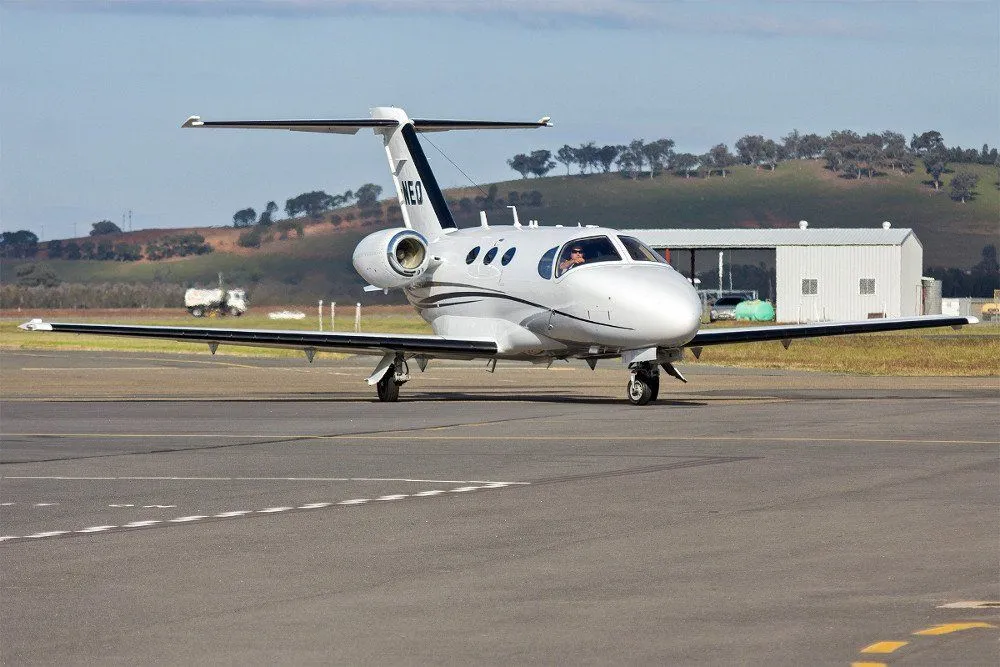
Also spelled ‘taxying’ in some cases, it usually refers to the movement of an aircraft on its wheels, but is also used in the case of airplanes with floats or skis. Note that taxiing does not include the towing of an aircraft where it’s being pulled by a tug; it exclusively refers to the self-powered movement of the aircraft. Also, the high-speed run an aircraft takes along the runway before taking off is not a part of taxiing. The same holds true for the decelerating run just after it lands on the runway.
Commercial airliners, as you might already know, taxi at slow speeds, as they have to navigate through a network of interconnecting lanes, especially at big airports.
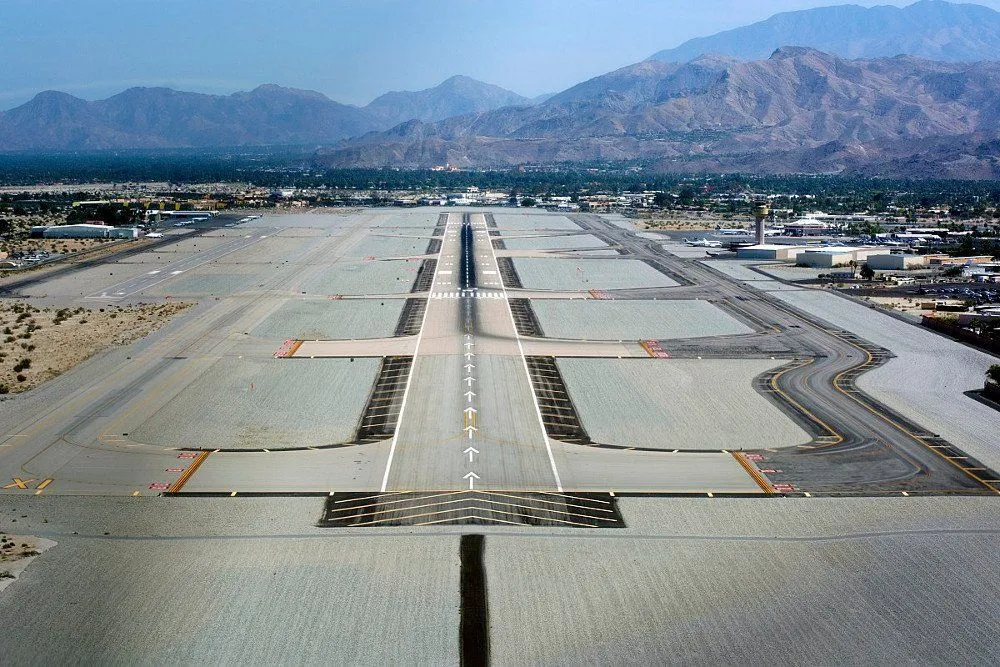
Therefore, it goes without saying that steering an airplane with precision is, quite predictably, of paramount importance.
How Are Airplanes Steered On The Ground?
When on the ground, an airplane’s movement can be broadly divided into two stages: when the plane moves on ‘taxiways’ (i.e., interconnecting roads that link runways and terminals) and when it barrels down the runway during takeoff/landing.
Aircraft Steering During Taxiing
While taxiing, an airplane is steered with a tool that pilots refer to as ‘the tiller’. It is actually a small wheel or crank that lies (usually) to the side of the pilot.
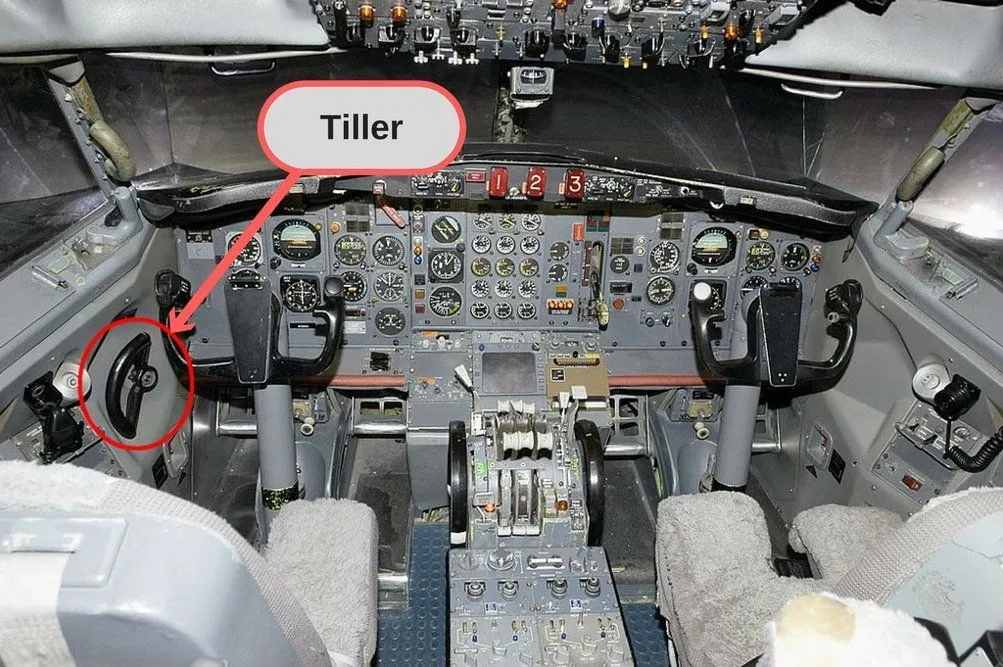
Although its exact position in the cockpit varies depending on the type of commercial aircraft in which it’s housed, the tiller generally lies on the side of the control panel, so pilots typically use it with only one hand (use of both hands is not required).
Although the tiller looks nothing like the steering wheel of a car, it works pretty much the same way. When you turn the tiller, the wheels directly under the nose of the aircraft are turned, and the rest of the plane follows suit. This way, you can steer the plane comfortably and even navigate tight turns on taxiways. In a typical airliner, the tiller can swing the nose-gear up to roughly ±72°, which is more than enough to pivot the aircraft into a tight gate.
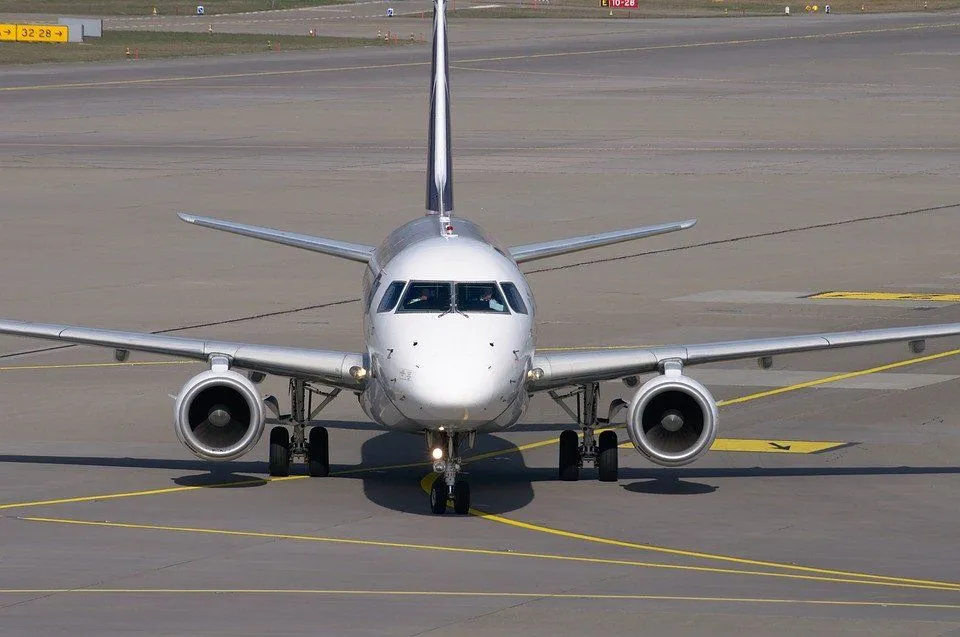
However, tillers are usually present in the cockpits of large commercial aircraft. Smaller planes don’t have the hardware required to turn their wheels, so they have two options: follow a fixed, straight path, or use other methods to steer.
Differential braking is a very popular technique to steer a plane (that doesn’t have a tiller). As the name suggests, it works by applying the brakes to the wheels on one side of the airplane, causing it to pivot around that wheel and move in the desired direction.
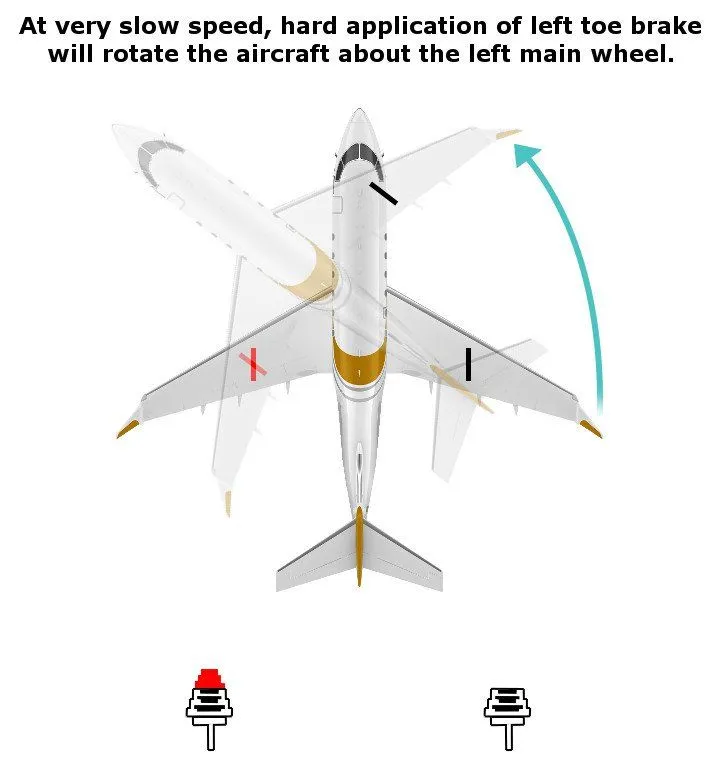
A similar method of steering a small aircraft, which has an engine on each side, is ‘differential throttling’. It works in conjunction with differential braking by adding thrust to the engine on the side opposite the ‘braked’ wheel. This helps to turn the plane more smoothly.
Aircraft Steering During Takeoff/landing
Tillers help to steer an aircraft when it’s going slow, but when it barrels down the runway, the dynamics change… drastically. You see, when a plane is tooling around on taxiways, it’s very easy to turn it left/right by turning the tiller accordingly. However, when you’re going too fast, as in “takeoff/landing fast”, then using the tiller to turn the nose wheel could cause the latter to snap off and quite predictably, lead to a catastrophe.
Therefore, using the tiller and techniques like differential braking and throttling are off-limits during takeoff/landing. The only way to make minor course corrections at those times is with the rudder, assisted by a limited-authority nose-wheel steering link from the rudder pedals (typically only about ±6°), which is just enough for fine line-keeping but too gentle to cause damage at high speed.
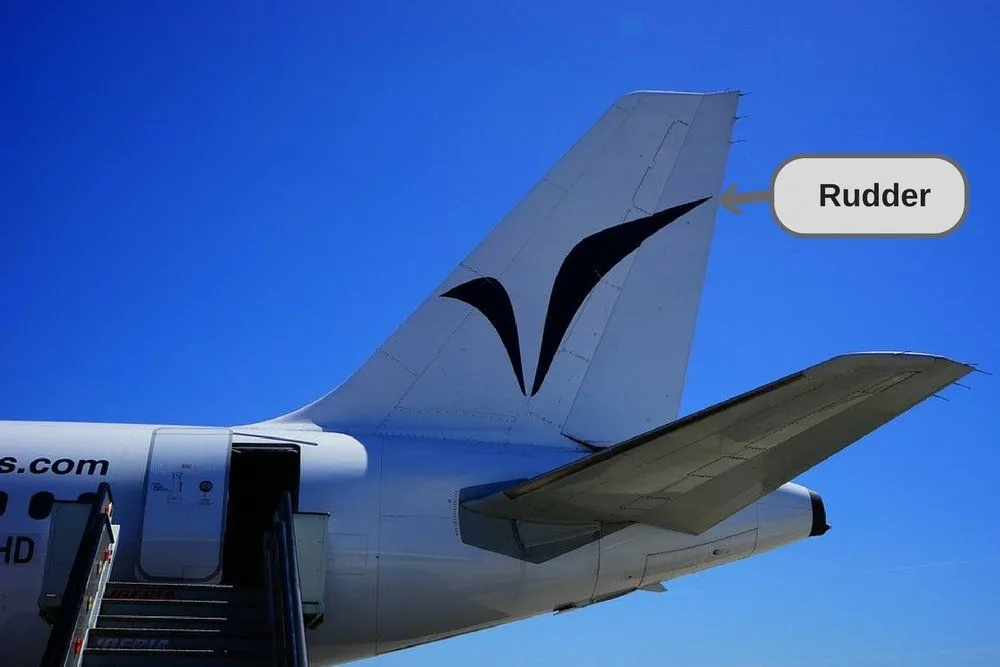
The rudder is essentially a small symmetrical wing turned on its end that you can see at the back of commercial aircraft. The pilot controls the left/right movement of the rudder, which in turn helps to make small course corrections when the plane is going too fast on the runway. It also helps in steering the plane once it is airborne.
Thus, the rudder doesn’t provide a lot of steering movement to the aircraft, but it’s enough to make tiny adjustments and remain on a straight path before takeoff and after landing.
What Is Differential Braking, And When Do Pilots Use It?
We touched on differential braking above, but since it’s the only way a lot of small planes can steer, it’s worth a closer look. The idea is beautifully simple: if you slow down one side of the aircraft while the other keeps rolling, the plane pivots toward the side you’ve dragged. Press the left brake and the plane swings left; press the right brake and it swings right.

Here’s the catch: not every plane has a nose wheel that’s wired to the pedals. Some popular light aircraft, including the Cirrus SR20 and SR22, have no nose-wheel steering at all. Their nose wheel simply swivels, or ‘casters’, freely (much like the front wheel of a shopping cart), so the pilot points the plane purely with the rudder and differential braking. To do this, the pilot presses the very top of the left or right rudder pedal, where the toe brakes sit, feeding braking to just that side.
Because it can pivot a plane more sharply than the rudder alone, differential braking is a handy trick on narrow taxiways and tight ramps, or for spinning around on a short grass strip before takeoff. But it isn’t free. Riding the brakes wears out the pads and heats up (and can even burn) the tires, and jabbing a brake at any real speed can throw the plane into a swerve or a ground loop. That’s exactly why pilots keep it for slow, careful maneuvering and hand the steering back to the rudder as the plane speeds up.
How Do Planes Steer Once They’re In The Air?
Everything we’ve covered so far (the tiller, differential braking and the rudder) is about pointing a plane while it’s still on the tarmac. Once the wheels leave the ground, though, none of it turns the aircraft the way you might expect. In the air, a plane doesn’t steer like a car or a boat; it turns by banking, or rolling, onto one side.

The banking is done with the ailerons, the hinged panels near the tip of each wing. To roll right, the right aileron lifts up and the left one drops down, so one wing makes more lift than the other and the plane tips onto its side. Here’s the clever part: a wing’s lift always points straight up out of the wing, so when the plane banks, that lift tilts along with it. Part of it still holds the plane up against gravity, but the rest now points sideways, and it’s this sideways slice of lift that hauls the aircraft around in a curved arc.
So what does the rudder do up here? Surprisingly little of the actual turning. Its job is to keep the turn tidy. When the ailerons roll the plane, the lowered aileron creates extra drag that tries to swing the nose the wrong way, a nuisance pilots call ‘adverse yaw’. A gentle nudge of rudder in the direction of the turn cancels that out, keeping the nose tracking neatly through the curve. Level the wings again and the sideways force disappears, leaving the plane flying straight ahead on its new heading.
References (click to expand)
- Taxiing Standard Operating Procedures - www.hsu.edu:80
- Jann Mayer, Timothy H. Cox - Evaluation Of Two Unique Side Stick Controllers In A Fixed-Base Flight Simulator - CiteSeerX
- Anthony D. Andre - Information Requirements For Low-Visibility Taxi Operations: What Pilots Say - CiteSeerX
- Nose Wheel Steering. SKYbrary Aviation Safety
- Airport Cooperative Research Program, Transportation Research Board, & National Academies of Sciences, Engineering, and Medicine. (2009). Enhanced Modeling of Aircraft Taxiway Noise, Volume 1: Scoping. []. Transportation Research Board.
- TAXI ! - NASA ASRS. The Aviation Safety Reporting System
- How does an aircraft steer while taxiing on a runway?. The MIT School of Engineering
- Technique: Puttin’ On The Brakes - Aircraft Owners and Pilots Association (AOPA)
- Banking Turn - NASA Glenn Research Center
- Adverse Yaw Explained: A Pilot’s Guide To Better Control - Pilot Institute