Table of Contents (click to expand)
Black pepper makes you sneeze because it contains piperine, an irritant alkaloid released when peppercorns are crushed or ground. Inhaled piperine activates TRPV1 and TRPA1 receptors on trigeminal nerve endings in the nasal lining, which fire a reflex that ejects the irritant in a forceful sneeze.
As a kid who loved Tom and Jerry, watching Jerry fall into a sneezing fit inside the pepper shaker is a classic, but that obviously brought up a few questions in my head.
I went to the kitchen and tried to make myself sneeze using pepper in the same way (I was a weird kid, I know). To my initial amusement, I sneezed and sneezed… and then sneezed some more. Let me just say, by the time I was finished, it was no longer such a pleasant experience.
If you spend any time in the kitchen, chances are good that this grey-black dust of the peppercorn has likely caused you to sneeze once or twice. Older references will tell you a sneeze races out at a wild 100 miles per hour, but modern high-speed-camera measurements peg the actual peak speed at a far more modest 4–10 m/s (roughly 10–20 mph)—still plenty of force to scatter pepper droplets several feet across the room.
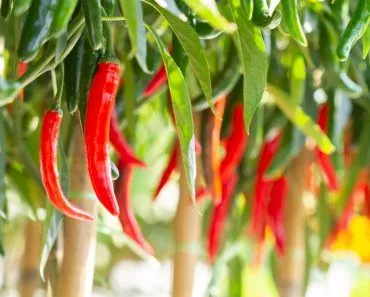
Have you ever wondered what it is about pepper, in particular, that makes us sneeze so readily? What makes pepper so special? There aren’t many spices that have this effect. One spice with a somewhat parallel effect is red chili, which induces a similar sneeze reflex, but there is one difference—it is also accompanied by pain!
Pepper
Peppercorns, whether whole, crushed or powdered, are a commonly used spice in almost every cuisine of the world. The peppercorns we eat are actually fruits of the Piper nigrum plant, part of the Piperaceae family — a flowering vine native to the Western Ghats of southern India (the Malabar Coast of present-day Kerala). Piper nigrum is the most common source of black pepper, and every commercial peppercorn grown today, from Vietnam to Brazil, traces back to those same Indian vines.
Helen of Troy’s face may have launched a thousand ships, but these tiny insignificant-looking red and green balls have, to their credit, launched a few ships in their time too, including the Niña, Pinta and Santa María. Christopher Columbus sailed those ships west in 1492 hoping to reach India and its spice markets (pepper included), and famously ran into the Caribbean instead.

There are many organic compounds present in pepper giving it that typical pungent odor and its tasty properties. Almost 600 compounds have been isolated and identified from black pepper thus far. That’s a whole lot of punch packed into one little peppercorn!
One of these compounds is responsible for triggering the sneeze reflex…
The Culprit – Piperine
The main component of black pepper and the secret to its spicy and pungent qualities is piperine. This alkaloid (an organic compound containing nitrogen) is what makes pepper one of the most widely used spices in the world. The concentration of piperine per peppercorn varies, depending on the strain, typically falling between about 2% and 10% of its dry weight. Naturally, the higher the piperine content, the greater the resulting irritation in the nose, meaning a more intense bout of sneezing.
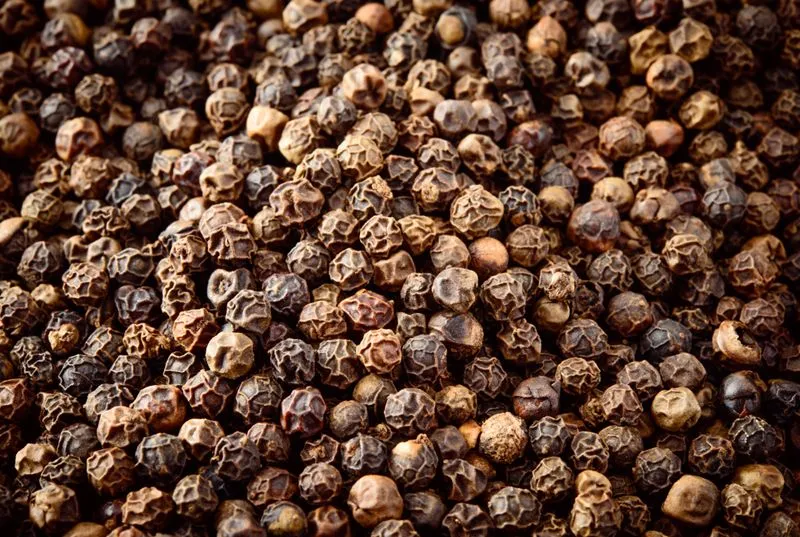
Piperine specifically engages two ion-channel receptors, TRPV1 and TRPA1, sitting on the trigeminal nerve endings that line the inside of your nose. Once these receptors fire, they kick off a reflex response designed to push the irksome pepper back out.
Sneezing is basically that defensive response — a quick, coordinated blast of air aimed at clearing the irritant from the nasal passage as fast as possible. It is how our noses “scratch themselves from the inside,” so to speak.
Just as dust irritates sensitive noses, it is the finely ground powder of peppercorns that triggers the irritation response. When piperine is locked inside a whole peppercorn, it cannot drift into the nose to reach those receptors. Grinding the peppercorns to a fine dust releases the piperine into the air, and the dust particles physically tickle the mucosa, simultaneously engaging large numbers of trigeminal nerve endings that then induce a sneeze.
Another similar nose aggravator is red chili, with capsaicin as the main culprit. Capsaicin hits the same TRPV1 receptor on the trigeminal nerve, but it does so much more potently and broadly throughout the airway, which is why a face full of chili powder produces not just a sneeze but a sharp, burning pain along with it.
Scientists even exploit this reliable reaction. When researchers need volunteers to sneeze on cue — say, to study how far respiratory droplets travel or to test how well a face mask catches them — they hand the volunteers pepper powder to sniff, a technique known as the pepper stimulus.
If scientists waited for participants to feel a spontaneous sneeze coming on, a single study could take forever. It is much easier to just put some pepper in front of their noses. The volunteers should at least be grateful that the painless option works as well as it does — chili powder would do the job too, but with considerably more screaming.

Why Doesn’t Pepper Make Everyone Sneeze?
If you have ever ground fresh pepper over a shared dish and watched one person erupt while everyone else stays perfectly composed, you have spotted the truth: pepper does not make everyone sneeze, and it does not do it every single time. The reflex is dose-dependent. Piperine only sets it off once enough fine dust actually drifts up into the nose and reaches those trigeminal receptors, so a lot comes down to plain geometry. Lean in close over the grinder and you inhale a little cloud of particles; season from higher up, at arm’s length, and most of that dust never makes it to your nostrils in the first place.

The other half of the story is that no two noses are wired quite the same. Each of us has a personal sneeze threshold set by how sensitive our trigeminal nerve endings are, and that sensitivity is partly inherited. The clearest proof that sneeze reflexes differ from person to person is a curious trait called the photic sneeze reflex, or ACHOO syndrome (short for autosomal dominant compelling helio-ophthalmic outburst). Somewhere between 18% and 35% of people sneeze the moment they step out of shade into bright sunlight, while everyone else feels nothing at all. It is a dominant inherited trait, so if one of your parents does the sun-sneeze, you have roughly a 50% chance of doing it too.
Nobody is entirely sure why light should trip a reflex meant for the nose. The leading idea is optic-trigeminal summation: the sudden brightness overstimulates the branch of the trigeminal nerve near the eyes, and that signal spills over into the neighboring branch serving the nose, fooling the brain into thinking there is an irritant to expel. The takeaway is that your sneeze wiring is genuinely your own, which is exactly why a pinch of pepper can floor one person at the table and leave the next completely unbothered.
How to Make Yourself Sneeze on Purpose
Sometimes a sneeze stalls halfway, hanging there maddeningly, and you just want to get it over with. Because pepper works by irritating the trigeminal nerve, you can coax that same nerve into firing with a handful of harmless tricks. The most reliable is the one this whole article is about: sniff a little freshly ground pepper (the very pepper stimulus researchers reach for), or another pungent spice such as cumin or crushed red chili.
You do not even need the spice rack. Twist the corner of a tissue into a soft point and gently wiggle it just inside one nostril until it tickles; a light touch on the nasal lining is often enough on its own. Pressing the tip of your tongue firmly against the roof of your mouth stimulates the maxillary branch of the trigeminal nerve and works for a surprising number of people. Plucking a single eyebrow hair can do it too, and if you happen to have the photic sneeze reflex, simply turning your face toward a bright window may be the quickest route of all.
A word of caution, because your nose is more delicate than it feels. Never push a tissue, cotton swab or anything else deep into the nostril, since you can scratch the lining or start a nosebleed; a gentle tickle right at the entrance is all it takes. And if you are chasing a sneeze with light, glance toward a bright window or lamp rather than staring straight at the sun, which can harm your eyes. Done gently, an occasional self-induced sneeze is harmless, and it certainly beats standing around with your mouth open waiting for one to arrive.
Conclusion
Pepper is a key part of many recipes, so don’t be surprised if you start sneezing if a recipe calls for some. Just take care not to sneeze into your food—or anyone else’s!
Pepper, no matter how irritating it is when inhaled, is quite delightful on the tongue, so swearing off pepper to avoid its effects is unrealistic.
And if you’re out in public and need to sprinkle some pepper on your food, just be careful not to inhale it. A surprise sneeze across a restaurant table is still one of the great social faux pas (right up there with belching at the dinner table), so aim that pepper grinder downward and breathe through your mouth for a second.
References (click to expand)
- Why does pepper make you sneeze? - Library of Congress. The Library of Congress
- Ahmad, N., Fazal, H., Abbasi, B. H., Farooq, S., Ali, M., & Khan, M. A. (2012, January). Biological role of Piper nigrum L. (Black pepper): A review. Asian Pacific Journal of Tropical Biomedicine. Medknow.
- (2016) Nose Length as a Factor in Salt and Pepper Passage. Semantic Scholar
- Your Nose (for Kids) - Nemours KidsHealth. kidshealth.org
- Dong, Y., et al. (2019). A distinct structural mechanism underlies TRPV1 activation by piperine. Biochemical and Biophysical Research Communications. PMC, NIH.
- Achoo Syndrome: Why the Sun Makes You Sneeze. Cleveland Clinic.
- Photic sneeze reflex: Definition, cause, symptoms, and more. Medical News Today.
- How to Make Yourself Sneeze: 9 Ways. Healthline.