No, the “10% of our brain” claim is a myth. Brain imaging shows that humans use virtually all of their brain, with different regions active for different tasks across a day. The brain burns about 20% of the body’s energy, so evolution would have pruned any large, unused 90% long ago.
There are several references in pop culture to the myth that we use only 10% of our brains, perhaps most recently in the movie “Lucy”. That particular story shows the journey of the protagonist as she learns to acquire new skills using the “remaining” 90% of her brain!
Companies marketing “brain-boosting” products often use the same myth to sell the idea that using their products may help customers “tap into” that unused potential of the brain.
Due to such popular references, this myth continues to persist.
What Is The 10% Myth And Why Is It Popular?
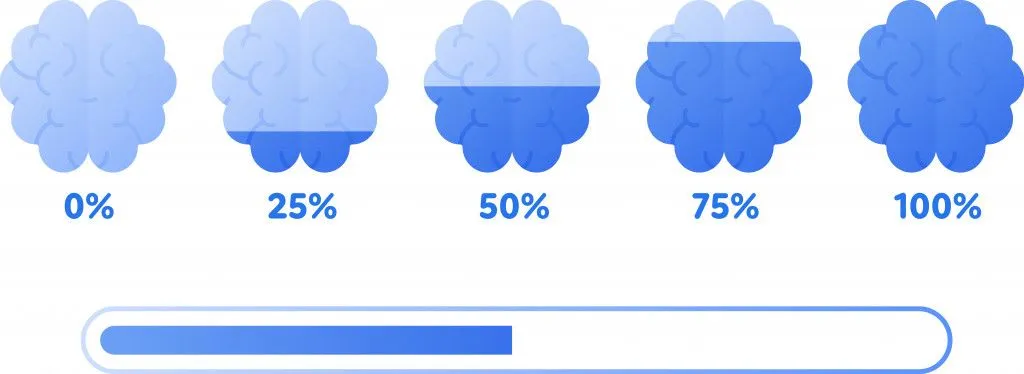
The 10% myth is that an average human uses only about 10% of their brain or mental capacity.
The origin of the myth is hard to track, due to its extensive appearance in popular culture, but as usual, this myth originated from misinterpreted scientific findings.
In the early 1900s, popular American psychologist William James, drawing on his ideas about untapped human “reserve energy”, famously stated in his 1907 essay The Energies of Men that “We are making use of only a small part of our possible mental and physical resources”.
This, supposedly, gave rise to the idea that we use only a fraction of our brain “power”, and such a fallacy was later recycled in advertisements and self-help books.
The myth really took off in 1936, when the broadcaster Lowell Thomas wrote the Foreword for Dale Carnegie’s How to Win Friends and Influence People. Thomas attributed the idea to William James, writing that “Professor William James of Harvard used to say that the average man develops only ten percent of his latent mental ability”. James himself never named a number (he died in 1910), but Thomas’s confidently precise “ten percent” is the version that stuck.
Another source for this myth was a study by the famous neurosurgeon, Wilder Penfield.
During surgery, Penfield used electricity to stimulate certain parts of the brains of his patients. He noticed that stimulating certain parts of the brain led to specific actions. For example, stimulating the brain region controlling the left arm would lead to movement in the left arm! Using this method, he was able to draw an entire map of the brain’s functions, specifying which region controlled which part of our body.
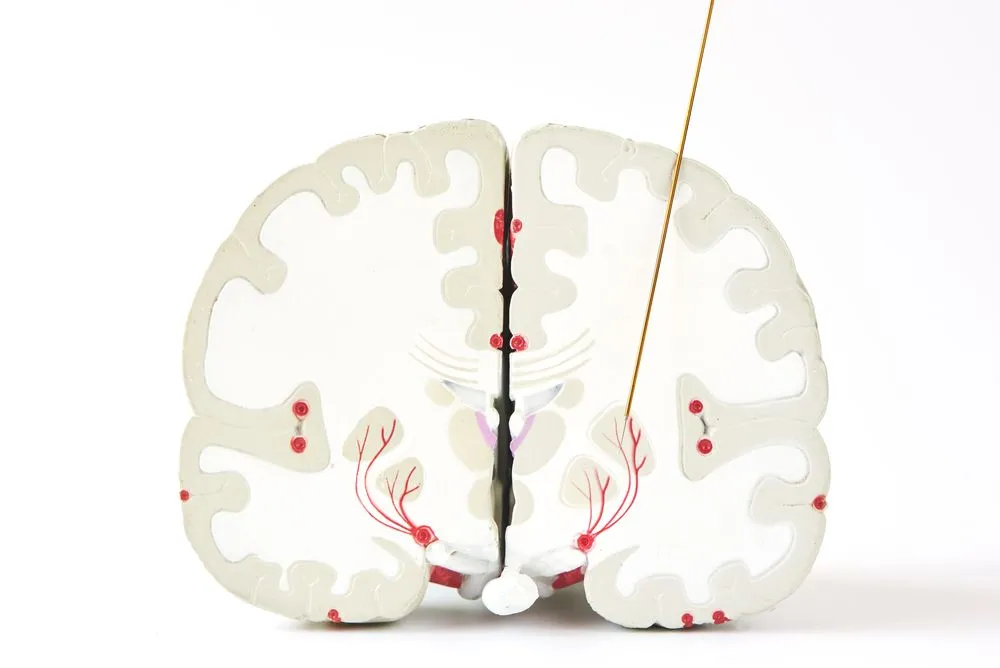
However, he also encountered certain “silent” parts of the brain; stimulating them electrically did not produce any effect on the body. This was interpreted as proof that not all brain regions are functional and that some parts remain ‘unused’. We now know this to be false, since the lack of reaction from stimulation does not mean that the region is non-functional.
With the passage of time, new cell types in the brain were discovered, but many were initially considered to be non-functional. For example, at the time of their discovery, ‘glial’ cells were named as such because they were thought to be just “glue” holding the nervous system together. The lack of technology led to assumptions that underestimate the importance of many such cells. This cemented the idea that not all of the brain is functional, and that only a fraction is probably put to use.
Debunking The Myth
With advances in brain imaging technology, it became clear that while only a fraction of the brain may be active at a particular time, all parts of the brain are functional.
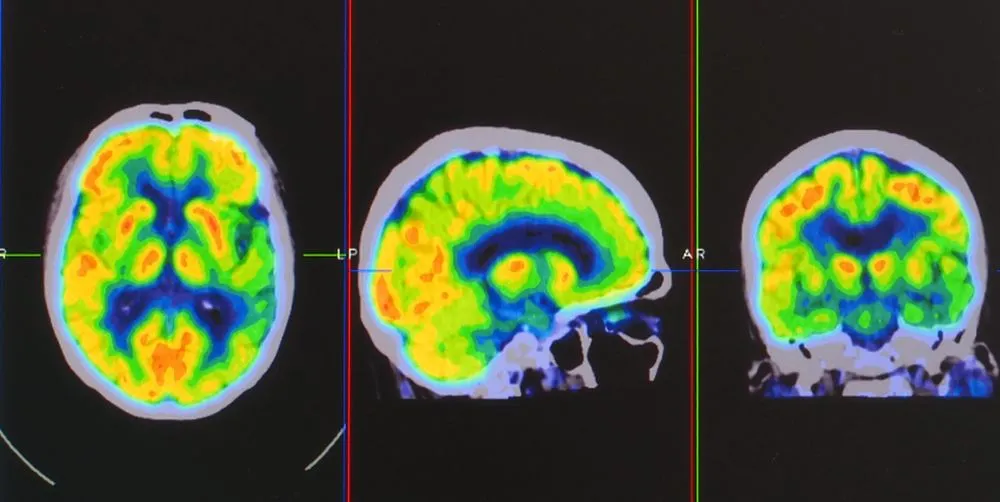
Studies on patients with brain damage show that even small lesions can lead to huge deficits in our functioning. A famous example is a case described by Paul Broca in 1861. His patient, Louis Victor Leborgne, had lost the ability to speak after damage to his left frontal lobe and could only utter one syllable – Tan!
Furthermore, the brain is known to “prune” itself. Much like a gardener “prunes” unnecessary branches of a bush, the brain is known to “prune” itself of brain cell connections that no longer serve any function. Given this, if the myth were true, 90% of our brains would have been “pruned” and discarded!
Also, it’s unlikely that any unused brain region would survive the process of “evolution”. Having such a high non-functional mass of the brain would be very energetically costly, since the brain is known to consume a whopping 20% of our total energy. Thus, we have little reason to believe that only a small fraction of our brain is functional.
Why Is The Myth Popular?
The myth allows us to believe that we are capable of ‘growth’. It provides an optimistic viewpoint, suggesting that we are all capable of great things and that each of us has the potential to be an “Einstein”!
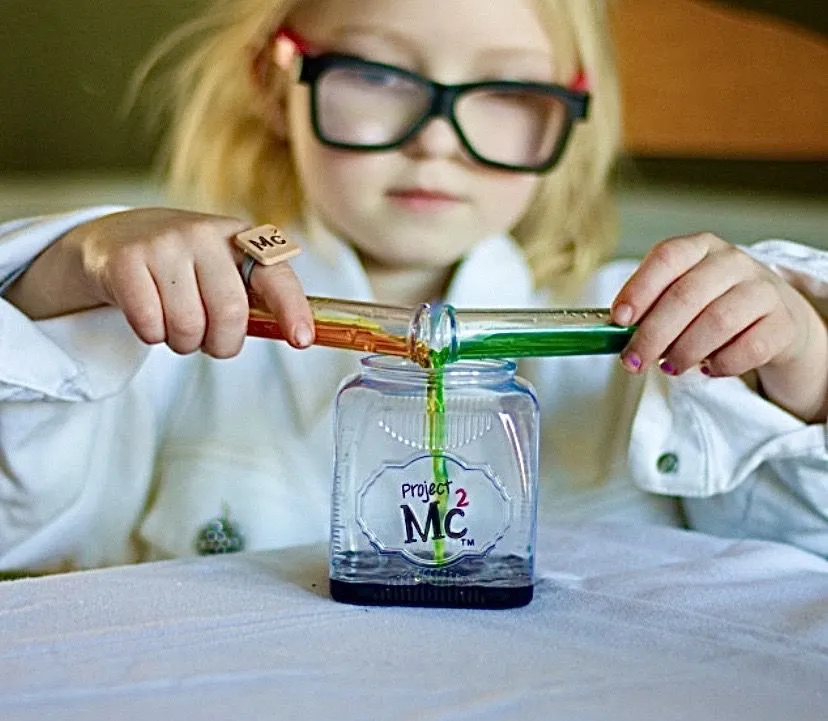
It’s important to note that debunking this myth in no way means that we can’t learn new skills. You can pick up a new language, learn to juggle, do magic, or play an instrument (and be very good at it) at any point in life. This is in no way dependent on having “unused” regions lying around in the brain! We’re more than capable of picking up new skills using the existing and ‘used’ brain tissue.
This is proven by the fact that humans have invented a variety of skills, such as reading and mathematics, in only the last few thousand years. The brain wasn’t designed to do these functions, but we are all capable of these skills. The brain can continuously adapt its existing tissue and reuse it for new skills. If that weren’t true, using a computer or a smartphone would be nearly impossible!
What Percentage Of Our Brain Do We Use Consciously?
A common follow-up to the 10% myth is the question of how much of our brain we use consciously. This is a slightly different question, and it hides a subtle mix-up: it treats “being aware of” an activity and “using” the brain as if they were the same thing. They are not.

At any given moment, your brain is quietly running a long list of jobs you never notice. It keeps your heart beating, adjusts your breathing, holds your posture upright, regulates your body temperature, and filters the constant flood of sights, sounds, and sensations so that only the important bits reach your attention. The brain is constantly handling both unconscious tasks, such as regulating heart rate, and conscious ones, such as driving a car, and as Johns Hopkins neurologist Barry Gordon has noted, we in fact use virtually all of it, with most of the brain active almost all the time. All of this quiet background work is metabolically expensive, and none of it is carried out by some idle, “switched-off” portion of the brain; it relies on real, fully functional tissue.
So is there a tidy figure for “conscious use”, like the 5% you may have seen quoted online? No. Those numbers are guesses rather than measured facts, and they repeat the same error as the 10% myth by pretending the brain splits neatly into a small “used” part and a large “unused” one. What brain imaging actually shows is that, over the course of a full day, we draw on essentially all of the brain, as Mayo Clinic neurologist John Henley has noted, whether or not that activity ever surfaces in our conscious awareness. The honest answer, then, is that the slice of brain activity you consciously notice is small, but the fraction you use is effectively all of it.
Can You Train Your Brain To Do More?
If there is no dormant 90% waiting to be switched on, can you still get more out of your brain? You cannot “unlock” hidden capacity the way the movie “Lucy” imagines, but the brain you already use in full is far from fixed. Through a property called neuroplasticity, it constantly rewires its existing connections in response to what you do, following the well-known rule that neurons that fire together, wire together.

This is why the science points to caring for and challenging the brain you have, rather than chasing a mythical spare 90%. A 2022 review in Frontiers in Psychology highlights three everyday levers that support this rewiring. Regular physical exercise, especially aerobic activity, raises levels of growth signals such as brain-derived neurotrophic factor (BDNF) that help neurons form and strengthen connections. Sleep does much of the actual consolidation, locking in what you learned during the day, which is why sleep deprivation blunts the brain’s capacity for plasticity. And a healthy diet, such as a Mediterranean-style pattern, helps preserve the structural connectivity of key brain circuits.
Learning itself is the other half of the equation. Every new language, instrument, or skill you practice strengthens the networks you use, while connections you neglect are gradually pruned away. In other words, the way to “use more” of your brain is not to awaken sleeping regions but to keep the whole, already-active organ well rested, well fed, and regularly challenged.
Conclusion
All humans are capable of “growth” or acquiring new skills, and we use all of our brain in a distributed fashion for carrying out various functions. The motto of our nervous system is very much “Use it or LOSE it”! Thanks to the housekeeping system built into our brains, we can lose any lazy brain tissue over time. As a result, we never end up with “unused” parts of the brain!
References (click to expand)
- James, W. (1907, January). The Energies of Men. The Philosophical Review. JSTOR.
- PENFIELD, W., & PEROT, P. (1963). The Brain’S Record Of Auditory And Visual Experience. Brain. Oxford University Press (OUP).
- Sakai, J. (2020, June 24). How synaptic pruning shapes neural wiring during development and, possibly, in disease. Proceedings of the National Academy of Sciences. Proceedings of the National Academy of Sciences.
- (2000) Patient Tan revisited: a case of atypical global aphasia?. The United States National Library of Medicine
- Boyd, R. (2008, February 7). Do People Only Use 10 Percent of Their Brains? Scientific American.
- Pickersgill, J. W., et al. (2022). The Combined Influences of Exercise, Diet and Sleep on Neuroplasticity. Frontiers in Psychology.