Yes - American crows (and other corvids) hold long-lasting grudges against specific humans who have wronged them, recognize them by face, and pass that information to their flock-mates and even their offspring. A long-running University of Washington study found that crows still dive-bombed and scolded a researcher wearing a particular 'dangerous' mask five years after the original trapping event, including by birds who had never been trapped themselves.
A few years ago, I befriended a particularly happy puppy in a park near my house. I visited the park quite often and would walk around different parts of it. On these frequent visits, I was always accompanied by my new friend (whom I named Pumba).
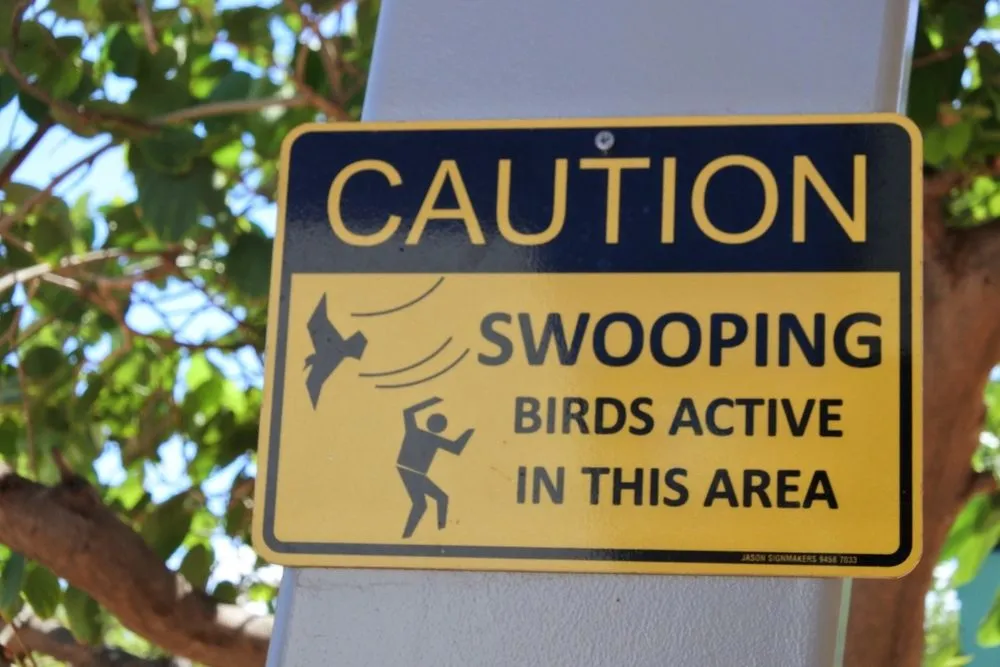
Once, while walking in a new part of the park with my furry friend, I noticed that crows would often fly right at us and swoop down, seeming to dive-bomb us. Stranger still was that sometimes the crows would literally stop right in front of the puppy and caw at him. It was almost as if they were chastising or threatening him. Now, this was my first time exploring this part of the park, so there would be no reason for the flock of crows to give me this much attention, unless they were naturally skittish (something crows aren’t generally known for). This led me to my theory… had Pumba messed with these same crows before and did they somehow remember him?
A Thirst For Vengeance
Crows are incredibly smart creatures. Compared to other birds, all corvids (members of the crow family) are characterized by an abnormally large brain. For instance, a raven’s brain can account for up to 2 percent of its body mass. For scale, that’s eerily similar to an adult human, whose brains also take up about 2 percent of their total body weight.
Corvids are well documented for their use of tools. We’ve all seen articles that rave about a crow retrieving food from inside a closed box or piling rocks into a glass of water in order to drink from it. Yet, corvid cognition might be even more advanced than we anticipated. This advance in their cognition comes down to their memories.
Crows can remember a lot. They can recognize individuals and their particular behaviors. In fact, they’re so good at processing memory that they can even pass on information to their offspring!
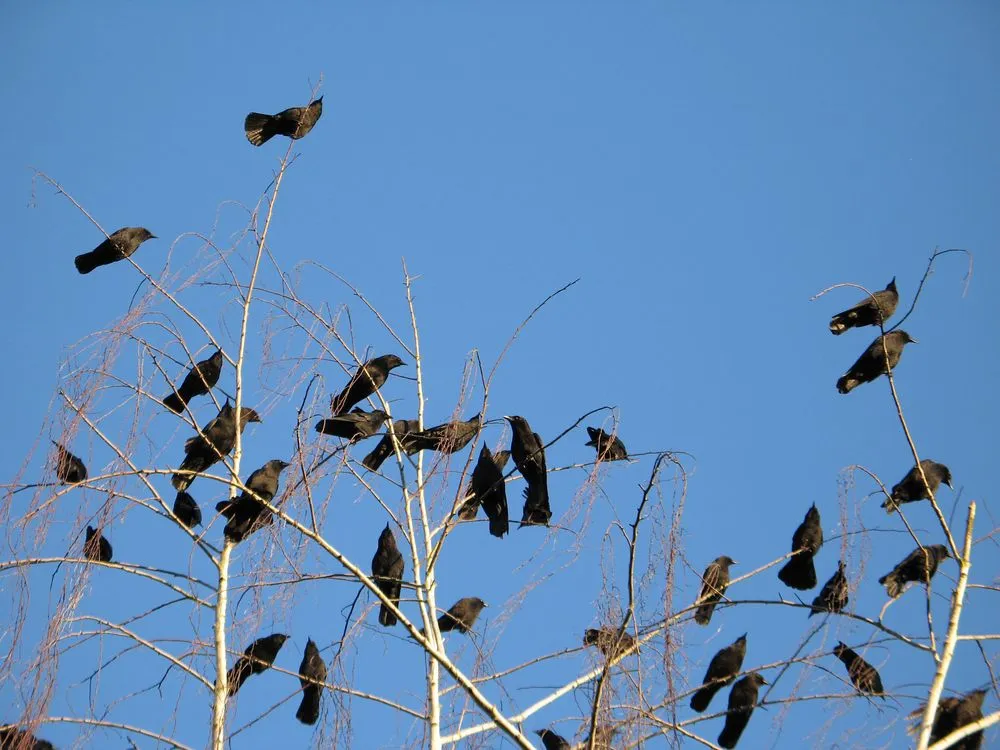
Wildlife biologists, at the University of Washington confirmed as much when they conducted an experiment with American Crows. Researchers were divided into groups of two. One group wore full-face “dangerous” masks while handling the crows (the researchers who wore dangerous masks trapped, banded, and then released the crows), while the other group of researchers wore “neutral” masks.
When simultaneously exposed to two people, one in the dangerous mask and the other in a neutral mask, the crows would ignore the neutral-masked individual, but would dive bomb, scold, or even mob the individual wearing the dangerous mask.
Researchers noticed that even when they wore the masks upside down, the crows would overcome their initial confusion by simply tilting their heads. Kaeli Swift, the doctoral student who focused her thesis on crow behavior, had the following to say when commenting on corvid intelligence for NPR, “For a brief moment, the crows seemed a little confused, and then they would just tilt their head upside down and then they’d start an alarm-calling.”
Swift also pointed out that banded crows didn’t just scold the guilty. Rather, they’d relay information about the “dangerous” masked individuals to other members of their flock, who would then exhibit the same dive-bombing behavior upon coming across “dangerous” masked individuals themselves.
Hatchling Crows Inherit Grudges From Their Parents
As it turns out, crows don’t just hold grudges. They propagate them too. It’s a “one for all, all for one” strategy. If you mess with one bird of the flock, you mess with every member of the flock. This makes a lot of sense when you consider that, similar to other highly intelligent animals, crows are extremely social in their group structure. In fact, even solitary species of crows congregate together when it comes to foraging for food.
Another aspect to consider when it comes to corvid cognition is that crows can remember things for a long time. When researchers at the University of Washington donned their “dangerous” masks again, five years after the initiation of their experiment, they were still dive-bombed and screeched at by crows in the area!
Crows passed on the legend of the “dangerous” mask not just to their flock mates, but also to newborn hatchlings! Like human parents warning their babies against the bogeyman, baby crows would join in with their parents to chase away masked offenders.
Other Corvids Like Ravens Exhibit Similar Behaviors
When researchers at Lund University gave nine ravens a chance to play judge, they were amazed to find out that ravens could accurately make distinctions between “fair” and “unfair” deals.
As part of the experiment, a few researchers gave hand-raised ravens a small piece of bread they could exchange for a tastier piece of cheese.
In the second phase of the experiment, another group of researchers would create an “unfair” encounter by eating the cheese themselves, rather than giving the cheese to the ravens as part of a reciprocal exchange.
Researchers observed that when they later attempted to let the ravens choose between “fair” trainers (who exchanged the bread for cheese), “unfair” trainers (who did not participate in meaningful exchanges), and neutral trainers, seven out of nine Ravens chose the fair trainer.
How Good Is A Crow’s Memory?
By now you might be wondering just how sharp a crow’s memory really is. The honest answer is: unnervingly sharp. That same University of Washington experiment ran for a full five years, and rather than fading over time, the birds’ memory of the “dangerous” mask actually grew stronger. When the researchers first trapped the crows, only about 20 percent of the local birds bothered to scold the mask. Five years later, roughly 60 percent of them did, because the warning had rippled outward through the flock and down to a new generation that had never been trapped at all.

What makes this so striking is how long crows live. These aren’t mayflies; the oldest wild American crow on record was more than 14 years old, and a bird in a typical urban neighborhood can easily stick around for well over a decade. So when a crow files you away as a threat, that memory can shadow you for a huge chunk of the animal’s life. One bad encounter could, in theory, earn you years of dirty looks from the local murder. And it isn’t only crows that manage this; their close relatives the ravens pull off similar feats of memory.
It also isn’t only faces they file away. Crows keep careful track of which people have wronged them and which haven’t, and they fold that information into how they behave, from the alarm calls they raise to the wide berth they give a known threat. That same sharp social memory shows up elsewhere in their lives too, including the way they sometimes gather around their dead. A crow’s memory isn’t a party trick; it’s a survival tool, and a remarkably durable one.
Are Crows Dangerous To Humans?
If a murder of crows has ever screamed at you from a rooftop, you’ve probably wondered whether they might actually follow through. The reassuring news is that crows are almost never genuinely dangerous to people. There are no records of a crow killing a human, and even the dramatic dive-bombing that started this whole article rarely leaves a mark.

Most swooping happens in a narrow window in late spring and early summer, during what researchers call the fledgling stage. Like many birds, young crows leave the nest before they can properly fly, so they spend several days hopping around on the ground, hopelessly exposed. Their parents stand guard, and to an anxious crow parent, a passing human can look like one more predator to see off. As University of Washington corvid researcher Kaeli Swift explains, the birds are simply protecting youngsters who are “very vulnerable to predation.”
Even then, it’s mostly for show. Swift notes that direct contact where a crow actually draws blood is “really uncommon,” and that “it’s very unlikely you’re actually going to get injured.” The worst most people suffer is a startled yelp and maybe a light clip to the back of the head. If you do find yourself in a crow’s crosshairs, the advice is refreshingly simple: stay calm, keep walking out of the area, give any nest you know about a wide berth, and, in Swift’s words, “carry an umbrella when you go outside. It’s very simple, and it’s really effective.” And if a crow seems to have singled you out in particular, well, it might be worth asking whether you’ve wronged that murder before.
A Final Word
As I would later find out from a gardener in the park, Pumba would indeed chase down crows for his own amusement in that particular portion of the park. So now, every time he visited that area, he’d be shamed by a murder of crows cawing at him and booing him from the skies or while perched on treetops.
From my own personal experience, I would generally agree with the sentiment that crows do remember wrongdoings against them, but I wouldn’t necessarily call this holding a grudge.
Crows cleverly reduce future predation risk by acquiring and spreading valuable information to members of their flock and hatchlings. Essentially, they’re just protecting themselves and others from known threats, and passing that wisdom along to any crow who will listen!
References (click to expand)
- Cornell, H. N., Marzluff, J. M., & Pecoraro, S. (2011, June 29). Social learning spreads knowledge about dangerous humans among American crows. Proceedings of the Royal Society B: Biological Sciences. The Royal Society.
- Swift, K., & Marzluff, J. M. (2018, July 16). Occurrence and variability of tactile interactions between wild American crows and dead conspecifics. Philosophical Transactions of the Royal Society B: Biological Sciences. The Royal Society.
- Müller, J. J. A., Massen, J. J. M., Bugnyar, T., & Osvath, M. (2017, June). Ravens remember the nature of a single reciprocal interaction sequence over 2 days and even after a month. Animal Behaviour. Elsevier BV.
- Davies, R. (2011). Never cross a crow - it will remember your face. The Conversation.
- Corvus brachyrhynchos (American crow). Animal Diversity Web, University of Michigan Museum of Zoology.
- Why crows are dive bombing unsuspecting Seattleites. KUOW / NPR (interview with Dr. Kaeli Swift).