Table of Contents (click to expand)
- What’s The Deal With Antarctica?
- Have Humans Ever Tried Settling Down At The South Pole?
- So, How Many People Actually Live In Antarctica?
- Has Anyone Ever Actually Been Born In Antarctica?
- What Happens If Someone Falls Ill During The Antarctic Winter?
- Final Verdict: Is It Possible To Live In Antarctica Year-round?
Yes, people do live in Antarctica all year round, just not as native inhabitants. About 4,500 scientists and support staff are stationed across some 70 research bases during the bright Antarctic summer, dropping to roughly 1,000 hardy "winterovers" who stay through the months-long polar night. The temperatures are harsh, the day-and-night cycle is extreme, there is no greenery, and food is limited to what can be flown in or grown indoors.
In November 2022, the world welcomed its eight billionth person. As newspapers rushed in to try and isolate the exact baby who would officially take the title of ‘eight billionth baby”, they seemed to gloss over an alarming and highly related problem: global population increase. By 2050, around 10 billion people could be living on this planet.
Given that we have yet to find another habitable and accessible planet in the galaxy, we’ll need to figure out a way to accommodate everyone here. Eventually, as we look to the one continent in the world with no permanent human settlements, the question will be raised: can we live in Antarctica all year round?
What’s The Deal With Antarctica?
Antarctica doesn’t even have an indigenous population. Think of the Maoris of New Zealand, indigenous to the mainland there. Antarctica has no actual natives that call the continent home. The inaccessibility of the continent has always been an obstacle.
Antarctica is a pretty “chill” continent… perhaps a little too chill. The lowest temperatures reach around -80°C (-112°F), while the average temperature hovers around -10°C (14°F) . The entire continent is a comically large (around 13.66 million square kilometers) sheet of ice.
The continent experiences two main seasons: a sunny summer and a bleak winter. On a sunny summer day in Antarctica, the sun never sets. Likewise, on a dark and gloomy winter day in Antarctica, the sun never rises. Both of these seasons are equally harsh and last for approximately six months. In Antarctica, you literally get six months of either uninterrupted darkness or uninterrupted daylight.
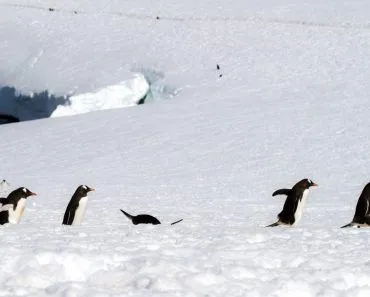
Contrary to popular belief, there are no polar bears at the south pole. However, there are leopard seals and penguins, though even these prefer spending most of their time underwater, as opposed to waddling and sliding along the ice sheets. As for flora, you won’t find any large trees or anything useful to forage. If anything, there’s just algae and moss scattered over certain areas, like the coasts of the continent. That makes hunting and feeding particularly challenging for those who call this continent home.
There’s no denying that the continent is a tough sell, yet the lack of predators, coupled with vast spades of virgin land for agriculture, would be the perfect conditions any settler would desire when attempting to colonize or settle a new land. So, why have we never attempted to enact permanent settlements in Antarctica?
Have Humans Ever Tried Settling Down At The South Pole?
The first known camp on the Antarctic continent was established by Robert Falcon Scott during the Discovery expedition (1901-1904), when his team set up a base at Hut Point on Ross Island. It wasn’t until a decade later that Roald Amundsen became the first person to reach the South Pole itself. When he and his team finally reached the pole on December 14th, 1911, they christened the site of their campsite “Polheim” or “Home at the Pole”. Barring the symbolism of the name, Polheim did not last very long. The team packed up their camp as early as two days later, and bid the South Pole adieu on the 17th of December.
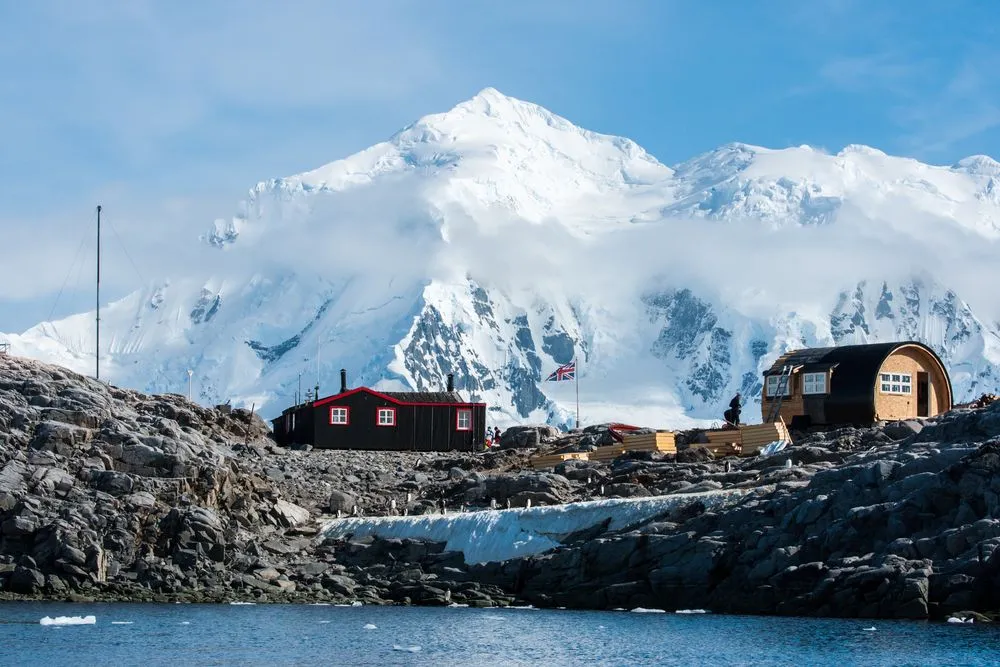
Since then, any humans who have set foot on the continent have either been scientists or tourists. Scientists may have the best claim as "natives" to the continent. About 30 countries operate research facilities in Antarctica, totalling roughly 70 stations across the mainland and its surrounding islands. From conservation biologists to astronomers, scientists across a wide range of disciplines set up base at these stations to study the continent. The biggest, McMurdo Station (US), can house over 1,000 people in summer; the smallest are tiny huts staffed by only a handful of researchers.
Tourists, on the other hand, only visit the continent during the summer months. Cruise ships ferry eager passengers whose primary goal is to witness a whale breach from the icy waters. Some tourists also charter private operators to get them onto the continent, as opposed to sailing around it.
So, How Many People Actually Live In Antarctica?
Here’s the strange part: nobody in Antarctica is a permanent resident. There are no citizens, no towns with a mayor, and no one whose home address is simply “Antarctica”. Every single person on the continent is there on a temporary posting, and the total headcount rises and falls with the seasons like a tide.

During the summer field season, when the coast basks in near-endless daylight and planes and ships can finally reach it, the population climbs to roughly 4,000 to 5,000 scientists and support staff spread across the continent. When the sun disappears for winter, most of them fly home and the number drops to around 1,000 hardy souls who stay behind. These aren’t all researchers, either. Keeping a base alive through the polar night takes cooks, mechanics, electricians, doctors and firefighters too.
The people are split between roughly 70 research stations run by about 30 different countries. The largest by far is the United States’ McMurdo Station, a sprawling outpost on Ross Island that can hold about 1,000 people in summer and shrinks to around 200 in winter. Others are far lonelier: the Amundsen–Scott South Pole Station sits right on the geographic pole and keeps only a few dozen “winterovers” through the dark months. So while the answer to “does anyone live in Antarctica?” is a firm yes, it’s less a settled population and more a rotating crew.
Has Anyone Ever Actually Been Born In Antarctica?
Believe it or not, yes. On 7 January 1978, a boy named Emilio Marcos Palma was born at Argentina’s Esperanza Base on the Antarctic Peninsula, weighing in at 3.4 kg (7 lb 8 oz). He holds the Guinness World Record as the first person ever born on the continent.

But this wasn’t a happy accident. Emilio’s arrival was, quite literally, a strategic move. His mother, Silvia Morella de Palma, was flown to the base while seven months pregnant on the orders of an Argentine government keen to strengthen its territorial claim over the peninsula. The logic went that if the first human born in Antarctica was Argentine, Argentina’s foothold there would look that much more legitimate. Chile promptly answered by sending its own families south, and by the mid-1980s at least 11 children had been born on the continent, eight at Esperanza and three at Chile’s Villa Las Estrellas settlement.
So does that make these children native Antarcticans? Not in any legal sense. Under the Antarctic Treaty of 1959, no country’s territorial claims are recognised, and the seven nations that do claim slices of the continent have agreed to freeze those claims for as long as the treaty holds. Being born on the ice grants no citizenship and no ownership. Antarctica remains the only continent with no indigenous people and, officially, no permanent population at all.
What Happens If Someone Falls Ill During The Antarctic Winter?
This is where “living” in Antarctica stops being a fun bit of trivia and turns deadly serious. For much of the year the inland stations are physically cut off from the rest of the planet. At the Amundsen–Scott South Pole Station, no aircraft come or go between roughly mid-February and late October, because flying into months of darkness at temperatures near -60°C (-76°F) is dangerous enough to kill a flight crew. If you fall ill during that window, you are, for all practical purposes, on your own.

The most famous example is Dr. Jerri Nielsen, the sole physician at the South Pole during the 1999 winter. When she found a lump in her breast, there was no way out. She biopsied herself with help from colleagues, consulted doctors back home over a video link, and began self-administering chemotherapy using drugs that a US Air Force plane airdropped by parachute that July. She was finally evacuated on an LC-130 aircraft that touched down in mid-October, weeks earlier than the season would normally allow.
Even today, midwinter rescues are rare and risky. In June 2016, a Canadian-operated Twin Otter, one of the few planes able to fly in temperatures as low as -75°C (-103°F), made a dramatic two-day dash to pull two ill workers off the South Pole station in near-total darkness. Stories like these are exactly why national programs screen their winterover staff so carefully. Choosing to spend a winter in Antarctica means accepting that, for months at a time, the nearest hospital might as well be on another planet.
Final Verdict: Is It Possible To Live In Antarctica Year-round?
Let’s suppose that you’re a climatologist studying the effects of climate change on the melting Antarctic ice. To gather data for your study, your university sets you up with a 15-month contract at any one of the 82 field sites on the continent. Apart from the headache of reaching such an inaccessible destination, there are many more logistical and biological concerns to consider. About 1,000 winterovers ride out the polar night every year: at McMurdo around 150 stay, and Amundsen–Scott South Pole Station drops to just ~50 staff for eight months of total isolation.
For example, think of the effect of the Antarctic weather on your biological clock or circadian rhythm. Your circadian rhythm is what gives you a sense of time. It’s what reminds you to go to bed when it’s dark and what wakes us up when the sun rises. On a continent where the sun never sets, your circadian rhythm will go haywire. Your body has no actual environmental reminders to do basic and necessary activities, such as eating or sleeping.
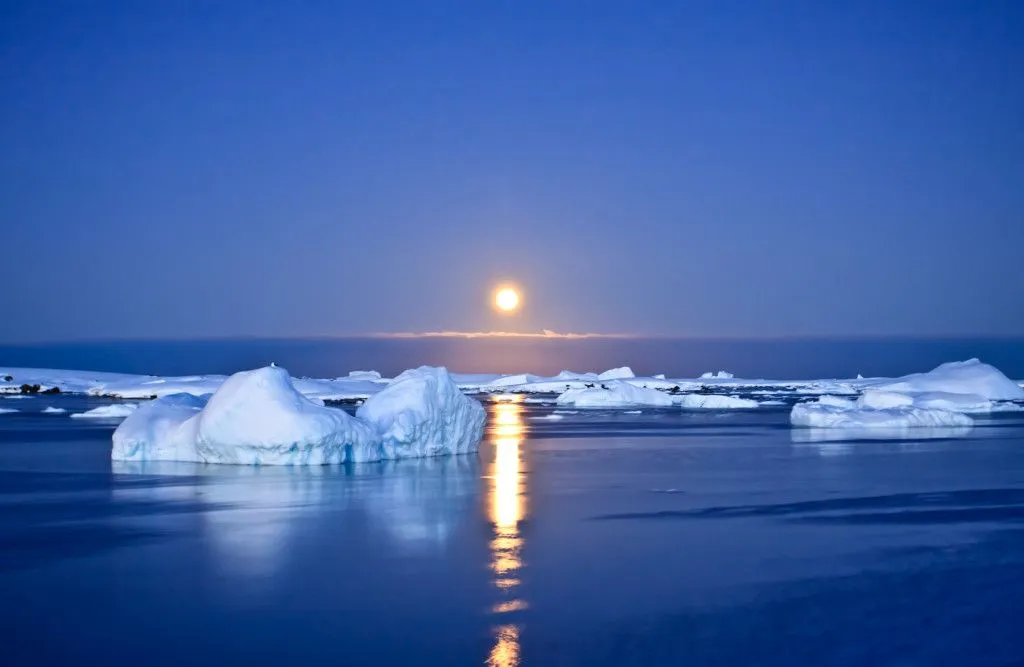
Similarly, whether it’s summer or winter, Antarctica is one of the windiest places in the world. It is also one of the driest places on the planet. The continent is quite literally bad for your health. It’s not a place we are supposed to live because we’re just not built for it. We don’t have layers of blubber under our skin like leopard seals and penguins do. Presently, we can acclimatize, but it is highly unlikely that we would ever adapt to the harsh climes of Antarctica in a single lifetime.
We have set up greenhouses and can grow plants hydroponically (without soil, in nutrient-rich water), but that’s only possible in greenhouses, and to make the produce sustainable for human survival, we’d need to take up large swaths of land.
We must also consider how changing Antarctica could affect the rest of the world and the earth’s ecosystems. Antarctica might look like a white desert, but its coldness plays a key role in the delicate climate balance of the planet. Would we potentially change that if we colonized the land?
Final answer, yes, but only a handful can do it and only a select few of that handful actually end up doing it. Living in Antarctica for a year is akin to living on the International Space Station for a year. Technically speaking, no human was ever supposed to live in either of those extreme environments.
References (click to expand)
- What Is Antarctica?. Tration
- Antarctica. National Geographic Education
- Day of 8 Billion | United Nations. Sion In South Sudan (Unmiss)
- Over 100 years of Antarctic agriculture is helping scientists ....
- Demographics of Antarctica. Wikipedia
- Emilio Palma. Wikipedia
- The Antarctic Treaty. Antarctic Treaty Secretariat
- Jerri Nielsen. Wikipedia
- Daring flight removes 2 sick workers from South Pole station. Phys.org