Yes, but by an amount no mirror will ever show. Living higher up means slightly weaker gravity, and through gravitational time dilation that makes your clock (and you) run a touch faster than at sea level. A 2010 NIST experiment found that spending 79 years just 33 cm (1 foot) higher ages you about 90 billionths of a second more. So time really does move faster up high, never enough to add a wrinkle.
As you struggle to get out of bed each morning, look for that one pair of pants that fit just right, and fix yourself a cuppa Joe, you’ve probably wished that time would stop moving so fast and take it easy. Well, it turns out, it actually could. Not in the way you’d wished for, but it’s easier to pull out that self-help book holding up the coffee table leg than wait around for the universe to fit your time schedule.
Is Time Not Constant?
While we’ve always believed that time moves at a constant rate, like the hands on the dial of a watch, physics and subjective experience show us how this simply isn’t so. The concept of ‘absolute time’ is an illusion (time to call up your old physics teachers).
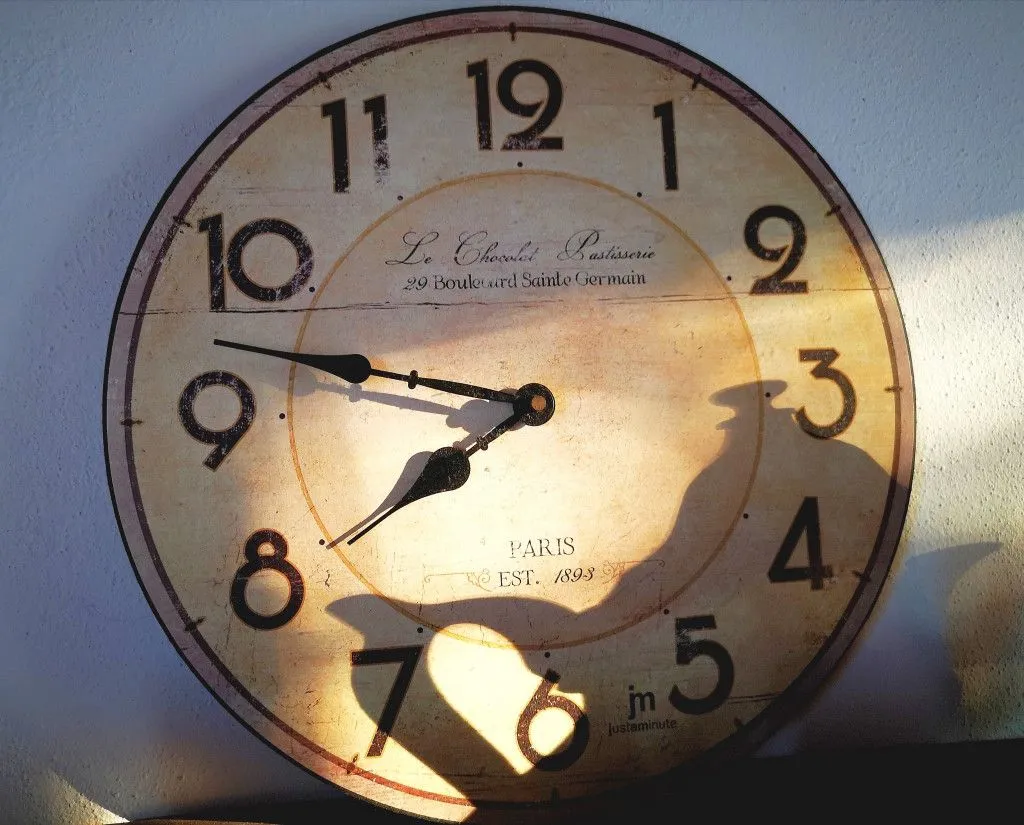
To understand this, a little experiment is required. If you place one clock at the top of a mountain and the other at the edge of a beach, you’ll eventually see that both clocks tell a different time!
In the past, Einstein predicted this difference in time occurring at the cosmic scale in the universe (shoutout to my all-time favorite space film, Interstellar). However, physicists in 2010 observed this on a much smaller scale using precise atomic clocks, one placed 33 centimeters (1 foot) higher than another. They discovered that time moved slower for the one kept at the bottom.
What’s even weirder is that this phenomenon is not just limited to the passage of time in clocks. For two people, one living at the top of the building and the other living on the ground floor, time flows at a different pace. The one living lower would have lived less time, even if it’s by a fraction of a nanosecond (forgetting the time saved on stairs and escalators). Researchers found that if a twin spent 79 years living at an altitude 1 foot higher than the other twin, the first would end up 90 billionths of a second older than the other one!
But Why Exactly Does This Happen?
This mystifying phenomenon can be accredited to something known as Einstein’s Theory of General Relativity. This concept, introduced by Einstein in 1915, is one of the most fascinating insights into the universe we’ve discovered to date. This theory talks about an effect called ‘gravitational time dilation’. Before you skip ahead, anticipating another boring lecture, let me tempt you with a teaser: a bendable universe. As strange as that sounds, it’s actually the truth!
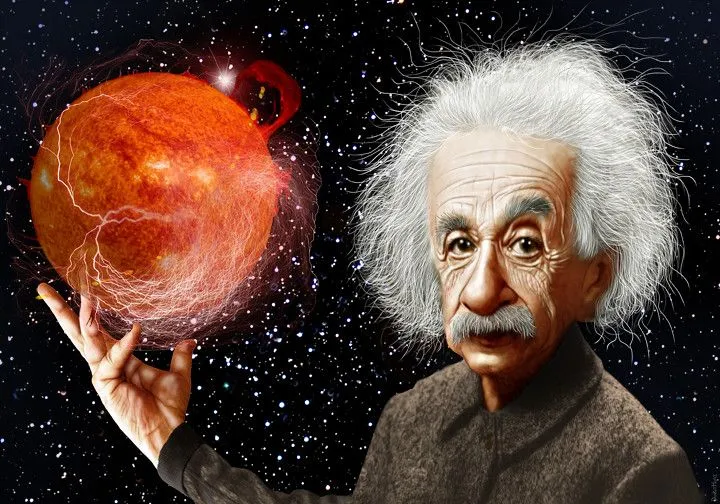
The universe is composed of four dimensions that we know of: the three dimensions we see, and the fourth dimension of time. The part that gets really gripping is due to the fact that space and time are interlinked; when cosmic bodies move across space, they also bend time. According to Einstein’s theory, the gravity that we experience is due to this curvature of space and time (i.e., space-time).
An object with a heavier mass will have a stronger gravitational field. Since we know that gravity results from the curvature of spacetime, the stronger the gravity of a body, the more spacetime curves and the slower time moves ahead.
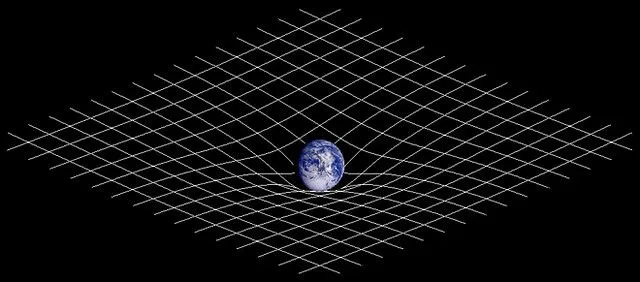
This gravitational time dilation occurs due to a difference in gravity between two points. We feel the force of gravity strongest at the surface of the Earth, as it pulls us down to the ground. As we move farther away from the surface, even just a few meters, the effect of gravity gets weaker. We might not feel this slight effect much, but even climbing one floor of a building weakens the effect of gravity that we experience.
However, it’s also important to know that for two people in different gravity settings, the time they both observe would be normal to each of them, and they’d both be right. It’s only if they could compare their times with respect to each other that they’d realize that the one closer to the ground is a bit behind. Time slows and speeds itself up depending on spacetime.
This Also Means You Can Time Travel!
This change in time as we go up essentially means that to travel through time, all you need to do is climb all the way up a skyscraper, et voila! If we look at a building as tall and spectacular as the Empire State Building, and with respect to a person sat in the middle of the building, a person traveling from the bottom to the top in an elevator would literally be traveling through time, in relation to the person in the middle.
As the lift moves further away from the surface of the Earth, time keeps moving faster, and when they eventually cross the person in the middle to reach the top, they will have moved through time as compared to them.

This is why people who work on the top floor of a high-rise literally edge into the future in relation to the people stuck on the bottommost floor, since their clock ticks a hair faster. Add this to the list of cool fun facts about your job.
This essentially means that living at a higher altitude would mean less gravity pulling you down, so you’ll be moving ahead faster than the rest of us slogging down below, but don’t worry, the wrinkles won’t catch up to you that fast.
Even though so much of how gravity and time intertwine is still being explored, this corner of relativity sets the precedent for huge developments ahead. You never know, one day, time travel could be a reality, and won’t be confined to the elevators in a skyscraper!
So, Do You Age Faster Or Slower In Space?
Here’s where things get delightfully contradictory. An astronaut aboard the International Space Station is roughly 400 kilometers above us, sitting in noticeably weaker gravity than anyone on the ground. By everything we’ve just covered, that should make them age faster than us earthbound folk. And yet they come home a smidge younger. So what gives?

The twist is speed. Our skyscraper trick only ever involved gravity, because the person in the elevator is basically standing still. An orbiting astronaut, on the other hand, is screaming around the planet at roughly 27,500 kilometers per hour (about 17,500 mph). Einstein’s special relativity tells us that the faster you move, the slower your clock ticks, a completely separate effect known as velocity time dilation. So astronauts get tugged two ways at once: weaker gravity nudges their clock a little faster, while blistering orbital speed drags it slower.
On the ISS, speed wins the tug-of-war. The velocity effect outweighs the altitude effect, so the net result is that astronauts age a touch more slowly than the rest of us. When Scott Kelly came back from 340 days aboard the station in 2016, physicists calculated that he had aged about 5 milliseconds less than his identical twin brother Mark, who had stayed on the ground. Hardly a fountain of youth, but a real, measurable head start on the family photos.
Does Living Up High Actually Age Your Body?
By now you might be eyeing a mountain cabin and wondering whether the altitude will eventually show up on your face. The relativistic aging we’ve been talking about is real, but it is measured in billionths of a second, so it will never, ever crease your skin. The everyday biology, though, is a far more interesting story.

There is one way height can visibly age you, and it comes from the Sun rather than from Einstein. With thinner air overhead there is less atmosphere to soak up ultraviolet light, so UV levels climb by roughly 10% for every 1,000 meters you gain in elevation, according to the World Health Organization. More UV means faster photoaging (think wrinkles, sagging and age spots), which is exactly why dermatologists nag mountain dwellers and skiers about sunscreen.
Zoom out to your whole body, though, and living high does not appear to age you faster at all. A 2013 review in the journal Aging and Disease found that people living at higher altitudes tend to have lower death rates from cardiovascular disease and stroke, even though mortality from lung conditions such as COPD runs higher. A national analysis of US counties echoed this: counties above about 1,000 meters saw fewer deaths from ischemic heart disease, more deaths from COPD, and roughly no net change in life expectancy overall. Researchers suspect the mild, constant dip in oxygen coaxes the body into building more red blood cells and blood vessels. So while the thin-air lifestyle can toughen your skin, it is not quietly stealing years off your life (just remember these are population-wide trends, not a personal guarantee).
References (click to expand)
- Does time go faster at the top of a building compared to the .... West Texas A&M University
- NIST Pair of Aluminum Atomic Clocks Reveal Einstein's .... The National Institute of Standards and Technology
- Chou, C. W., Hume, D. B., Rosenband, T., & Wineland, D. J. (2010, September 24). Optical Clocks and Relativity. Science. American Association for the Advancement of Science (AAAS).
- Einstein’s ‘Time Dilation’ Prediction and How Astronaut Scott Kelly Aged Slower Than His Twin. Space.com
- Burtscher, M. (2013). Effects of Living at Higher Altitudes on Mortality: A Narrative Review. Aging and Disease.
- Altitude, Life Expectancy and Mortality from Ischaemic Heart Disease, Stroke, COPD and Cancers: National Population-Based Analysis of US Counties. Journal of Epidemiology and Community Health.
- Radiation: Ultraviolet (UV) Radiation. World Health Organization.