Yes. Time dilation affects even the most accurate atomic clocks. Because GPS satellites orbit fast and sit higher in Earth’s gravity, their clocks run about 38 microseconds per day faster than clocks on the ground (roughly +45 from gravity, minus 7 from speed). GPS corrects for this, or positions would drift by about 10 km a day.
Have you ever noticed how we sometimes feel like time is flying by, while at other times it seems to drag on forever? It’s bizarre how our internal clocks work, because we tend to expect time to always pass at the same pace, regardless of what we’re doing or where we are.
However, in his Special theory of relativity, Einstein proposed that the laws of physics are the same for all observers, no matter where or how fast they’re moving.
Also, as Einstein noted, the speed of light is always the same, no matter how fast you or the light source is moving.
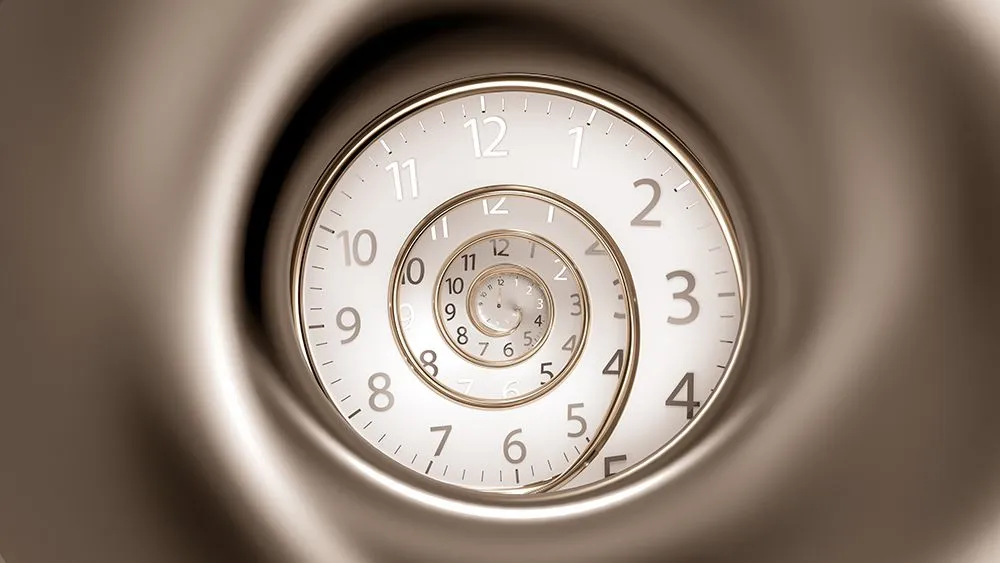
Now… imagine a world where time doesn’t tick uniformly everywhere!
In such a world, would time dilation affect super-accurate clocks?
What Are Atomic Clocks?
Atomic clocks are highly precise timekeeping devices that measure time by counting the vibrations or oscillations of atoms. These clocks are incredibly precise due to their ability to vibrate at stable and well-defined frequencies.
For example, Cesium-133 atomic clocks measure the frequency of microwave radiation that prompts electrons in Cesium atoms to move between energy levels. The consistency of these vibrations makes atomic clocks the most dependable and precise timekeepers humans have ever devised.
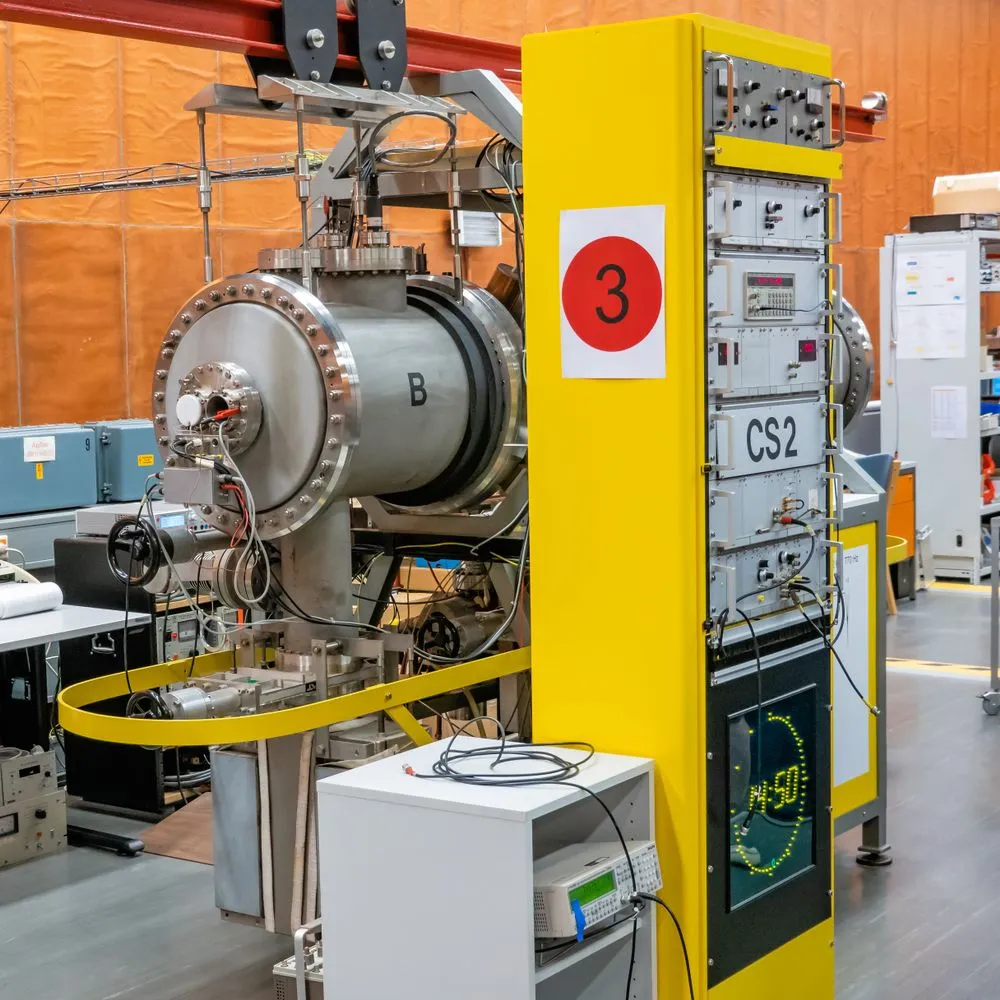
The international standard for the definition of a “second” is based on Cesium atomic clocks. One second is defined as the duration of 9,192,631,770 vibrations or oscillations of a Cesium-133 atom when it transitions between two specific energy states.
Special Theory And Time Dilation: A Dynamic Relationship
Special relativity is a theory that explains how time is not an absolute concept, but rather a function of the relative motion of observers. The idea of time dilation, which is a fundamental consequence of Einstein’s theory, describes the perceived change in the passage of time for an object that is in motion, relative to its velocity compared to the speed of light.
This phenomenon is critical in understanding the behavior of objects moving at high speeds, and it has been a cornerstone of modern physics for over a century.
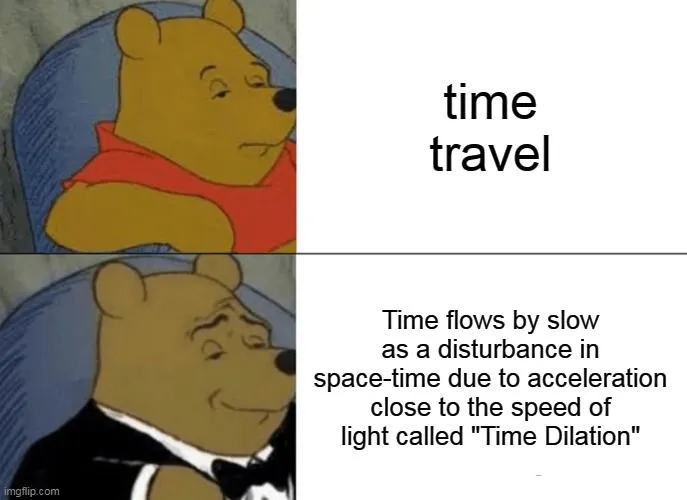
Basically, there are two forms of time dilation: velocity and gravitational. What are they and how do they affect us?
Time And Gravity
According to Einstein, velocity time dilation is the assertion that as an object approaches the speed of light, time appears to pass more slowly for it than it does for an observer not moving at such a high speed. It follows that the faster an object travels, the slower time seems to pass for it, in comparison to someone who is stationary.

Gravitational time dilation explains how time appears to pass differently depending on the strength of a gravitational field. To understand this phenomenon, consider these simple facts:
– Strong Gravity Slows Time: In regions with a strong gravitational field, such as near a massive planet or a black hole, time passes more slowly than in regions with weaker gravity, such as in outer space or near a less massive celestial body.
– Weak Gravity Speeds Time: Conversely, in areas with weaker gravity, time passes more quickly than in regions with stronger gravity. For example, a clock placed on the surface of a massive planet like Earth would tick slightly more slowly than a clock in deep space, as the clock isolated in deep space would not be influenced by a strong gravitational field!
And you don’t need a black hole or deep space to see this. In 2022, physicists at JILA used a strontium optical atomic clock to measure gravitational time dilation across a height difference of just one millimeter (about the width of a pencil tip). The atoms a hair higher up, where gravity is the tiniest bit weaker, ticked measurably faster. That’s how unforgiving these clocks have become to even the smallest change in gravity!
Has Time Dilation Actually Been Measured With Real Clocks?
By now you might be wondering whether any of this is truly measurable, or whether it just lives on paper as theory. As it happens, we didn’t have to wait for GPS to find out. In October 1971, physicist Joseph Hafele and astronomer Richard Keating ran one of the most famous experiments in modern physics. They booked passenger seats on ordinary commercial airliners and strapped in four HP 5061A cesium-beam atomic clocks, then flew them twice around the world, once heading east and once heading west. The whole time, an identical set of reference clocks stayed put at the U.S. Naval Observatory.

When the travelling clocks came home, they no longer agreed with the ones that had stayed on the ground. The clocks flown eastward, in the same direction as Earth’s rotation, ran slow and lost about 59 nanoseconds, while the clocks flown westward gained about 273 nanoseconds. Both results matched what special and general relativity had predicted (a loss of roughly 40 nanoseconds going east and a gain of about 275 nanoseconds going west) to within the experiment’s margin of error.
It was one of the first direct, real-world demonstrations that speed and gravity genuinely change the rate at which a clock ticks, exactly as Einstein had claimed half a century earlier. So the answer to our headline question is a firm yes: time dilation is not just a thought experiment. We have literally flown clocks around the planet and watched them fall out of step!
Practical Implications: Precision In Modern Applications
Atomic clocks play a vital role in guiding us everywhere. Yes, one of the greatest applications of atomic clocks is in the Global Positioning System (GPS). GPS relies on a network of satellites equipped with atomic clocks.
These satellites emit precisely timed signals, and by measuring the time it takes for these signals to reach multiple GPS receivers on Earth, the receivers can calculate their precise location. The accuracy of GPS is dependent on the accuracy of the atomic clocks on the satellites. Without atomic clocks, GPS navigation as we know it would be impossible.
Apart from GPS, atomic clocks are crucial in telecommunications, financial transactions, network synchronization and (of course) space exploration. But how does time dilation play a role in this scenario?
The GPS system relies on a network of satellites orbiting Earth. These satellites move at significant speeds in their orbits, and they also sit roughly 20,000 km (about 12,400 mi) up, where Earth’s gravity is weaker than it is at the surface. Both of those facts cause them to experience time dilation relative to stationary objects on Earth. As we explained above, we know that time flows differently in this scenario.
Here’s the twist: the two effects pull in opposite directions. Velocity time dilation makes each satellite clock run about 7 microseconds per day slower than a ground clock, while the weaker gravity up there makes it run about 45 microseconds per day faster. Gravity wins, so the net result is that each satellite clock gains roughly 38 microseconds per day on clocks back on Earth.
That sounds tiny, but light travels about 30 centimeters in a nanosecond, so 38 microseconds of error works out to a positioning drift of around 10 km (6 mi) every single day! Imagine if the satellite clocks were not corrected… your GPS calculations would be off by a significant margin, making them highly inaccurate and likely causing millions of people to get lost.
This is where we use time dilation correction. To ensure accuracy, engineers tune the satellite clocks before launch and apply ongoing relativistic corrections, so the clocks stay in step with time on the ground despite both the velocity and gravitational effects acting on them!
What About Astronauts On The Space Station?
GPS satellites sit high above us where gravity is weak, so their clocks run fast and gravity wins the tug-of-war. But what happens closer to home, aboard the International Space Station (ISS)? The answer flips.

The ISS orbits only about 400 km (250 mi) up, where Earth’s gravity is barely weaker than it is at sea level. At that modest altitude the gravitational speed-up is small, adding only a few microseconds per day. Meanwhile the station is racing around the planet at roughly 7.66 km/s (about 28,000 km/h, or 17,500 mph), and that enormous speed slows its clocks by about 28 microseconds per day. This time velocity wins the contest. The net result is that a clock on the ISS runs a couple of dozen microseconds per day slower than one on the ground, the mirror image of what happens to GPS.
For the astronauts, this means they age very slightly slower than the rest of us, a real-life echo of the famous twin paradox. It is a genuine effect, just a minuscule one. When NASA astronaut Scott Kelly came back from his 340-day mission in 2016, calculations showed he had aged roughly 5 milliseconds less than his identical twin brother Mark, who had stayed on Earth. Scott returned home a tiny sliver younger than his twin, having quietly slipped a few thousandths of a second into the future, all thanks to time dilation!
In conclusion, even the most super-accurate clocks must consider and account for time dilation in order to maintain their precision! So, the next time you check your GPS, give a nod of appreciation to those super-accurate clocks up in space, our trusty timekeepers that bravely defy the quirks of time dilation to keep us on schedule in our wacky and relativistic universe!
References (click to expand)
- JILA Atomic Clocks Measure Einstein's General Relativity at the Millimeter Scale. NIST.
- GPS and Telling Time. GPS.gov.
- Real-World Relativity: The GPS Navigation System. The Ohio State University.
- A Review Article on Einstein Special Theory of Relativity.
- Whether time dilation of relativity can be verified by all kinds of clocks? - www.researchgate.net
- Reinhardt, S., Saathoff, G., Buhr, H., Carlson, L. A., Wolf, A., Schwalm, D., … Gwinner, G. (2007, November 11). Test of relativistic time dilation with fast optical atomic clocks at different velocities. Nature Physics. Springer Science and Business Media LLC.
- USNO Marks 50 Year Anniversary of Breakthrough Relativity Experiment. U.S. Naval Observatory.
- Hafele-Keating experiment. Wikipedia.
- Einstein's Time Dilation Spread Age Gap for Astronaut Scott Kelly and His Twin. Space.com.
- In Space, Scott Kelly Aged Slower Than His Brother on Earth, And Here's Why. ScienceAlert.