Table of Contents (click to expand)
- What Is Sound, And How Is It Made?
- How Loud Is Loud? What A Decibel Actually Is
- Is There A Limit To How Loud A Sound Can Get?
- Why Is The Limit 194 Decibels?
- What Happens If You Go Past 194 Decibels?
- Is 1,000 Decibels Possible? What About 300, Or 10,000?
- But What About The Tsar Bomba's "224 dB"?
- Can A Human Survive 200 Decibels?
- How Loud Was Krakatoa?
- Was The Saturn V Really 204 Decibels?
- Could Sound Be Louder Somewhere Else?
- What Is The Loudest Sound In The Universe?
- So, What's The Loudest Sound Possible On Earth?
The loudest possible sound in Earth's atmosphere is about 194 decibels at its peak, or 191 decibels measured the way a sound meter measures it. A sound wave squeezes air molecules together and then spreads them thin around a baseline of one atmosphere: the squeezing has no limit, but the spreading does, because at 194 dB the spread-thin part has given away a full atmosphere (101,325 pascals) and is an actual vacuum. Nothing louder can exist as a sound wave, so figures like the Tsar Bomba's “224 dB” or viral claims about “1,000 decibels” describe blast pressure or nothing physical at all, rather than sound.
Picture the biggest speaker ever built, with a volume knob that turns all the way around. You start turning. It gets louder. Then louder still. Your ears give up long before the knob does.
If you kept turning, would it just keep getting louder forever?
It wouldn't. Somewhere on that dial, the sound stops being a sound at all. Not because the speaker melts, and not because you have gone deaf. Because the air runs out.
That is a strange sentence, and it happens to be one of the odder true facts in all of physics, precisely because it sounds impossible and is not. Better still, it takes only about four minutes to make obvious. Stay with me, because by the end you will be able to look at almost every "loudest sound ever" claim on the internet, including the famous one about the Tsar Bomba, and see straight through it.
What Is Sound, And How Is It Made?
Clap your hands. You just made a sound. Here is what actually happened.
Your palms slammed together and shoved the air out from between them. That shoved air had to go somewhere, so it barged into the air next to it and squashed it. That squashed air barged into the air next to it. And so on, outward, in every direction.

If that is hard to picture, picture a slinky instead.
Stretch a slinky across a table and give one end a sharp shove. You can watch exactly what happens: a bunched-up squeeze of coils races down the spring to the far end. Now watch any single coil. It does not travel anywhere. It shuffles forward, bumps its neighbor, and springs back to where it started. The squeeze crosses the whole table. The coils stay home.
Air does exactly that, just invisibly, with molecules instead of coils. Push it and you leave a patch where molecules are crowded together, at high pressure. Let go and you leave a patch where they are spread thin, at low pressure. Do that over and over and those patches travel outward through the air as a wave. Every voice you have ever heard, every song, every clap of thunder, is just that slinky trick played out in air. Hold on to that picture, because it is the key that unlocks the whole puzzle.

How Loud Is Loud? What A Decibel Actually Is
One more tool before we go hunting for the limit, and it is worth getting right, because the decibel is a wonderfully slippery little unit that trips up almost everybody, including plenty of people who should know better.
A decibel is not an amount of something, the way a meter is an amount of length. It is a comparison. It measures your sound's pressure against a reference pressure: roughly the faintest sound a healthy young ear can detect.
It is also squashed. Every extra 20 decibels means ten times the pressure. Not twice as much. Ten times. So 60 decibels is not "a bit more" than 40, it is ten times the pressure, and 80 is a hundred times.

That squashing is why decibel numbers stay small and tidy while the real pressures behind them get enormous. It is also why big decibel numbers are so easy to quote and so easy to misread, which will matter a lot later. (More on the scale, including the strange fact that it can go negative, in why negative decibels are a thing.)
Is There A Limit To How Loud A Sound Can Get?
So turn the volume up and watch what you are asking the air to do. The squeezed patches have to go further above one atmosphere. The spread-thin patches have to go further below it.
Those two jobs are not equally easy, and here is where it gets good, because that lopsidedness is the whole story.
Going up is fine. To raise the pressure you cram molecules closer together, and you can always cram them a little closer. There is no natural stopping point. Squeeze harder and the number just climbs.
Going down is different, because now you are taking molecules out of the patch. Make it louder, take out more. Louder still, take out more again. Keep going and you arrive somewhere very specific: a patch with no molecules left in it at all.
That is a vacuum. Zero pressure. Empty.
And that is the wall. Not because the physics gets difficult there, but because there is no such thing as less air than no air. You cannot take out molecules that are not there. The pressure has a floor, and the floor is zero.
Which tells you exactly how much room the spread-thin patch has to work with. It starts at one atmosphere. It can fall to zero. So it can fall by one atmosphere, and never a scrap more, because one atmosphere is all the pressure there ever was to give away.
So yes, there is a hard limit on how loud a sound can be. Notice what it has nothing to do with: your speaker, your budget, or how big a bomb you are willing to build. The sound is limited because the air only has so much of itself to give away.

Why Is The Limit 194 Decibels?
We can now work the whole thing out in three steps, and you will not need a calculator for any of them.
Step one: how far down can the spread-thin patch go? It starts at one atmosphere and it can fall to zero. So the biggest possible drop is one atmosphere.
Step two: how far up does the squeeze go? The same. A sound wave is a swing, and it swings evenly either side of the baseline, so a wave that dips one atmosphere below must rise one atmosphere above.
Step three: put those together. The biggest swing any sound in our air can have is one atmosphere down and one atmosphere up. Ask for more and the bottom of the swing would need less air than none, which is not a thing.
So here is the answer in the most honest units there are: the loudest possible sound on Earth is a one-atmosphere sound. That is the ceiling, and you did not need a single decibel to find it.
Decibels only come in when you want to compare it to everyday sounds, and for that the scale needs an actual number. So: one atmosphere works out to 101,325 pascals (a pascal is just the metric unit of pressure, the way a meter is the unit of length). Run that through the standard formula that turns a pressure into decibels, and it comes out at 194 decibels.
And that is the entire derivation. This is the part worth pausing on: look at everything that was never in it. Nothing about speakers, nothing about energy, nothing about engineering. Just the weight of the air sitting above your head. The ceiling is not really a fact about sound at all. It is a fact about our atmosphere, hiding in plain sight, and once you notice it you start seeing it everywhere.
A footnote on 194 versus 191. A sound wave's pressure is never sitting still, it is swinging up and down thousands of times a second. So to put one number on it, you have to pick which number. It is like describing a car journey: you can quote the top speed you hit, or the average speed for the trip. Both are true, and they are not the same. 194 is the top-speed answer, the pressure at the very peak of the swing. Sound level meters use the average-style answer instead, and measured that way the exact same wave comes out at 191 decibels. One wave, one ceiling, two honest ways of reporting it. We will say 194 from here, because that is the number the internet argues about.
What Happens If You Go Past 194 Decibels?
Nothing, if you insist on calling it sound.
Push more energy in and the wave cannot dig a deeper trough, because the trough is already empty. So it stacks up on the squeeze instead. The neat symmetry collapses, and you get a shock wave: one steep, almost instant jump in pressure, travelling faster than sound with a near-vacuum dragged along behind it.
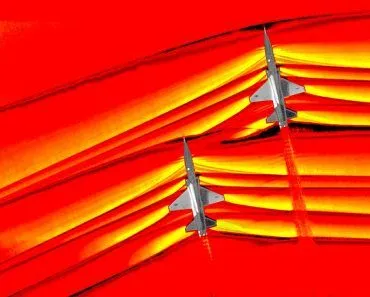
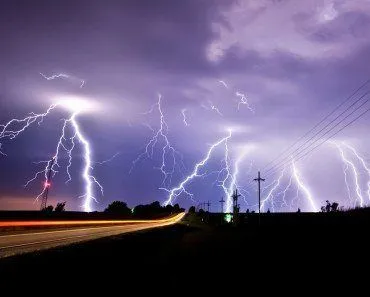
A sound wave wobbles, and your eardrum wobbles with it. A shock wave is a moving wall. It is what forms around a jet breaking the sound barrier, and it is why thunder sounds the way it does: lightning does not vibrate, it explodes.
Air stops behaving well before the ceiling anyway. Waves start deforming above roughly 150 decibels. So 194 is not a wall you slam into. It is the far end of a slope you have been sliding down.

Is 1,000 Decibels Possible? What About 300, Or 10,000?
Every extra 20 decibels means ten times the pressure, so big decibel numbers get out of hand faster than they look.
300 decibels works out to roughly 200,000 times the air pressure around you. 1,000 decibels is a pressure you would write as a 1 with about 45 zeros after it. 10,000 decibels needs a number 496 digits long.
For scale, the standard solar model puts the pressure at the center of the Sun at about 230 billion times Earth's atmosphere. Run that through the same formula, and the core of our star scores about 421 decibels.
Sit with that. The middle of the Sun is a 421. So "1,000 decibels" is not merely louder than the inside of a star, it is something like a hundred billion billion billion times the pressure there. Nothing in the observable universe is remotely like that, which means "what would 1,000 decibels do to you?" has no answer, in the same way "what color is Tuesday?" has no answer. The viral claims that 1,100 decibels collapses into a black hole are doing math on a number that was never a measurement of anything.

But What About The Tsar Bomba's "224 dB"?
We could not trace "224 decibels" to any original measurement, and as far as we can tell, nobody else can either. It is copied across dozens of sites, never with a citation to an actual instrument reading. It looks like someone working backwards from an estimated blast pressure. Treat it the way you would treat a rumor.
But the sourcing is not even the main problem. Suppose an instrument really had registered 224 decibels over Novaya Zemlya. That would make it a very large blast wave, measured correctly and then labeled wrongly. Above 194 there is no sound wave to describe. You are describing a shock front, in a unit borrowed from acoustics.
That is the most common mistake in this whole topic, and it is worth saying plainly: a decibel number above 194 is not a louder sound. It is a different thing wearing sound's clothes.

Can A Human Survive 200 Decibels?
The honest version of the question is "can a human survive that much pressure?"
Hearing gives up far earlier. The NIH's National Institute on Deafness and Other Communication Disorders says repeated exposure at 85 dBA and above causes hearing loss, and that a single intense blast can tear the eardrum and wreck the tiny bones behind it, permanently. OSHA caps workplace noise at 90 dBA across an eight-hour shift. Our ceiling sits about a hundred decibels above that, which on this scale means roughly a hundred thousand times the pressure.
At the lethal end, the Institute of Medicine's Gulf War and Health, Volume 9 puts potentially fatal blast pressure at 414 to 552 kilopascals, which is about four to five and a half atmospheres, and notes it kills mainly by injuring the lungs, not the ears. On the decibel scale, that is around 206 to 209.

So 200 decibels is already where lung injury turns life-threatening, and it sits above the sound ceiling anyway. What reaches you is a shock front, not a noise. Your hearing would be the least of your problems. (Sounds you cannot consciously hear can still do damage, which we looked at in whether our hearing can be damaged by sounds we can't hear.)
How Loud Was Krakatoa?
On August 27, 1883, the volcanic island of Krakatoa tore itself apart in the Sunda Strait.
A barometer at a gasworks in Batavia, 160 kilometers (100 miles) away, jumped by more than 2.5 inches of mercury: a spike of roughly 8,500 pascals, which is about a twelfth of an atmosphere, or about 172 decibels, from a hundred miles away. The sound was heard on Rodrigues Island, 3,000 miles off. The captain of the Norham Castle, 40 miles out, wrote that the eardrums of more than half his crew had burst.
Stop and let that land. 172 decibels at a hundred miles is only 22 under the ceiling, and it burst eardrums forty miles out at sea. At the volcano itself, Krakatoa was almost certainly pressed right up against the limit, which is exactly why it stopped being a sound there and became a shock wave. This is the closest anything in recorded history has ever come to the loudest a sound can physically be.

Was The Saturn V Really 204 Decibels?
You will read constantly that the Saturn V hit 204 decibels. It didn't, and the mistake is a useful one.
204 is a sound power number, and power is not pressure. BYU's Mark Anderson puts it well: "Sound power is like the wattage of a lightbulb... Sound pressure is like the brightness of the bulb." One wattage, many brightnesses, depending on where you stand.
When Kent Gee's team at BYU checked the rocket against surviving 1960s recordings (Journal of the Acoustical Society of America, 2022), the power figure came out at 203. The pressure actually measured at the Apollo 8 launch was 163.5 decibels at 81.5 meters from the pad. That is a full 30 decibels below the ceiling, meaning the limit carries about 34 times that pressure. Sit with how wild that is: the most powerful rocket America ever flew, the machine that hurled men at the Moon, heard from 80 meters away, was not even close. Even jet engines do not come near.
At the human end, NIDCD puts concerts at 94 to 110 dBA, and the ceiling is about 16,000 times the pressure of a 110-decibel concert. The loudest crowd on record, 72,171 fans at Taylor Swift's Eras Tour in Seattle, holds a Guinness World Record for shaking the ground like a magnitude 2.3 earthquake. No decibel figure was ever published for it, and when Caltech's Gabrielle Tepp studied a later show, the shaking turned out to come from dancing, not the speakers. It was never a loudness record.

Could Sound Be Louder Somewhere Else?
The only ingredient in that derivation was air pressure. Change it, and the ceiling moves.
On Venus, NASA measures surface pressure at 93 times Earth's, roughly what you would feel 930 meters (3,000 feet) underwater. There, the spread-thin half of a wave has 93 atmospheres to fall through before it runs out of air, so the ceiling sits near 233 decibels. Think about what that means: a Venusian Krakatoa could be genuinely, physically louder than anything Earth's air will ever carry, and it would still count as an honest sound. The loudest possible noise is not a fixed number written into the universe. It is a local rule, and every world writes its own.
Go the other way and the ceiling drops. Climb a mountain and it falls with the thinning air. On Mars it is far lower. In the vacuum of space there is no air pressure at all, so there is no sound. Which is why 194 is best understood not as a fact about sound, but as a fact about our sky.

What Is The Loudest Sound In The Universe?
If Earth's ceiling is set by Earth's air, then the fair way to ask the question for the whole universe is to go looking in a place that can actually carry a sound. That place is the Perseus galaxy cluster, about 250 million light years away. In 2002, NASA's Chandra X-ray Observatory stared at its center long enough to catch faint ripples moving through the hot gas that fills the cluster. Those ripples are pressure waves, genuine sound, rolling outward from the supermassive black hole in the giant galaxy at the cluster's heart.

The popular idea that there is no sound in space is right about most of it, because a vacuum has nothing to squeeze. A galaxy cluster is the exception: it holds enough gas to pass a wave along. Astronomers even worked out the pitch, and it is the one they love to quote, a B-flat sitting 57 octaves below middle C. That is over a million billion times deeper than the lowest note a human ear can catch, so nobody has ever heard it. To build its 2022 sonification, NASA had to shift the signal up by 57 and 58 octaves, lifting it roughly 144 quadrillion times, just to reach our ears.
Notice what is missing from all of that: a decibel figure. Searches that promise the loudest sound in the universe “in dB” are quoting numbers no telescope ever measured. NASA reported a pitch, not a loudness, and the reason is the same rule that pins our own sky at 194. The gas between those galaxies is a thin, hot wisp, so sparse it would count as a fine vacuum down here, and a medium that empty can only ever carry the faintest pressure. The universe's most famous sound is remarkable for how deep it is and how long it has been playing, roughly 2.5 billion years, not for how loud it is.
So, What's The Loudest Sound Possible On Earth?
About 194 decibels, and the reason is so ordinary it almost feels like a letdown, right up until you realize how strange it actually is. It is not a limit on energy, or on engineering, or on how big a bomb anyone is willing to build. It is arithmetic on the weight of the air above your head: one atmosphere, and not a scrap more. A sound has to squeeze and spread around normal air pressure, and once it has pulled the last molecule out of the spread-thin half, there is simply nothing left to give.
Notice that the genuine record-holders sit underneath the line: Krakatoa at 172 from a hundred miles out, a Saturn V at 163.5 from 80 meters. They have to. Everything that is actually a sound does. The famous numbers above the line are not louder sounds. They are other quantities entirely, wearing borrowed units.
Nature reached that ceiling once in recorded history, in the Sunda Strait in 1883. To the people closest to it, it did not sound loud. It sounded like the end of the world, and then they could not hear anything at all.
References (click to expand)
- Sound Intensity and Level — Physics LibreTexts (University Physics)
- Air Pressure — NOAA JetStream
- dB SPL — Julius O. Smith III, Mathematics of the DFT, CCRMA, Stanford University
- Sound pressure — Wikipedia (supplementary; "194 dB peak or 191 dB SPL", and non-linearity above ~150 dB)
- Bahcall, J.N., Pinsonneault, M.H. & Basu, S. (2001). “Solar Models.” Astrophysical Journal, 555, 990 — central pressure of the standard solar model
- Noise-Induced Hearing Loss — NIH / NIDCD
- Occupational Noise Exposure — OSHA
- Gulf War and Health, Volume 9: Long-Term Effects of Blast Exposures — Institute of Medicine (NCBI Bookshelf)
- The Sound So Loud That It Circled the Earth Four Times — Nautilus
- Debunking acoustics myths around the Saturn V — Brigham Young University Physics & Astronomy
- Saturn V was loud but didn't melt concrete — ScienceDaily (on Gee et al., JASA, 2022)
- Venus Facts — NASA Science
- Greatest seismic activity caused by a music concert — Guinness World Records
- What kinds of seismic signals did Swifties send at LA concert? — ScienceDaily (on Tepp et al., Seismological Research Letters, 2024)
- Chandra “Hears” a Black Hole for the First Time — Chandra X-ray Observatory / NASA (Perseus cluster, B-flat 57 octaves below middle C)
- New NASA Black Hole Sonifications with a Remix — NASA (galaxy-cluster gas as a medium for sound; sonification shifted up 57 and 58 octaves)