Yes. A handful of bird species produce a milk-like, highly nutritious secretion for their chicks. Pigeons and doves (both parents) make “crop milk” in their crop; flamingos secrete a bright-red milk from their upper digestive tract; and male emperor penguins can produce an esophageal milk to keep the chick alive until the female returns from the sea.
Kingdom Animalia is diverse, and we use convenient characters to identify its members. If I ask you to imagine any animal feeding milk to its babies, you will probably think of a cow, because you know that milk-feeding is a distinguishing characteristic of mammals. The root of the word mammal even indicates this; it’s Latin for ‘of the breast’.
Now, here is an exciting bird fact. Like mammals, some species of birds secrete milk to feed their babies! However, unlike mammary glands in breasts, they secrete milk from their stomachs! Or, more accurately, from their crop or esophagus.
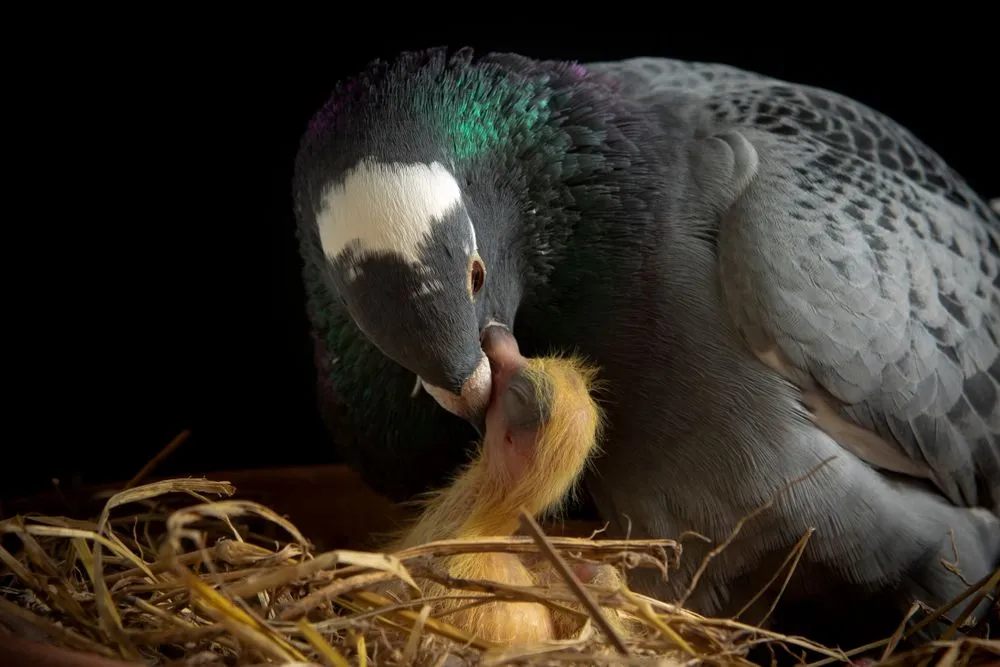
The crop is a modified part of the digestive tract and a temporary food storage organ in many birds. The crop reduces the risk of predators by lowering the time of their food search before flitting away. However, some birds also use crops and analogous organs to produce milk!
What Is Bird Milk?
Young mammals rely on milk for a brief stage, and bird hatchlings rely on worms and seeds their parents have found. Certain birds face challenges, though, such as underdeveloped mouthparts or food scarcity. In such birds, you will see a milk-feeding stage like mammals. It ensures there is enough nutrition for the young ones.
When the eggs start to hatch, the crop (pigeons and doves) or esophagus (emperor penguin) of some birds change. These specialized cells collect fats, proteins, and other nutrients. Once enough nutrients accumulate, the cell layer separates and can be fed as milk to the babies. Bird milk is similar in function to mammalian milk. It has immunizing ability and growth-promoting elements.
Which Birds Secrete Milk And Why?
Milk production is often seen in three families of birds.
- Flamingos (male and female)
- Emperor penguins (only male) of the Penguin family
- Pigeons and Doves (male and female)
Flamingos
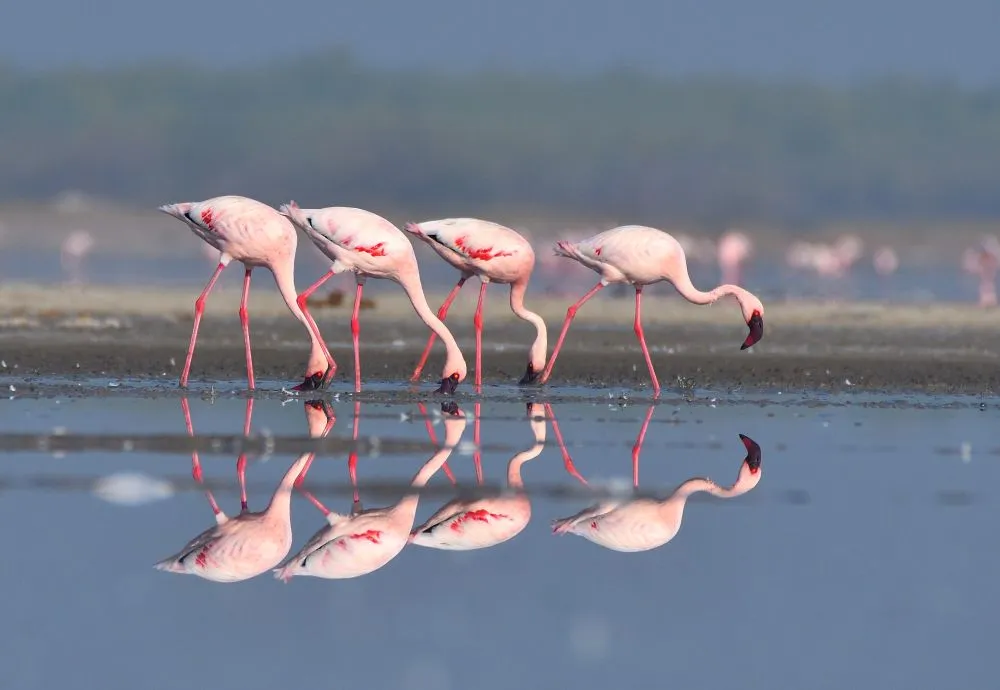
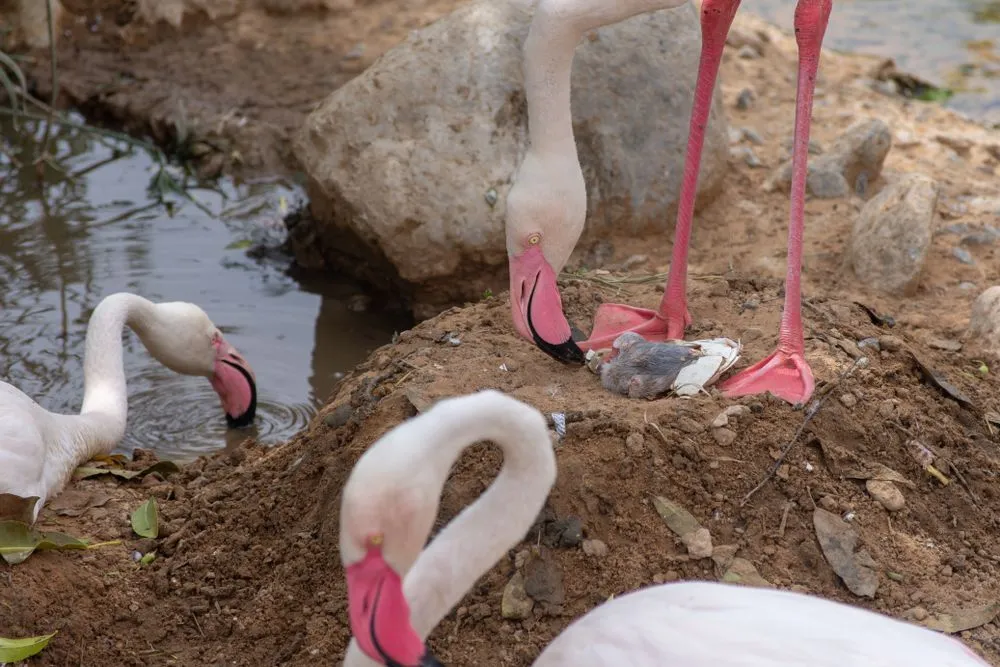
Flamingos source a lot of their feed from the water, which they need to filter for the food, like the filters and sieves in your own kitchen. The filters are not well-formed in hatchlings, so a liquid diet of bird milk becomes necessary. The parent flamingos secrete milk from their digestive tract and feed babies for about two months.
An astonishing thing about this milk is its red color. The bird milk contains carotenoid pigments (canthaxanthin and astaxanthin) from the parent’s diet and some erythrocytes, which give it such an unusual hue.
Emperor Penguins
These birds breed on sea ice in extreme temperatures. Since the hunting sea is far away, young penguins can die of starvation. Male penguins, the initial caretakers, produce bird milk to feed their young. The female emperor penguins move to hunt in the sea after laying an egg. At the same time, the male emperor penguin incubates the egg for months. Once the egg hatches, the male feeds milk from its esophagus to the young ones.
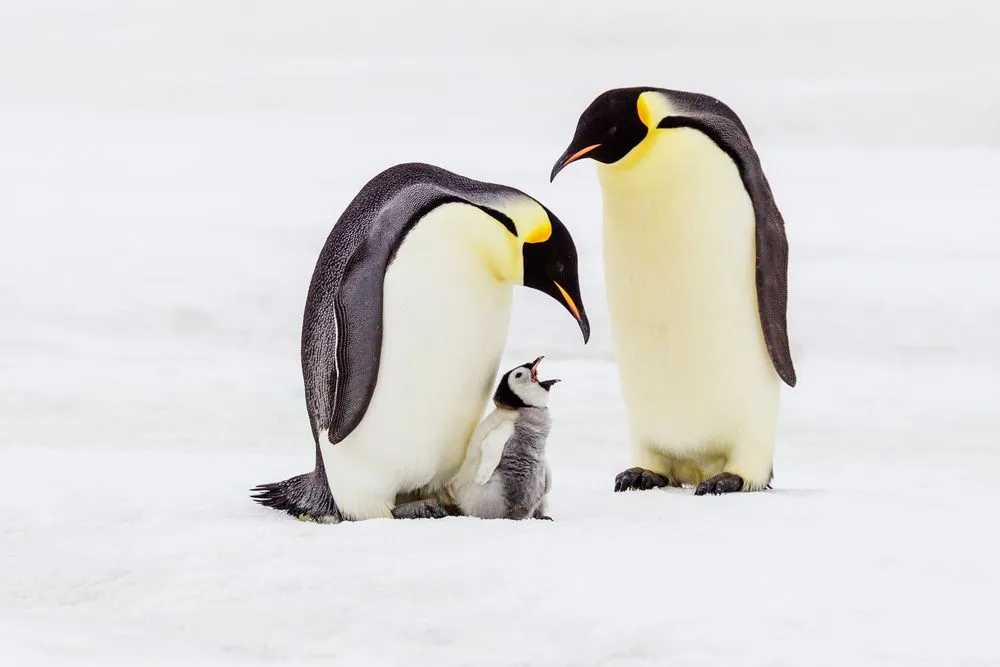
When the female emperor penguin returns, they feed using other techniques, such as regurgitation. This means they first swallow food and partially digest it. This semi-digested food is then provided to the young penguin.
Pigeons And Doves
Pigeons and doves have precise requirements for crop milk. Without lactation, squabs fail to develop into regular functioning pigeons and may die.
The crop of male and female pigeons alters to synthesize this nutritious feed. Pigeons feed crop milk to their hatchlings for two weeks and shift to other foods at the end of the lactating phase.
How Do Birds Produce Milk?
At the onset of the hatching phase, the digestive tract of birds changes (except for female emperor penguins). The process starts with the production and secretion of the hormone prolactin. Prolactin is a hormone that promotes parental behavior in birds, including brooding and feeding.
Prolactin promotes an increase in the number of germinal cells in the crop. Prolactin also enhances the synthesis of molecules, such as triglyceride and antimicrobial proteins.
With the production of prolactin and the activation of genes that synthesize important nutrients, the cells of the crop or esophagus multiply and begin to store these nutrients. Once the cell layer accumulates enough nutrients, it separates as a fluid mass.
The bird then feeds this digestive tract derivative to the hatchlings in the form of regurgitated milk.
Can You Give A Bird Or Baby Bird Cow’s Milk?
Here is where many people get confused. If some birds make milk, can you set out a saucer of cow’s milk for the pigeons on your balcony, or for a baby bird you have found in the garden? The answer is no, and it is worth understanding why.

To begin with, the “milk” that pigeons, doves, flamingos, and emperor penguins make has almost nothing in common with the milk in your fridge. Crop milk is a crumbly suspension of fat-rich and protein-rich cells that slough off the lining of the crop, and it contains no lactose, the sugar that defines mammalian milk. Cow’s milk, by contrast, is built around lactose.
That difference matters, because birds are not built to handle milk sugar. A wild bird’s diet is insects, seeds, and fruit, never milk, so birds carry very little lactase, the gut enzyme that breaks lactose down. Undigested lactose simply ferments in the digestive tract, which can leave a bird bloated and give it diarrhea. Fresh, clean water is the only drink any bird actually needs.
For a baby bird, there is a second danger that has nothing to do with digestion. Wild-bird rehabilitators warn that dribbling any liquid into a nestling’s mouth is risky, because it slips down the windpipe instead of the throat and can drown the chick or trigger pneumonia. If you find a healthy baby bird, the safest thing is to return it to its nest or leave it for its parents, who are usually nearby. If it is injured or genuinely orphaned, call a local wildlife rehabilitator rather than trying to feed it yourself.
How Do Birds Normally Feed Their Young?
Crop milk is the exception, not the rule. The vast majority of birds never make milk at all, so how do they keep a nest full of hungry chicks fed? The honest answer is: constantly, and with a lot of protein.

Most songbird chicks are raised on insects. Even birds that live mainly on seeds as adults switch to caterpillars, spiders, and other bugs while raising young, because growing chicks need the concentrated protein that insects provide. Parents tend to select size-appropriate, nutritionally dense prey that often differs from what the adults eat themselves.
How the food is delivered depends on the bird. Many songbirds carry back one item at a time, an insect or a worm, and post it straight into a gaping mouth. Gulls, wading birds, pelicans, and cormorants swallow their catch and later regurgitate it from the crop for their chicks, the same predigested route that a returning emperor penguin uses. Hawks, eagles, and owls rip larger prey into bite-sized pieces until the chicks are big enough to swallow it whole. Whichever method they use, altricial chicks (those hatched helpless and naked) beg with open, brightly colored mouths, and busy parents may make dozens of feeding trips to the nest in a single day.
Conclusion
Milk is a nutritious feed that is often secreted by mammals, but some other classes, in addition to mammals, secrete milk. These interesting exceptions include birds such as Doves, Emperor Penguins, Pigeons, and Flamingos.
Though bird’s milk is quite different in synthesis from mammalian milk, it still shares similar health benefits for their young. The crop (in pigeons and doves), esophagus (in male emperor penguins), and whole upper gastric path (in flamingos) undergoes functional changes. They transform from a storage area to a milk-producing organ. These modified functions overcome their environmental constrictions and improve the chances of survival for their young.
Several hormonal and genetic regulations start the lactating phase, which lasts from 2-3 weeks, depending on the bird type and family. When the birds reach a particular stage, the digestive tract returns to its previous function of storing food, and the parent bird stops lactating.
References (click to expand)
- Digestive Anatomy and Physiology of Birds - Vivo.Colostate.edu. Colorado State University
- Bird Milk. Stanford University
- Flamingo Feeding. Stanford University
- Gillespie, M. J., Crowley, T. M., Haring, V. R., Wilson, S. L., Harper, J. A., Payne, J. S., … Moore, R. J. (2013). Transcriptome analysis of pigeon milk production – role of cornification and triglyceride synthesis genes. BMC Genomics. Springer Science and Business Media LLC.
- Penguin - an overview | ScienceDirect Topics. ScienceDirect
- Crop milk. Wikipedia
- Gilbert, S. Do Not Feed Baby Birds Milk or Bread. 10,000 Birds
- Found a baby bird out of a nest? RSPCA
- Nesting Season Means Busy Bird Parents Feeding Voracious Chicks. Audubon
- What Do Baby Birds Eat? Their Diet Explained. Birdzilla