Table of Contents (click to expand)
- What Actually Makes Something A Metal?
- What Actually Makes Something A Mineral?
- Why The Two Definitions Don't Line Up
- Is Gold A Metal Or A Mineral? (And Copper, And Silver)
- Are Steel And Aluminum Foil Minerals?
- Is A Diamond A Metal?
- Most Metals Hide Inside Minerals: The Ore Story
- So, Metal Or Mineral? The Quick Way To Never Mix Them Up
"Metal" and "mineral" answer two different questions, so a thing can be one, both, or neither. Metal describes how a material is built, with its atoms sharing a pool of loose electrons, which is why metals conduct, shine, and bend. Mineral describes where a material came from, a natural solid whose atoms sit in a regular repeating pattern, so a gold nugget is both at once, a steel beam is a metal but no mineral, and a diamond is a mineral but no metal.
Picture a gold nugget behind museum glass. The little card beside it calls gold a mineral. Now picture a jeweler holding the same soft yellow metal, calling it a precious metal. Same gold. Two labels. Both people are right.
The confusion runs deeper than gold. Your car's body is steel, which everyone calls a metal and nobody calls a mineral. A copper wire is metal. A grain of table salt is a mineral. A diamond is a mineral too. So which word is correct, and when?
The honest answer is that "metal" and "mineral" are not rivals fighting over the same turf. They belong to two different sciences, and they ask two different questions. Once you can see the questions, the whole thing clicks into place. So let's meet them one at a time.
What Actually Makes Something A Metal?
Grab a spoon. Tap it, bend a paperclip, watch a coin catch the light. Everything you just did traces back to one trick happening inside the metal.
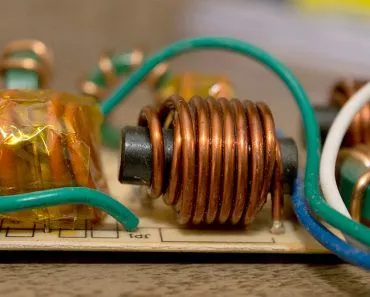
In most materials, each atom keeps a tight grip on its own electrons. Electrons are the tiny charged specks that swarm around every atom. A metal does something strange. Its atoms let their outer electrons go loose. Those loose electrons drift through the whole lump, like water soaking through gravel. Chemists picture a metal as "an array of positive ions in a sea of electrons". The atoms sit in the sea as positive lumps. The loose electrons wash between them.
That one picture explains why metals act the way they do. Because the electrons are loose, they can flow. Push electrons in one end of a copper wire and they shove others out the far end. That flow is electricity. Hammer the metal and the loose electrons act like a cushion. They slide between the atoms, so the metal dents instead of cracking. Shine a light on it and the loose electrons bounce the light straight back, so the surface gleams.
So here is the idea to hold on to. Metal is not a place a thing came from. It is a way its atoms are glued together. Metal is a chemistry answer, about the recipe, not the origin. It does not even depend on whether the stuff is solid. A metal that has melted, or boiled into a metal gas, is still a metal.

What Actually Makes Something A Mineral?
Now the second science, and it is geology, not chemistry. A geologist does not ask what a rock is made of first. They ask where it came from and how it is built. To count as a mineral, a substance has to pass a five-part checklist.
- Natural. It formed on its own, without us. As the National Park Service puts it, "man-made substances such as steel are not minerals".
- Inorganic. It did not grow from a living thing, plant or animal.
- Solid. A liquid or a gas does not qualify.
- A fixed recipe. Its ingredients stay the same wherever you dig it up, within set limits.
- Neatly stacked atoms. Its atoms sit in an orderly, repeating pattern, and that is what grows crystals.
Quartz ticks every box. So does table salt. So does a diamond. Now notice what the list never mentions: electricity, shine, or bending. A mineral is defined by its birth and its inner order, not by how it behaves when you tap it. The US Geological Survey uses the same criteria. Mineral is a geology answer.

Why The Two Definitions Don't Line Up
Here is the part where everyone trips. The two words measure completely different things. Metal asks one question: how are the atoms glued together? Mineral asks another: is it natural, and are its atoms neatly stacked? The questions are different, so a material can pass one, both, or neither.
That leaves four boxes, not two. A thing can be both a metal and a mineral. It can be a metal but no mineral. It can be a mineral but no metal. Or it can be neither, like plastic, wood, or a pane of glass.
The gold nugget and the steel beam land in different boxes. That is the whole reason the museum and the jeweler were both right. Let's walk the boxes that matter.

Is Gold A Metal Or A Mineral? (And Copper, And Silver)
Gold is the easy one, because it is both, fully. Dig up a gold nugget and it arrives as metal already. No furnace, no factory. As geologists say it plainly, "native gold is an element and a mineral". "Native" is the geologist's word for a metal you find in the ground as metal, not locked inside some compound.
Gold also ticks the mineral checklist all the way down. Natural, inorganic, solid, a fixed recipe (gold is gold), atoms in a regular pattern. So a nugget of native gold is a real mineral and a real metal at the same instant.
Copper and silver pull off the same trick. The principal native metals are gold, silver, copper, and platinum. Each is both a metal and a mineral where it turns up native. Platinum does it too, though native platinum is much rarer than the other three.
One quirk answers a question people keep asking: why is natural gold never pure? Because in the ground, gold almost always comes mixed with a little silver. The blend even shifts the color, and the gold whitens as more silver creeps in. Jewelers then blend in extra metal on purpose, which is one more reason the gold in a ring is rarely pure gold.

Are Steel And Aluminum Foil Minerals?
Now the box that catches people out. Steel is the metal we build the modern world from, and it is not a mineral at all. It fails the first checkbox, the natural one. We cook steel up in furnaces, blending iron with a pinch of carbon, so steel is a man-made substance and not a mineral. No natural process hands you an I-beam. The aluminum in a soda can and the bronze in a statue tell the same story. All metal. None of them minerals.
Then there is a lovely edge case, the one that proves the rule. Metallic glass is a genuine metal, loose electrons and all. But it is chilled so fast that "its atoms freeze in a random, glass-like arrangement instead of a crystal lattice". Its atoms never line up. So even a chunk found in nature would flunk the neat-crystal rule. Metallic glass is living proof that the tidy-crystal test belongs to minerals, and metals never signed up for it.

Is A Diamond A Metal?
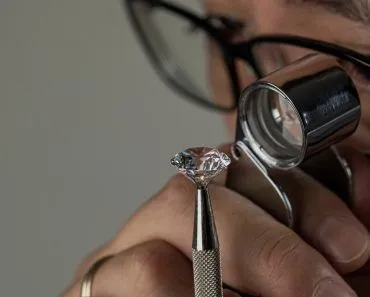
Flip the whole thing around. A diamond sails through the mineral checklist. It is natural, inorganic, solid, a fixed recipe (pure carbon), and its atoms sit in one of the most orderly patterns in all of nature. Diamond is a naturally occurring mineral made entirely of carbon. It is also the hardest mineral we know, a flat 10 on the scale geologists use.
But a diamond is not a metal, not remotely. Its carbon atoms clamp onto each other with tight, shared bonds, and each atom grips four neighbors. Nothing is loose. There is no sea of drifting electrons, so nothing is free to flow. That is why a diamond will not carry electricity, will not bend, and shatters rather than dents. It is see-through instead of chrome-shiny for the same reason. A diamond is a mineral and a nonmetal in one clear stone.

Most Metals Hide Inside Minerals: The Ore Story
Here is the twist that ties the room together. Almost every metal you touch never existed as native metal. It was hiding inside a mineral, bonded to something else, and we had to pry it out.
Take iron, the metal in your car, your fridge, your kitchen knife. Iron almost never turns up as native metal, and native iron is rare except in meteorites. It hides inside reddish minerals like hematite, a compound of iron and oxygen. To free the metal, we heat the mineral in a blast furnace with carbon, which tears the oxygen away and leaves molten iron behind. That takes real heat. Iron melts at 1,538 °C (2,800 °F).
Aluminum does the same disappearing act. It hides in a rock called bauxite, an impure aluminum oxide, and never lies around as a shiny sheet on its own. The rust on an old nail is the return trip. Iron crawls back into an oxide. That is why rust will not carry a current the way the metal did.
So the everyday link between the two words is not "which is it." It is "the metal came out of the mineral." Native gold is the exception. Ore is the rule.

So, Metal Or Mineral? The Quick Way To Never Mix Them Up
Two questions, and you never have to guess again.
First: how are its atoms glued? If they share a sea of loose electrons, so the thing conducts, shines, and bends, it is a metal. That is chemistry, and it does not care whether the thing is natural or built in a plant.
Second: is it natural, solid, and made of neatly stacked atoms with a fixed recipe? If yes, it is a mineral. That is geology, and it does not care one bit whether the thing carries electricity.
Run any object through both. A gold nugget answers yes twice, so it is a metal and a mineral. A steel beam answers yes to the first only, so it is a metal but no mineral. A diamond answers yes to the second only, so it is a mineral but no metal. The museum card and the jeweler were describing the same gold from two different sciences, and neither one was wrong.
One last knot to untie. A cereal box brags that it is "rich in minerals" like iron and calcium. That is a third meaning altogether, borrowed by nutrition. Those dietary minerals are about what your body needs, not about crystals in the ground. Different room, different science, same overworked word. That is English for you, keeping three fields on their toes with one small word.
References (click to expand)
- Metallic Bonding — Chemistry LibreTexts
- Minerals (Geology) — U.S. National Park Service
- Minerals FAQ — U.S. Geological Survey
- Native Elements: Metals, Semimetals, and Nonmetals — Geosciences LibreTexts
- Metals and Ores — Chemistry LibreTexts
- Gold: Native element and mineral — Geology.com
- Diamond: A gem mineral — Geology.com
- Iron — Element information — Royal Society of Chemistry
How this article was made. It was researched from the sources cited above and drafted with the help of AI, then fact-checked, edited and approved by Abhishek Jain before publication. Illustrations that are not credited to a photographer are generated diagrams or illustrations, not photographs.